Aroma
Peach
166 bottles with this note
Train this aroma
Irish Whiskey Aroma Kit
Develop your palate with the canonical reference for peach and related notes.

Writers' Tears Cask Strength 2022 Edition
Writers' Tears
The 2022 cask strength release demonstrates why Writers' Tears has earned a loyal following. The combination of single pot still and single malt at full proof delivers density without sacrificing the elegance that defines the brand. A drop of water opens it beautifully.

Waterford Sheestown Edition 8.1 Single Malt Irish Whiskey
Waterford
Waterford's single farm origin concept makes the barrel's influence a controlled variable, letting the barley itself speak. This Sheestown edition shows how terroir and restrained oak maturation can produce a whiskey of elegant precision. It's intellectual without being austere.

Benromach Contrasts: Organic Speyside Single Malt Scotch Whisky
Benromach
Benromach's organic bottling proves that starting with pure ingredients and traditional floor maltings yields a whisky of uncommon clarity. It's not a powerhouse — it's a window into what barley tastes like when nothing gets in the way. A terrific introductory Speyside that rewards contemplation.

Balvenie 14 Year Old Peat Week 2003 Vintage
Balvenie
Peat Week remains one of Balvenie's most compelling limited expressions, proving that Speyside peat can be a whisper rather than a shout. The 14 years of maturation smooths any rough edges, and the result is a whisky that feels both familiar and adventurous. Worth seeking out before stocks thin further.

Glenkinchie Distillers Edition 2023
Glenkinchie
This Distillers Edition demonstrates what Glenkinchie does best: gentle Lowland malt character given added complexity by careful cask finishing. The Amontillado sherry wood adds savory depth without burying the distillery's natural elegance. A textbook example of calibrated cask influence.

Jameson 18 Year Old Limited Reserve
Jameson
This limited reserve expression showcases what eighteen years in a mix of sherry and bourbon casks can do to Midleton's spirit. It's a whiskey that moves between sweet and spiced with effortless grace. While many aged Irish whiskeys lean heavily on cask influence, this one maintains the distillery's characteristic elegance throughout.

Tomatin Cù Bòcan
Tomatin
Tomatin's peated expression is a study in duality — smoke that enhances rather than dominates. It's an excellent entry point for drinkers curious about peat who aren't ready for Islay's full assault. The whisky rewards return visits; each pour seems to emphasize a different element.

Glen Grant 12 Year Old
Glen Grant
Glen Grant's tall stills produce one of the most elegant spirits in Speyside, and this 12-year expression is a masterclass in restraint. It doesn't shout; it invites. A perfect introduction to the distillery's house style, and a reliable daily dram for experienced whisky drinkers.

Writers' Tears Cask Strength 2024 Edition
Writers' Tears
The cask strength editions from Writers' Tears consistently punch above their price. The 2024 release showcases how Ireland's mild, damp climate shapes a softer, rounder maturation than you'd find at more extreme latitudes. Add a few drops of water and watch the honey notes unfold.

Fercullen 18 Year Old Single Malt Irish Whiskey
Fercullen
Fercullen's 18 Year shows what patience and careful sourcing can achieve. The integration of fruit, oak, and malt here speaks to well-chosen casks aged in a temperate maritime climate. It occupies a rewarding middle ground between richness and elegance that justifies seeking out.

Hinch 18 Year Old Single Malt Irish Whiskey
Hinch
Hinch's 18-year-old single malt demonstrates what Irish whiskey can achieve when given time and careful cask management. The Cooley-distilled spirit has developed real depth without losing the approachability that defines the category. At this price point for an 18-year-old, it represents serious value.
Waterford Sheestown Edition 1.2 Single Malt Irish Whiskey
Waterford
Waterford's single-farm-origin philosophy reaches its eighth edition from Sheestown, and the terroir-driven approach continues to reveal how soil, climate, and barley variety shape whiskey. This is Irish whiskey as an expression of place—transparent, articulate, and quietly compelling.

Dalwhinnie 25 Year Old Special Release 2022
Dalwhinnie
Scotland's highest distillery at 326 meters, Dalwhinnie uses its altitude—and the slow, cold maturation that comes with it—to produce whisky of exceptional delicacy. This 25-year expression showcases what quarter-century patience in thin Highland air yields: a whisky that is simultaneously rich and featherlight.

Glenmorangie 18 Year Old Extremely Rare Single Malt Scotch Whisky
Glenmorangie
Eighteen years in Glenmorangie's famously tall stills yields a whisky of uncommon grace. The extra-long copper contact strips away heaviness and leaves pure flavor. This is what patience and precise engineering produce when they meet at the right moment.

West Cork 10 Year Old Single Malt Irish Whiskey
West Cork Distillers
West Cork's 10-year single malt demonstrates that Irish whiskey's reputation for smoothness need not come at the expense of character. The decade of maturation adds just enough complexity to keep things interesting, and the price point makes it an excellent gateway into aged Irish malts.

Tomatin 15 Year Old Highland Single Malt Scotch Whisky
Tomatin
Tomatin's 15-year expression is Highland whisky in its most approachable form — generous without being heavy, complex without being difficult. The non-chill-filtered bottling at 46% lets the distillery character speak clearly. A textbook example of patient maturation paying dividends.

Tomintoul 14 Year Old Single Malt Scotch Whisky
Tomintoul
Tomintoul is often called 'the gentle dram' and this 14-year expression earns the reputation honestly. The binding agent here is texture—that creamy, buttery mouthfeel unites delicate flavors that might otherwise scatter. Understated Speyside craft at its most approachable.

Balblair 15 Year Old Highland Single Malt Scotch Whisky
Balblair
Balblair is one of the Highlands' most underrated distilleries, and this 15-year-old shows why patience rewards. The combination of ex-bourbon and ex-sherry maturation creates a layered dram that tastes older than its years. It's a textbook example of how Highland terroir — coastal air, spring water, unhurried warehousing — writes itself into whisky.

Glenlossie 10 Year Old Flora & Fauna
Glenlossie
Glenlossie is one of Speyside's overlooked gems—most of its output disappears into blends. This Flora & Fauna bottling reveals a distillery character that's delicate, rhythmically structured, and quietly compelling. A superb introductory Speyside for those tired of the obvious names.

Wolfburn Aurora Single Malt Scotch Whisky
Wolfburn
Wolfburn is mainland Scotland's most northerly distillery, and Aurora showcases a spirit that prioritizes clarity over complexity. The combination of first-fill bourbon barrels and Caithness water produces something genuinely refreshing. This is a whisky for people who value precision.

Kilbeggan 8 Year Old Single Grain Irish Whiskey
Kilbeggan
Single grain whiskeys are too often dismissed as blending fodder. Kilbeggan's 8-year expression makes the case for grain as a standalone spirit — light-bodied and approachable, but with a finish that lingers far beyond what the price point promises. A quiet overachiever.

Craigellachie 17 Year Old Speyside Single Malt Scotch Whisky
Craigellachie
Craigellachie's house style — muscular, unapologetic — finds its sweet spot at 17 years. The extended maturation rounds the distillery's signature meatiness without erasing it, and the finish rewards anyone willing to sit with it. This is Speyside whisky that refuses to play nice, and it's better for it.

Scapa Glansa Single Malt Scotch Whisky
Scapa
Scapa's unpeated spirit gains just enough smoky complexity from its peated cask finish to stand apart from the distillery's Skiren expression without losing its essential honeyed, coastal personality. It's a study in restraint — the peat whispers rather than shouts, letting the Orkney mineral character carry the conversation. An approachable but layered introduction to the islands.

Talisker Skye Single Malt Scotch Whisky
Talisker
Talisker Skye strips the brand's DNA to its essentials: smoke, salt, pepper, and malt. It lacks the depth of the 10 Year Old but offers remarkable structural clarity at an accessible price. A whisky that teaches you what Talisker means before any cask influence complicates the message.

Glenfiddich 12 Year Old Our Original Twelve
Glenfiddich
Glenfiddich 12 remains one of the most reliable entry points into single malt Scotch, not because it's simple, but because its complexity is delivered without friction. The Solera-style vatting in their signature Solera Vat No. 1 adds consistency across bottlings while maintaining that signature orchard-fruit character. A benchmark for the category.

West Cork 16 Year Old Single Malt Irish Whiskey
West Cork
Sixteen years of patience from a relatively young distillery yields a whiskey that punches well above its visibility. West Cork demonstrates that time and good cask selection can compete with the bigger names in Irish whiskey — this is understated maturity at an honest price.

Teaninich 10 Year Old Flora & Fauna
Teaninich
Teaninich is one of those distilleries that most whisky drinkers have consumed without knowing it — its spirit forms a backbone of several major blends. In its own right, this Flora & Fauna bottling is a refreshing, precise Highland malt. It rewards those who seek out the quiet corners of Scotch.

Waterford Dunbell Edition 1.1 Single Malt Irish Whiskey
Waterford
Waterford's single-farm-origin project is ambitious by design, and Dunbell 1.1 demonstrates why it matters. The barley from this specific farm delivers a flavor profile distinct from neighboring estates, vindicating the distillery's terroir-driven thesis. Approachable yet intellectually engaging.

Deanston 14 Year Old Single Malt Scotch Whisky
Deanston
Deanston 14 is a Highland malt that earns its place through texture and restraint rather than volume. The unpeated barley, dried in a gentle kiln, lets the distillery's clean spirit character shine. Non-chill filtered and bottled at a sensible strength, it rewards patience.

Glenfiddich 14 Year Old Bourbon Barrel Reserve
Glenfiddich
This is Glenfiddich at its most composed — the extra two years beyond their standard 12 and the exclusive bourbon cask maturation create a whisky of quiet confidence. It doesn't chase complexity; it arrives there naturally through patience. A Speyside malt that proves elegance needs no embellishment.

Benriach The Twelve Year Old Three Cask Matured Speyside Single Malt Scotch Whisky
Benriach
Benriach's three-cask maturation strategy—bourbon, sherry, and port—creates layers of flavor that unwind gradually. The 46% ABV without chill filtration preserves texture and nuance. This is a Speyside malt that rewards the patient sipper.

Jura 10 Year Old Single Malt Scotch Whisky
Jura
Jura 10 is an island malt that sidesteps the peat-bomb stereotype entirely. Its restraint is its strength — a whisky shaped by geography rather than process, tasting of the rain and wind that batter its remote island home. Ideal as a gateway to island Scotch.

Glen Moray 12 Year Old Speyside Single Malt Scotch Whisky
Glen Moray
Glen Moray has long been Speyside's overlooked neighbor, producing reliably excellent whisky at prices that make collectors look twice. This 12-year-old is the backbone of the range — a Speyside archetype with enough depth to reward close attention.

Tyrconnell 10 Year Old Port Cask Finish
Tyrconnell
The port cask finish adds complexity without masking the whiskey's essential double-distilled character. This is Cooley at its most approachable — a whiskey that demonstrates how thoughtful cask finishing can add dimension to an already solid malt. Non-chill filtered at 46%, it rewards neat exploration.

Knappogue Castle 14 Year Old Single Malt Irish Whiskey
Knappogue Castle
This 14-year expression sits in a sweet spot where the extra maturation adds depth without overshadowing the distillery's inherently clean, fruit-forward character. It's proof that Irish single malt can compete on complexity, not just smoothness. Well-priced for the age and quality.

Benromach Cask Strength Vintage 2012
Benromach
Benromach's cask strength vintages are consistently excellent value, and the 2012 is no exception. The distillery's signature gentle peat adds complexity without domination, and the high proof delivers texture rather than heat. A well-rounded Speyside with a backbone.

Midleton Very Rare 2022
Midleton Very Rare
The 2022 vintage continues Midleton's tradition of restrained blending. Former master distiller Kevin O'Gorman composed this release to emphasize the interplay between grain sweetness and pot still character. It's a whiskey that rewards patience — the complexity unfolds slowly and deliberately in the glass.

Deanston 18 Year Old Bourbon Cask Matured Highland Single Malt Scotch Whisky
Deanston
Deanston operates well below the radar in Highland single malt circles, which is exactly what makes bottles like this such satisfying discoveries. Eighteen years of patient bourbon-cask aging have produced a whisky of real composure — nothing shouts, but nothing is missing. Non-chill filtered and natural color, as is their standard.

Kilkerran 8 Year Old Cask Strength Campbeltown Single Malt Scotch Whisky
Kilkerran
Kilkerran's cask strength releases remain among the best values in single malt Scotch. This 8-year-old demonstrates that Campbeltown's revivalist distillery has found its voice — muscular and maritime without the heavy peat that dominates the conversation. It shows how heat and strength can reveal rather than mask youth.

Boann The Whistler Blue Note Blend Irish Whiskey
Boann Distillery
The Cooney family launched Boann Distillery with ambition and attention to detail, and the Blue Note Blend reflects that ethos. It's uncomplicated but not simple — a well-calibrated blend that demonstrates the distillery's emerging confidence. An excellent entry point to a producer worth tracking.

Tullibardine 20 Year Old Highland Single Malt Scotch Whisky
Tullibardine
Two decades in cask have given this Tullibardine remarkable composure. It balances the weight of extended maturation against a surprising lightness — a highland malt that never becomes ponderous. A fine example of patience rewarded.

Glencadam 18 Year Old Highland Single Malt Scotch Whisky
Glencadam
Glencadam is often called 'the cooler's malt' for the pure water source that feeds the distillery, and this 18-year expression shows why clarity matters. It's a whisky that never raises its voice but delivers remarkable complexity — peach sliding into cocoa, honey into spice. An underrated Highland gem.

Waterford Bannow Island Edition 2.1 Single Malt Irish Whiskey
Waterford
Waterford's terroir-driven approach yields a whiskey that tastes like a specific place. Bannow Island 2.1 captures the maritime, mineral-rich soils of this Wexford peninsula in a spirit that's both intellectual and immediately enjoyable. The threshold here is between grain and geography — you taste both.

Method and Madness Single Malt Irish Whiskey Finished in French Chestnut Casks
Method and Madness
Midleton's experimental range finds genuine purpose here. The chestnut cask isn't gimmick — it contributes a tannin structure Irish whiskey rarely achieves, adding backbone without sacrificing the distillery's characteristic smoothness. An inventive and rewarding dram.

Bowmore 18 Year Old Islay Single Malt Scotch Whisky
Bowmore
Bowmore's kiln-dried malt at eighteen years strikes a rare balance between Islay smoke and sherry cask richness. This is peat with polish — not fireplace but hearth. A benchmark for aged Islay whisky.

Ben Nevis 10 Year Old Highland Single Malt Scotch Whisky
Ben Nevis
Named for Britain's highest peak, Ben Nevis operates in relative obscurity compared to its Highland neighbors, but its robust house style rewards attention. The 10-year-old bottled at 46% without chill filtration delivers a rugged, textural dram that stands apart from polished, lighter Highland malts. A distillery that earns its reputation one cask at a time.

Auchroisk 10 Year Old Flora & Fauna
Auchroisk
Auchroisk is one of Speyside's best-kept secrets, largely because most of its output disappears into blends. This Flora & Fauna bottling showcases what the distillery can do on its own — a malt of quiet sophistication that deserves a wider audience.

Waterford Ballykilcavan Edition 3.1 Single Malt Irish Whiskey
Waterford
Waterford's obsessive focus on single-farm barley provenance makes each edition a terroir experiment. The Ballykilcavan 3.1 draws from a 14th-generation farm in County Laois, and the result is whiskey that tastes genuinely of a specific place. It challenges the idea that terroir belongs only to wine.

Talisker 8 Year Old Special Release 2020
Talisker
This younger Talisker at cask strength strips away polish to reveal the distillery's raw coastal DNA. The 8 years are enough to add complexity without taming the wild character that makes Talisker essential. An uncompromising dram for those who appreciate spirits with edges.

Tullibardine 25 Year Old Highland Single Malt Scotch Whisky
Tullibardine
Twenty-five years in wood has produced a whisky of real elegance without the tannic heaviness that can plague over-aged expressions. The fruit and oak are in genuine harmony here, and the mouthfeel is remarkably supple. This is patient distilling rewarded.

Waterford Sheestown Edition 3.1 Single Malt Irish Whiskey
Waterford
Waterford's terroir-obsessed approach finds clear expression here. The Sheestown farm's particular soil profile — heavy clay over limestone — translates into a whiskey with genuine mineral identity. This is Irish whiskey that asks you to taste the field, not just the barrel.

Mannochmore 12 Year Old Flora & Fauna
Mannochmore
Mannochmore is one of Speyside's great unknowns — most of its output disappears into blends. This Flora & Fauna bottling is a rare chance to taste the distillery character on its own terms. It's lighter than fashion dictates, but that lightness is the point: precision, not power.

Waterford Ballymorgan Edition 1.1 Single Malt Irish Whiskey Cuvée
Waterford
Waterford's terroir-driven approach can invite skepticism, but this bottling delivers undeniable distinctiveness. The Ballymorgan barley gives the whiskey a mineral depth and structural complexity that sets it apart from smoother, simpler Irish malts. At 50% ABV, it has the backbone to reveal its layers slowly over an evening.

Waterford Ballymorgan Edition 3.1 Single Malt Irish Whiskey
Waterford
Waterford's single-farm philosophy reaches its clearest expression in the Ballymorgan series. This third edition shows increased confidence and complexity, proving that Irish terroir is not a marketing concept but a sensory reality. The combination of scientific precision and farming heritage makes this one of the most intellectually satisfying Irish whiskeys available.

Tyrconnell 15 Year Old Single Malt Irish Whiskey
Tyrconnell
Tyrconnell's 15-year expression is an exercise in quiet sophistication. Double-distilled rather than triple, it retains more texture and character than many Irish malts, and the extended aging rounds its edges without sanding away personality. A thinking person's Irish whiskey.

Benriach The Twenty One Year Old Speyside Single Malt Scotch Whisky
Benriach
Benriach's 21-year-old is a masterclass in multi-cask maturation without losing coherence. The interplay of sherry, bourbon, and peated casks creates a whisky of real complexity that never feels overwrought. It's the kind of bottle that justifies the patience encoded in its age statement.

Clynelish 18 Year Old Single Malt Scotch Whisky
Clynelish
Clynelish at 18 years is a masterclass in Highland elegance. The distillery's distinctive waxy character serves as a canvas for layered fruit and coastal notes, resulting in a whisky that rewards slow, attentive drinking. This is distance measured in decades.

Waterford Rathclogh Edition 2.1 Single Malt Irish Whiskey
Waterford
Waterford's terroir-driven philosophy strips away everything except the barley and its origin. No peat, no unusual cask finishes, no blending across farms — just the expression of a single field rendered through malt. This second edition from Rathclogh farm shows increased depth and confidence over the first release.

Limavady Single Barrel Irish Whiskey
Limavady
Limavady revives a name from Irish whiskey's deep past — the town where the Gage family distilled for centuries before prohibition-era decline. Matured in first-fill bourbon barrels, each single barrel release carries its own personality, but the throughline is a malt-forward whiskey that favors elegance over weight. A strong argument for Northern Irish whiskey's modern renaissance.

Waterford Dunmore Edition 2.1 Single Malt Irish Whiskey
Waterford
Waterford's terroir experiment reaches its most compelling expression when you taste two farm origins side by side. Dunmore 2.1 is a whiskey that argues, persuasively, that barley grown in different Irish soils produces genuinely different spirits. Whether or not you're fully converted to the cause, the whiskey itself is beautifully made and intellectually engaging.

Kilkerran 16 Year Old Campbeltown Single Malt Scotch Whisky
Kilkerran
Kilkerran at sixteen years has matured into a whisky that channels every dimension of its Campbeltown home — the salt-laden winds, the ancient warehouses, the restrained peat. It's a benchmark for what this region can offer beyond its more famous neighbor. Serious malt, seriously grounded.

Glen Grant 15 Year Old Batch Strength First Edition
Glen Grant
Glen Grant has historically been underappreciated outside Italy, where it has long been a bestseller. This batch-strength release shows the distillery's light, fruity house style at full volume — the higher proof amplifies rather than overwhelms. A Speyside essential that demonstrates restraint can coexist with power.

Waterford Micro Cuvée Lomhar Single Malt Irish Whiskey
Waterford
Waterford's obsession with terroir reaches its most concentrated expression in the Micro Cuvée range. Lomhar gathers whiskey from their most expressive single farm origins into a blend that amplifies rather than averages their character. It's Irish whiskey for people who care about where grain is grown, not just where it's distilled.

Teeling Brabazon Bottling Series 04 Muscat Casks
Teeling
The Brabazon Series is Teeling's exploration of wine cask finishing, and this Muscat expression is the most harmonious yet. The dessert wine casks could easily overwhelm, but the distillery's spirit is robust enough to absorb the influence and come out more complex for it. A rewarding pour for anyone who thinks Irish whiskey can't do bold.

Tomatin 18 Year Old Highland Single Malt Scotch Whisky
Tomatin
Tomatin 18 is one of the Highlands' most underrated age-statement malts. The combination of first-fill oloroso sherry casks and refill bourbon barrels creates a layered, elegant whisky that never shouts. It rewards careful attention with steady, deepening complexity.

Dingle Single Malt Cask Strength Batch No. 5 Irish Whiskey
Dingle
Dingle's cask-strength releases showcase what happens when a small distillery refuses to rush. The heat here is real—58.2% ABV—but it is productive heat, pushing out flavors that a lower proof would hide. This is a whiskey that demands water and rewards patience, revealing new layers over the course of 30 minutes in the glass.

Glen Moray 15 Year Old Speyside Single Malt Scotch Whisky
Glen Moray
Glen Moray consistently punches above its price class, and this 15-year expression is a case study in Speyside approachability. It doesn't chase complexity for its own sake — instead it delivers a harmonious, well-aged dram that rewards patience. An excellent introduction to aged Speyside whisky.

Ancnoc 18 Year Old Highland Single Malt Scotch Whisky
AnCnoc
Knockdhu remains one of the Highlands' best-kept secrets, and this 18-year expression shows why patience at a small distillery pays dividends. It is refined without being polite — there is genuine complexity here, earned through unhurried maturation. A Highland malt that deserves a wider audience.

Waterford Ballymorgan Edition 2.1 Single Malt Irish Whiskey
Waterford
Waterford's terroir-driven approach is on full display. The Ballymorgan 2.1 is a whiskey that tastes like it came from somewhere specific — and that specificity is the whole point. It's intellectual without being cold, expressive without leaning on cask influence. A whiskey for anyone who believes place matters.

Benromach Peat Smoke Speyside Single Malt Scotch Whisky
Benromach
Benromach's Peat Smoke bottling is a deliberate provocation — Speyside distillers aren't supposed to play with fire this way. But the result is balanced and compelling, a whisky that uses peat as seasoning rather than identity. It bridges regions and expectations with confidence.

Glen Elgin 12 Year Old Hidden Malt
Glen Elgin
Glen Elgin is one of Speyside's most underappreciated distilleries, doing most of its work inside blends. This 12-year-old official bottling shows what happens when their spirit gets to stand alone—honeyed, fruit-forward, and impeccably balanced. A workhorse distillery's quiet solo performance.

Clonakilty Single Grain Bordeaux Cask Finish Irish Whiskey
Clonakilty
Clonakilty's grain whiskey is sourced from barley grown on the Scully family's own coastal farm, and the Bordeaux cask finish adds a vinous dimension that elevates an otherwise straightforward spirit. It's approachable without being simple — a bridge between Irish tradition and continental influence.

Glen Scotia 18 Year Old Campbeltown Single Malt Scotch Whisky
Glen Scotia
Glen Scotia is the smallest of Campbeltown's surviving distilleries, and this 18-year-old expression distills the town's singular character — coastal, complex, and unapologetically old-fashioned. The extended maturation adds depth without dulling the maritime edge that makes Campbeltown whisky unmistakable.

Waterford Tinnashrule Edition 1.1 Single Malt Irish Whiskey
Waterford
Waterford's terroir experiment continues to produce compelling evidence that where barley grows matters. Tinnashrule's single-farm origin delivers a whiskey with genuine sense of place — bright, textured, and intellectually satisfying. This is Irish whiskey moving forward with conviction.

Caol Ila 18 Year Old
Caol Ila
Caol Ila's 18 Year is what happens when Islay peat is given time to evolve rather than dominate. It's one of the best arguments for aged peated whisky, showing that smoke can be a supporting character in a story about elegance and restraint.

Benriach The Original Ten Year Old
Benriach
Benriach's ten-year-old is a masterclass in what careful maturation across bourbon, sherry, and virgin oak casks can achieve at a relatively young age. It's not trying to be complex — it's trying to be truthful to its spirit character, and it succeeds beautifully. An ideal introduction to the distillery's range.

Connemara Cask Strength Peated Single Malt
Connemara
Connemara Cask Strength is arguably the most uncompromising Irish whiskey on the market. It rejects every stereotype about the category's gentleness and replaces it with smoky, full-throttle character. At cask strength, it invites experimentation — neat, with water, or even as the backbone of a bold cocktail.

Spot Whiskey Single Pot Still 'Gold Spot' 9 Year Old
Spot Whiskey
Gold Spot revives a tier of the historic Spot range that was absent for decades. At nine years and cask strength, it bridges the approachability of Green Spot with the gravitas of the older Spot expressions. The result is a pot still whiskey that demonstrates exactly what careful cask management and unhurried maturation bring to Ireland's most distinctive whiskey style.

Arran 14 Year Old Single Malt Scotch Whisky
Arran
Arran 14 is island whisky without the smoke, a distillery that trusts its spirit to carry the weight. Non-chill filtered and natural color, it's a transparent window into careful cask management and clean, fruity distillation. One of Scotland's better-kept secrets at this price point.

Inchgower 14 Year Old Flora & Fauna
Inchgower
Inchgower is one of Speyside's most underappreciated distilleries, and this Flora & Fauna bottling shows why it deserves wider recognition. The coastal influence sets it apart from fruitier Speyside neighbors — there's a savory tension here that makes it more versatile than its modest reputation suggests. An excellent introduction to the distillery's character.

Waterford Hook Head Edition 1.1 Single Malt Irish Whiskey
Waterford
Waterford's single-farm-origin philosophy is not gimmick — it's the distillery's entire thesis. Hook Head 1.1 demonstrates how Irish barley, grown in specific soil, can produce a whiskey of real individuality. The transparency of sourcing here is matched by the transparency in the glass.

Glencadam 15 Year Old Highland Single Malt Scotch Whisky
Glencadam
Glencadam is routinely overlooked, and that's a shame. This 15-year expression exemplifies the distillery's house style — refined, fruit-forward, and meticulously balanced. At non-chill-filtered 46%, every nuance of the spirit's character comes through. This is Highland whisky that doesn't need to shout.

Tyrconnell 10 Year Old Madeira Cask Finish
Tyrconnell
The Madeira finish gives this Tyrconnell an extra dimension that its standard expressions don't reach. Ten years of maturation provides enough malt structure to stand up to the wine cask influence, and the result is an Irish whiskey with genuine layering. An underrated gem in the single malt category.

Arran 10 Year Old Single Malt Scotch Whisky
Arran
Arran's flagship ten-year-old is a masterclass in unpeated island malt done right. Non-chill filtered and naturally colored, it lets the distillery's characterful spirit speak clearly. This is the kind of whisky you hand to someone who thinks single malts need to be heavy or smoky to be interesting — it proves them wrong in every sip.

Waterford Ballykilcavan Edition 2.1 Single Malt Irish Whiskey
Waterford
Waterford's terroir experiment continues to produce compelling results. This second edition from the Ballykilcavan farm in County Laois demonstrates how barley origin shapes whiskey character in measurable ways. It's cerebral without being cold — there's genuine warmth and drinkability here alongside the intellectual curiosity.

Waterford Lakefield Edition 1.1 Single Malt Irish Whiskey
Waterford Distillery
Waterford's single-farm approach is obsessive in the best sense. Lakefield's terroir comes through clearly — the barley from this particular farm delivers a distinctly grassy, mineral-driven whiskey. At 50% ABV and non-chill filtered, it's a transparent expression of place rather than process.

Old Pulteney 15 Year Old
Old Pulteney
Pulteney's coastal character is unmistakable even at 15 years. The salt air of Wick has done its quiet work on these casks, and the result is a Highland malt that drinks more like the sea than the hills. Non-chill filtered and naturally colored — what you see and taste is honest.

Bushmills Causeway Collection 2008 Muscatel Cask
Bushmills
This Causeway Collection release demonstrates how carefully chosen cask finishing can elevate an already accomplished distillate. The muscatel influence is assertive but never domineering — a study in controlled extravagance.

Bushmills 16 Year Old Three Wood Single Malt
Bushmills
Bushmills' triple wood journey — bourbon barrels, then oloroso sherry butts, then port pipes — gives this whiskey three distinct intervals of rest that layer complexity without muddying the malt character. The port pipe finishing is measured, adding fruit depth rather than sweetness. This is mature Irish whiskey that knows exactly when to stop talking.

Strathisla 12 Year Old Speyside Single Malt Scotch Whisky
Strathisla
Strathisla is the spiritual home of Chivas Regal, yet its single malt releases remain criminally overlooked. This 12 year old is textbook Speyside — approachable, fruity, and generous — without a single sharp edge. It rewards anyone willing to look past the blending-house reputation.

Waterford The Cuvée Single Malt Irish Whiskey
Waterford
Waterford's entire project is built on the idea that barley provenance matters, and The Cuvée blends multiple single-farm-origin distillates to create a composite portrait of Irish terroir. The mineral backbone here isn't accidental — it's the thesis statement. Non-chill-filtered and bottled at 50%, this is Irish whiskey treated with winemaker logic.

Powerscourt Fercullen 10 Year Old Single Grain Irish Whiskey
Fercullen
Powerscourt's Fercullen 10 Year Old single grain is a masterclass in delicacy. The column-still distillation gives it a transparency that lets cask influence shine through without heavy-handedness. It's a whiskey that rewards contemplation over cocktails — best enjoyed neat after a long walk through the Wicklow hills that inspired it.

Glenburgie 15 Year Old Ballantine's Single Malt Series
Ballantine's
One of Speyside's quieter distilleries finally gets its solo turn. This 15-year Glenburgie is unapologetically gentle, but there's real complexity hiding in that softness — a malt that asks you to lean in rather than brace yourself.

Tobermory 15 Year Old Brandy Cask Finish
Tobermory
Tobermory's unpeated spirit benefits enormously from the brandy cask finishing, which adds depth without masking the distillery's distinctive coastal-mineral character. The 46.3% bottling strength hits a sweet spot — enough body to carry the complexity, no water needed. A Mull malt that deserves wider recognition.

Linkwood 15 Year Old Gordon & MacPhail Discovery Range
Gordon & MacPhail
Linkwood remains one of Speyside's under-appreciated distilleries, and this Gordon & MacPhail bottling shows exactly why it deserves more attention. The 15-year maturation hits a sweet spot of fruit-forward charm and structural refinement. This is a whisky for the moment you want something beautiful without effort.

Fercullen 14 Year Old Single Malt Irish Whiskey
Fercullen
Powerscourt Distillery sources well-aged stock while their own spirit matures, and this 14-year-old single malt justifies the strategy. It walks the line between orchard fruit sweetness and cereal depth with real composure. A serious Irish malt that doesn't need to shout about it.

Tullibardine 228 Burgundy Cask Finish
Tullibardine
Tullibardine sits on one of Scotland's oldest known brewing sites, and this expression shows the distillery's soft, malty house character at its most inviting. The Burgundy finish adds complexity without costume. A Highland malt that rewards curiosity.

Waterford Gaia 1.1 Organic Single Malt Irish Whiskey
Waterford
A philosophical whiskey as much as a sensory one — Gaia argues, persuasively, that organic Irish barley grown across multiple certified farms can speak with a distinct, layered voice.

Waterford Fenniscourt Edition 1.1 Single Malt Irish Whiskey
Waterford
Waterford's single-farm origin concept is more than marketing — it's a genuine attempt to prove terroir in whiskey. Fenniscourt 1.1 delivers a barley-forward profile where the grain's provenance genuinely seems to matter. The 50% ABV bottling strength lets every nuance come through without dilution.

Blair Athol 12 Year Old Flora & Fauna
Blair Athol
Blair Athol is one of Diageo's great unsung distilleries — most of its spirit goes into Bell's blended whisky. This Flora & Fauna bottling reveals what the distillery can do on its own: a warm, generous Highland malt with sherry influence and genuine depth at a fair price.

Pulteney 15 Year Old Single Malt Scotch Whisky
Old Pulteney
The 15 Year Old hits a sweet spot in the Pulteney range — old enough to show real depth, young enough to retain the distillery's trademark maritime freshness. It's a malt that tastes like its origin in the best possible way.

Glenfiddich 21 Year Old Reserva Rum Cask Finish
Glenfiddich
This is an exercise in invisible finishing. The Caribbean rum casks add dimension without ever announcing themselves, and two decades of Speyside maturation provide the canvas. Elegant rather than bold, it rewards slow, contemplative drinking.

Fercullen Falls Estate Series Single Malt Irish Whiskey
Fercullen
Powerscourt Distillery's flagship single malt reflects its Wicklow surroundings — green, elegant, unhurried. The interplay between orchard fruit and cereal sweetness makes for a whiskey that feels composed rather than complicated. A strong showing from one of Ireland's newer operations.

Wolfburn Morven Single Malt Scotch Whisky
Wolfburn
Wolfburn's lightly peated expression is a masterclass in restraint. The northernmost distillery on the Scottish mainland uses peat as seasoning rather than the main course, producing a whisky where smoke and sweetness coexist in quiet equilibrium. An ideal bridge for drinkers moving from Highland toward Islay.

Waterford Dunmore Edition 1.1 Single Malt Irish Whiskey
Waterford
Waterford's single-farm-origin program is the most ambitious terroir experiment in Irish whiskey. Dunmore Edition 1.1 sources its barley from a single farm in County Kilkenny, and the result is a whiskey that genuinely tastes different from its siblings. This is Irish whiskey for wine drinkers — the conversation about place is front and center.

Scapa Skiren
Scapa
Scapa is Orkney's quieter distillery, sitting in the shadow of Highland Park just a short walk away. Where its neighbor leans into peat and sherry, Scapa goes the opposite direction — unpeated, first-fill American oak, gentle and maritime. Skiren shows what Orkney terroir tastes like when you strip away the smoke.

Kilbeggan 18 Year Old Limited Release Irish Whiskey
Kilbeggan
This 18-year release from Kilbeggan proves that time can elevate even a modest blended whiskey into something genuinely distinguished. It carries its age lightly, trading power for finesse. A testament to the rewards of patience from Ireland's oldest licensed distillery.

The Busker Single Pot Still
The Busker
An expressive, value-driven single pot still that punches well above its price — proof that careful cask selection in skilled hands can elevate even an entry-level expression.

Bushmills 12 Year Old Single Malt
Bushmills
Bushmills 12 is a study in gentleness with purpose. Every element is present in proportion — fruit, malt, wood — without any single note attempting to lead. It's the kind of whiskey that demonstrates how triple distillation and patient maturation can create cohesion rather than simplicity.

Teeling Renaissance Series 3 Single Malt 18 Year Old
Teeling
Teeling's Renaissance series pushes Irish whiskey into territory usually occupied by premium Scotch single malts. The Muscat cask finish at 18 years shows that Dublin's newest distillery has access to remarkable old stock and the judgment to finish it with restraint. This is whiskey that rewards patience.

Midleton Very Rare 2023
Midleton
The 2023 vintage continues the Midleton Very Rare tradition of showcasing the distillery's remarkable range of pot still and grain whiskeys. Master Blender Kevin O'Gorman's selection emphasizes restraint over intensity, creating a whiskey where every element has space to breathe. It rewards those who approach it slowly.

Fettercairn 12 Year Old Highland Single Malt Scotch Whisky
Fettercairn
Fettercairn's distinctive copper cooling system — water cascading down the outside of the stills — creates a notably clean, fruit-forward spirit that stands apart from Highland conventions. At 12 years, this is an ideal entry point to one of Scotland's most underrated distilleries.

Waterford Ballykilcavan Edition 1.2 Single Malt Irish Whiskey
Waterford
Waterford's radical transparency — tracking each whiskey back to a single barley farm — is more than marketing. The Ballykilcavan farm's Laois limestone soils produce a distinctly mineral, structured malt that rewards careful nosing. This is terroir you can taste.

Royal Brackla 16 Year Old
Royal Brackla
Royal Brackla remains one of the Highlands' least-discussed treasures, and the 16-year expression shows why it deserves more attention. The sherry cask influence is measured, never heavy-handed, allowing the distillery's naturally fruity character to shine. A refined whisky for contemplative evenings.

Waterford Bannow Island Edition 1.0 Single Malt Irish Whiskey
Waterford
Waterford's Single Farm Origin series is the most radical expression of terroir in Irish whiskey today. The Bannow Island edition — sourced from a single farm on Wexford's coast — delivers a transparency of character that makes you taste the land. If you've ever wondered whether barley provenance matters, this is your proof.

Glendalough 13 Year Old Mizunara Oak Finish
Glendalough
The mizunara oak finish transforms what would already be a solid aged Irish single malt into something genuinely distinctive. Mizunara is notoriously difficult to work with — it leaks, it warps — and Glendalough's decision to use it as a finishing wood rather than primary maturation was smart. The result is a whiskey that bridges Irish approachability with Japanese aesthetic restraint.

Kilbeggan 21 Year Old Limited Release
Kilbeggan
Twenty-one years of patience have produced an Irish whiskey of uncommon refinement. The oak integration is masterful—present but never domineering. This is a contemplative pour for evenings when you want the glass to hold your attention.

Bushmills 21 Year Old Single Malt
Bushmills
This is Irish whiskey at its most refined. The 21 years across oloroso sherry and bourbon casks, finished in Madeira, create a tapestry of flavor that never overwhelms. It asks you to slow down. That request is worth honoring.

Jameson 18 Year Old Bow Street
Jameson
The Bow Street 18 represents the pinnacle of the Jameson range, finished in first-fill bourbon barrels at the old Bow Street location in Dublin. Eighteen years have stripped away any rough edges while amplifying the pot still character that defines great Irish whiskey. A contemplative pour that earns every year of its age.

Waterford Sheestown Edition 1.1 Single Malt Irish Whiskey
Waterford
Waterford's terroir-driven experiment yields whiskey that's about origin, not intervention. Sheestown Edition 1.1 strips away every crutch — no peat, no flashy cask finishes — and asks the barley from one farm to carry the weight. It does so with quiet authority. This is Irish whiskey at its most philosophically honest.

Knockando 12 Year Old
Knockando
Knockando is one of Speyside's quiet achievers — widely used as a backbone for J&B blends but rarely celebrated on its own. This 12-year-old single malt rewards patience. It is understated rather than simple, making it an ideal introduction to the lighter side of Speyside.

Tyrconnell 16 Year Old Oloroso & Moscatel Cask Finish
Tyrconnell
This is a side of Tyrconnell rarely seen — the double cask finish adds richness without sacrificing the distillery's characteristically light, graceful malt profile. The 16-year age statement is fully earned, delivering integration that shorter finishes cannot match.

Aberfeldy 16 Year Old
Aberfeldy
Aberfeldy's honeyed house style reaches its fullest expression at sixteen years. The distillery's use of particularly long fermentation periods creates a fruity, waxy new make that benefits enormously from patient maturation. This is a gateway Highland malt for anyone graduating from blends.

Balvenie 17 Year Old DoubleWood
The Balvenie
Where the 14-year Caribbean Cask pushes rum sweetness, this 17-year DoubleWood opts for depth and restraint. The extra three years in refill American oak followed by sherry butts adds a measured gravity that rewards slow sipping. A Speyside benchmark for secondary maturation done right.

Bushmills 16 Year Old Single Malt
Bushmills
Sixteen years across three wood types gives Bushmills a depth that their younger expressions only hint at. The triple distillation keeps things remarkably smooth, but the cask influence ensures there is enough going on to hold attention. This is Irish whiskey at its most refined.

Tomintoul 16 Year Old
Tomintoul
Known as 'the gentle dram,' Tomintoul 16 earns that reputation through patience rather than timidity. Sixteen Speyside winters have softened every edge without stripping character. It is a masterclass in how a cool, consistent highland climate produces whiskies of quiet complexity.

Glenkinchie 12 Year Old
Glenkinchie
Glenkinchie sits in the quiet Lowland countryside, and its whisky reflects that calm. The 12 Year is an exercise in restraint — nothing shouts, everything harmonizes. Perfect for those who want to understand what a mild maritime climate and low-lying warehouses can do to spirit over a decade.

Glen Grant 18 Year Old
Glen Grant
Glen Grant 18 is an exercise in restraint and transparency. Speyside character at its most precise — fruit-forward, nut-accented, and impeccably balanced. This is a malt for those who value clarity over volume.

Midleton Barry Crockett Legacy
Midleton
Named for the legendary Master Distiller who shaped Midleton's modern identity, this bottling is a masterclass in single pot still blending. The marriage of malted and unmalted barley at different ages and cask types creates complexity that rewards patient sipping. This is Irish whiskey at its most ambitious.

Monkey Shoulder Blended Malt Scotch Whisky
Monkey Shoulder
Monkey Shoulder exists to prove that blended malt can be serious without being complicated. The marriage of three Speyside single malts creates a whisky greater than any one component. It is the bartender's best friend and a useful benchmark for understanding blending ratios.

Glencadam 10 Year Old Highland Single Malt Scotch Whisky
Glencadam
Glencadam is one of the Highlands' best-kept secrets, and this 10-year expression demonstrates why. It's a study in poise — every element precisely calibrated, nothing fighting for dominance. An ideal gateway to understanding Highland subtlety.

Tobermory 12 Year Old
Tobermory
Tobermory 12 is one of the most underrated island malts in Scotland. It avoids peat entirely, instead offering a clean, fruity, and gently complex character shaped by long fermentation and unhurried maturation. An ideal entry point into Mull's distinctive terroir.

Craigellachie 13 Year Old
Craigellachie
Craigellachie 13 is Speyside's contrarian — a malt that wears its worm-tub-condensed character like a badge of honor. It trades polished elegance for muscular honesty, rewarding drinkers who appreciate texture and funk over refinement.

AnCnoc 12 Year Old
AnCnoc
AnCnoc 12 is a Highland malt that favors clarity over volume. It's an ideal entry into the style for those who equate 'light' with 'uninteresting' — there's real depth here, just expressed in a lower register. A weeknight dram that never bores.

The Irishman Founder's Reserve
The Irishman
The Irishman Founder's Reserve blends single malt and single pot still whiskeys to quiet effect. It reads as approachable on the surface, but repeated sips reveal a carefully balanced architecture of pot still spice and malt sweetness. A thinking person's everyday Irish whiskey.

Benriach The Smoky Twelve
Benriach
Benriach has always played the complexity card in Speyside, and The Smoky Twelve is their most accessible argument for peated single malt outside Islay. The triple-cask maturation creates dimension beneath the smoke — this is a bottle that changes character entirely from first pour to the last drop in the glass.

Balblair 12 Year Old Highland Single Malt Scotch Whisky
Balblair
Balblair's tall copper pot stills are designed to maximize reflux, and the result is a spirit of unusual purity and fruit-forward character for the Highlands. This 12-year-old balances accessibility with genuine complexity. Non-chill-filtered and naturally colored, it rewards attentive nosing.

Ledaig 10 Year Old
Ledaig
Ledaig is the peated alter ego of Tobermory, and this 10-year expression is among the best-value smoky malts available. The smoke here is grounded and savory rather than medicinal, making it an ideal entry for drinkers curious about peat without the full Islay assault. Bottled without chill-filtration, the texture alone justifies the purchase.

Tomatin 12 Year Old Highland Single Malt Scotch Whisky
Tomatin
Tomatin 12 is one of the Highlands' best-kept secrets — a distillery that once produced enormous volumes now focused on gentle, precise whisky. At this price, it over-delivers on subtlety and drinkability. It is a dram that asks nothing of you but rewards your full attention.

Tipperary Boutique Selection Single Malt
Tipperary
Tipperary is a micro-distillery operation producing whiskey with a clear point of view — gentle, fruity, and intentionally restrained. This single malt demonstrates that Irish whiskey's future includes small-scale producers who prize clarity over complexity. A contemplative pour for the predawn hours.
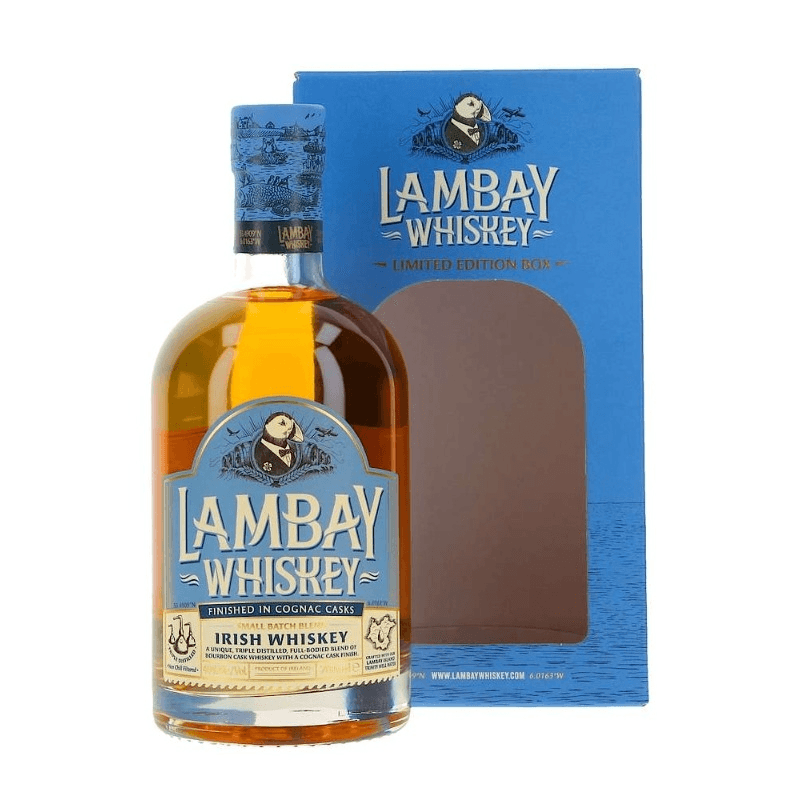
Lambay Small Batch Blend
Lambay Whiskey (Baring Family & Maison Camus)
Lambay Small Batch Blend is a whiskey born from an unlikely marriage — Irish triple-distilled spirit and French cognac cooperage, united by an island in the Irish Sea. The Cognac cask finish is not a gimmick; it adds a genuine floral and stone-fruit dimension that most blended Irish whiskeys lack entirely. And the sea-air finishing gives the whole package a maritime lightness that makes it dangerously easy to drink. At around $30, it's one of the most interesting experiments in Irish whiskey — and a reminder that where your casks breathe matters as much as what's inside them. Cocktail — "The Island Sour": Combine 2 oz Lambay Small Batch, 1 oz fresh lemon juice, 0.75 oz honey syrup, and 1 egg white. Dry shake vigorously, then shake with ice. Strain into a coupe and garnish with a few drops of Angostura on the foam. The honey and Cognac-cask character play beautifully against the citrus acid.
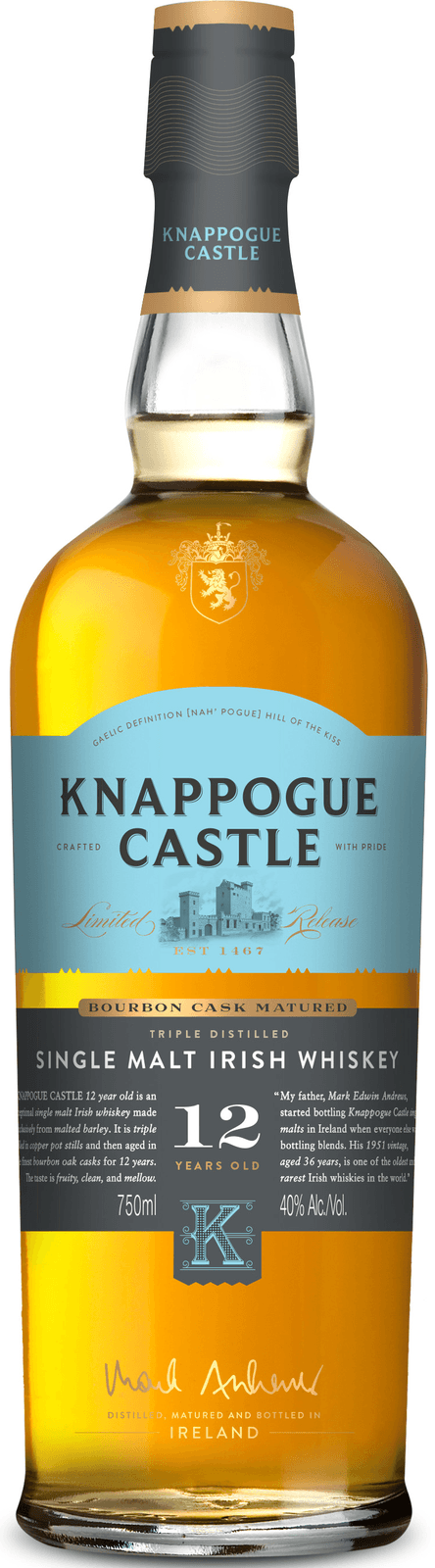
Knappogue Castle 12 Year Old
Cobblestone Brands
Knappogue Castle 12 is the proving ground for Irish single malt itself. When Mark Edwin Andrews began bottling these whiskies in the 1960s, Irish whiskey was synonymous with blends, and the idea that Ireland could produce world-class single malts seemed improbable to most. This 12-year-old, triple-distilled and aged entirely in bourbon oak, demonstrates the quiet power of Irish malt at its most elegant: smooth without being simple, gentle without being hollow. It proved that patience and purity were all Irish whiskey ever needed. Cocktail — The Castle Sour: 2 oz Knappogue Castle 12, 0.75 oz fresh lemon juice, 0.5 oz green apple syrup, 1 egg white. Dry shake, then shake with ice and strain into a coupe. Garnish with a thin apple slice. The whiskey's orchard fruit character shines through the frothy citrus.
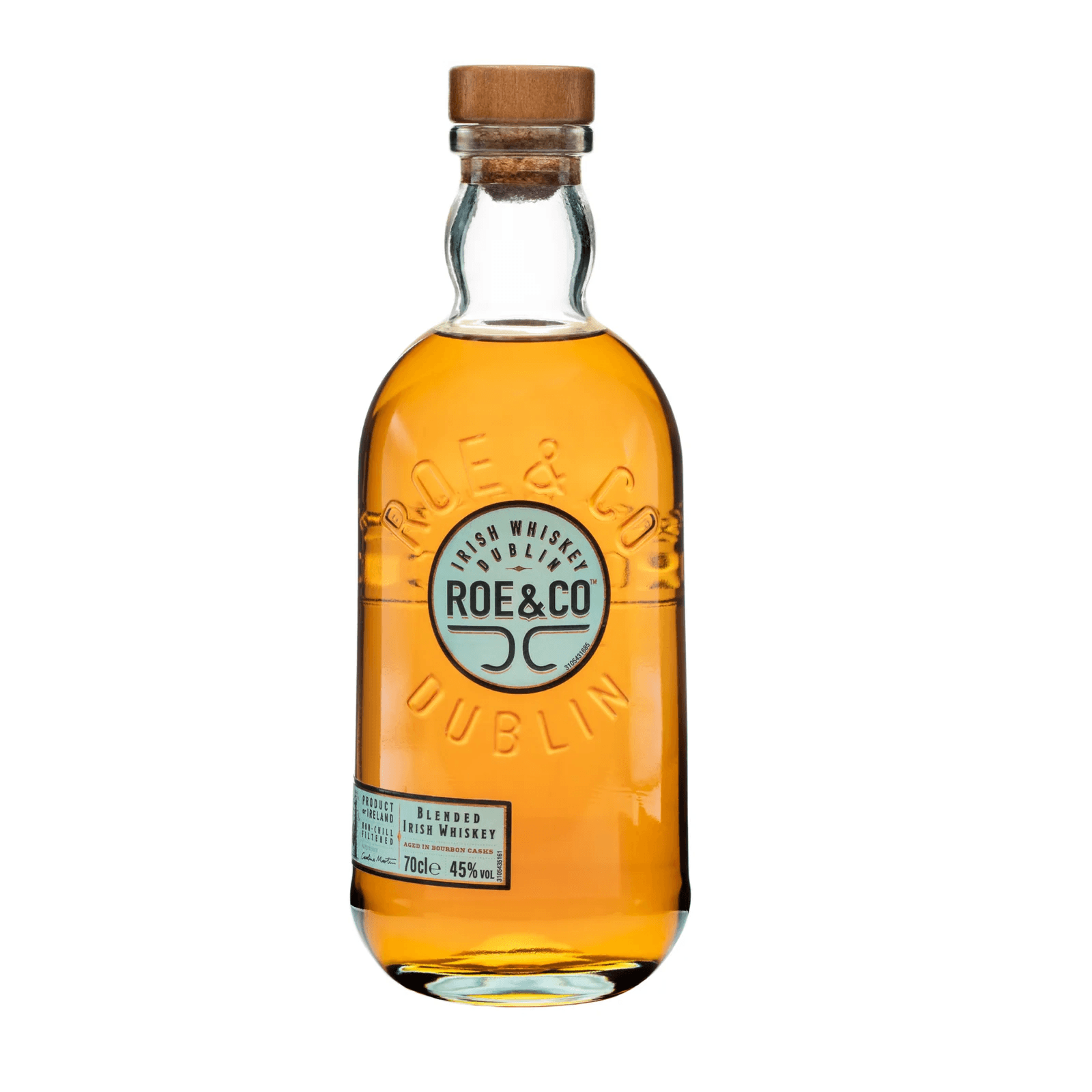
Roe & Co Blended Irish Whiskey
Diageo
Roe & Co is the resurrection of a name that once meant more to Irish whiskey than Jameson or Bushmills. George Roe’s original distillery was the largest in Europe, yet today most drinkers have never heard of him. Diageo’s revival blends rich malt and smooth grain whiskeys matured in a high proportion of first-fill bourbon barrels, then bottles at 45% ABV without chill filtration — a level of care that belies its modest price tag. At roughly thirty-five dollars, Roe & Co delivers the kind of creamy, spice-driven complexity that invites comparison with bottles twice its price.
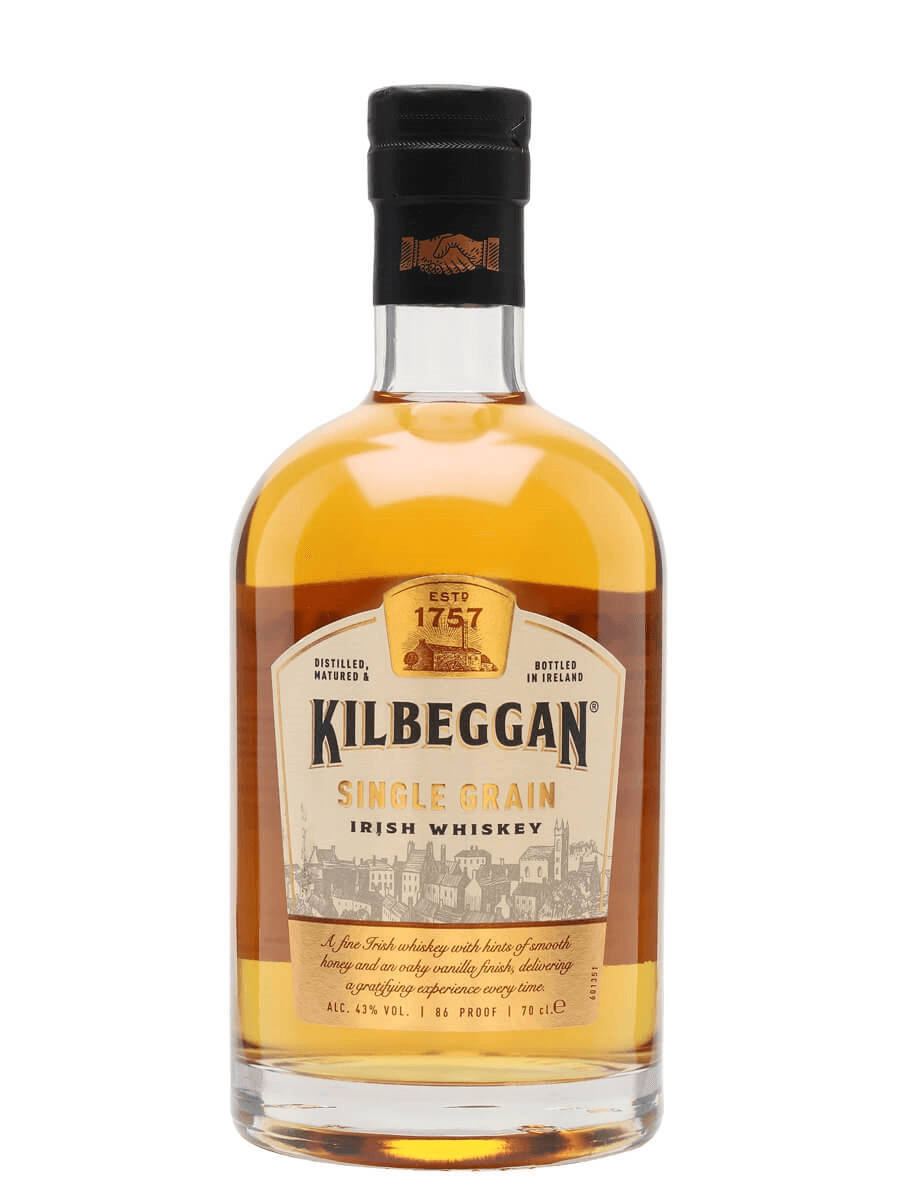
Kilbeggan Single Grain Irish Whiskey
Beam Suntory
The Kilbeggan distillery nearly vanished. After closing in 1957, it sat derelict until a group of local volunteers began restoring it in 1982 — cleaning pot stills by hand, patching stone walls, preserving equipment.
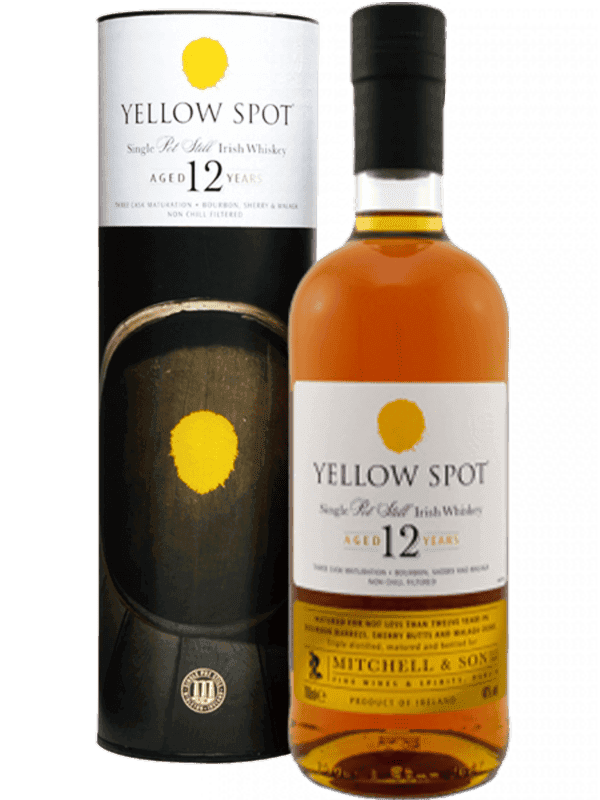
Yellow Spot 12 Year Old
Irish Distillers (Pernod Ricard)
Yellow Spot is the middle child of the Spot range, and arguably the most balanced. Three-cask blend: bourbon, sherry, and Malaga.
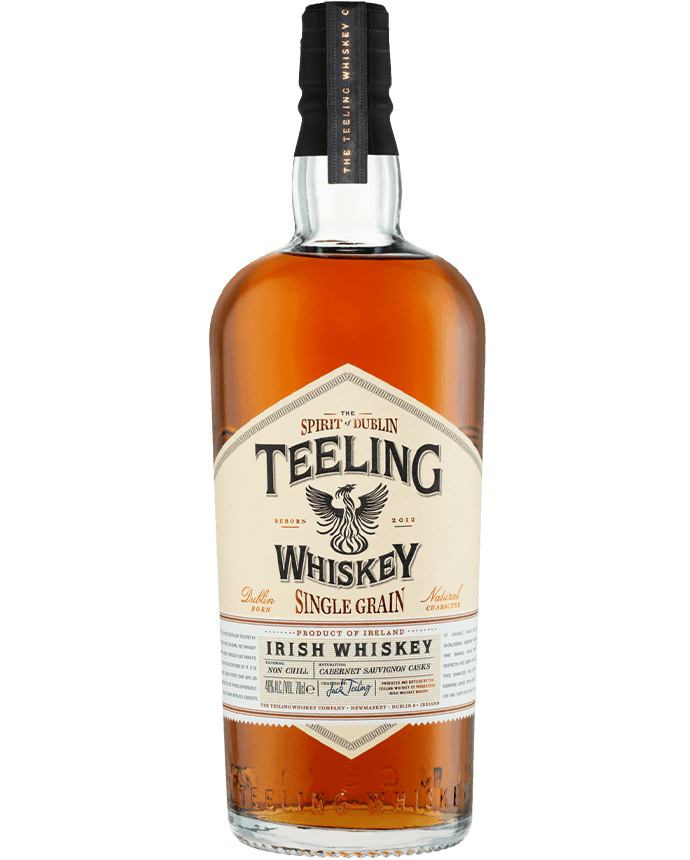
Teeling Single Grain Irish Whiskey
Teeling Whiskey Company
Grain whiskey gets little respect until you taste Teeling's version. Matured in Californian Cabernet Sauvignon casks, this single grain has the silkiness of a premium spirit and the depth of a well-aged whiskey. It's the secret that every Irish blend drinker has been unknowingly appreciating for decades, now bottled on its own terms. Serve it slightly chilled, neat, to anyone who claims Irish whiskey is predictable — this changes the conversation immediately.
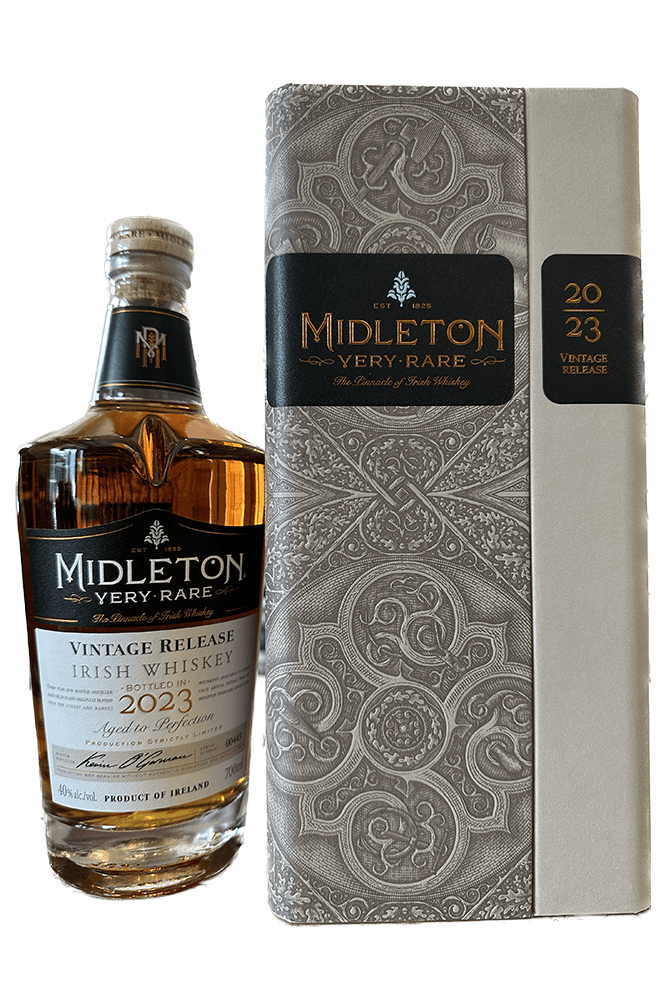
Midleton Very Rare 2024
Irish Distillers (Pernod Ricard)
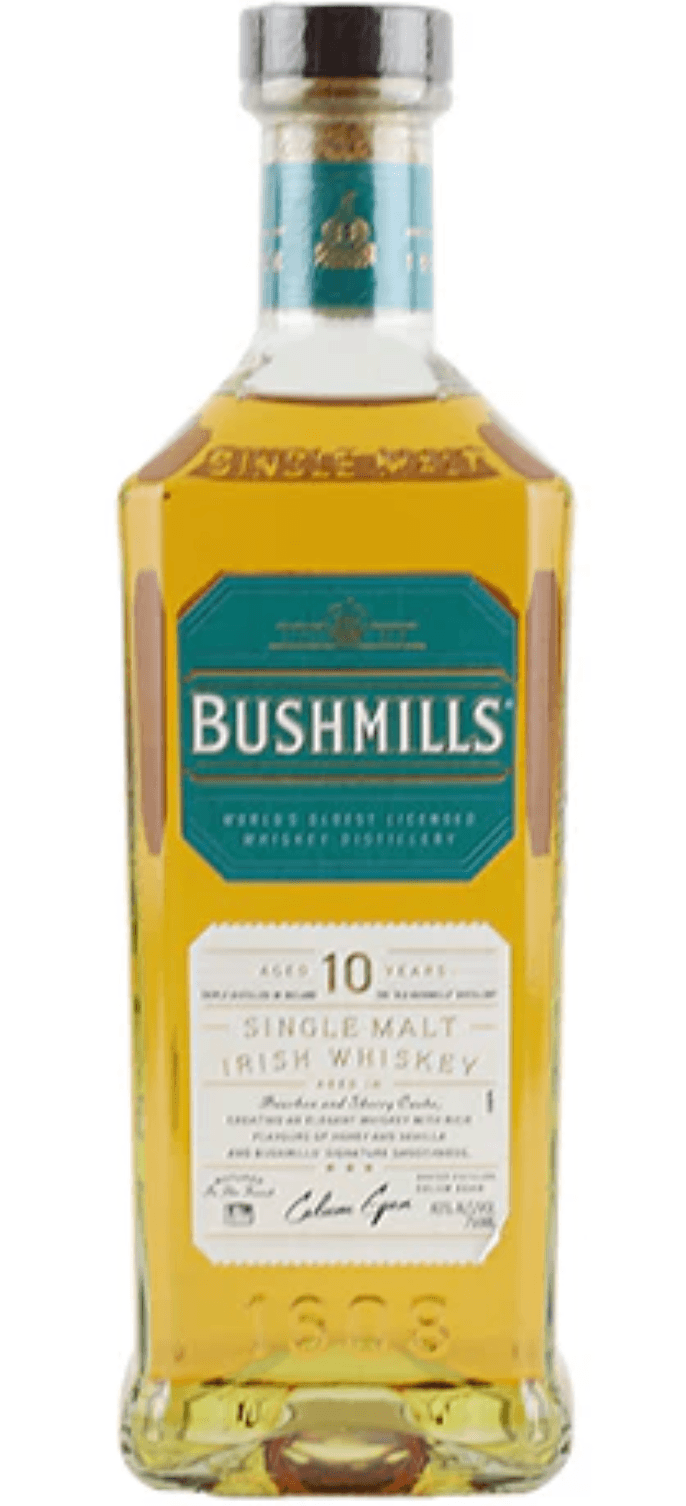
Bushmills 10 Year Old Single Malt
Proximo Spirits (Bushmills, est. 1608)
Bushmills 10 is the quiet aristocrat of Irish whiskey.
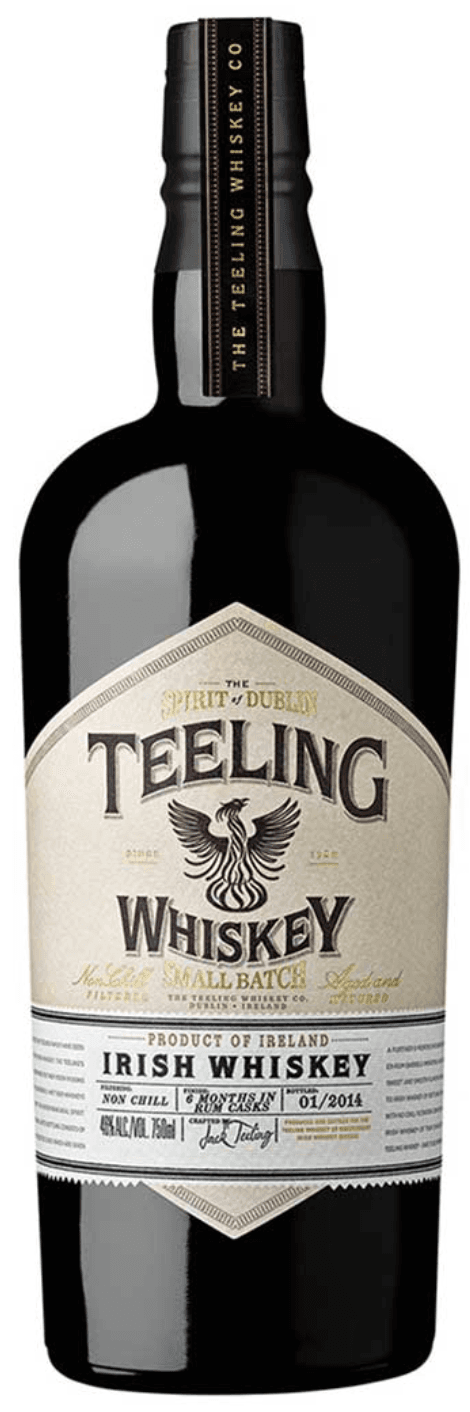
Teeling Small Batch
Teeling Whiskey Company (est. 2012)
The Teelings’ terroir isn’t soil — it’s Dublin itself. Jack and Stephen Teeling built their distillery in the Liberties, a neighborhood that had been the beating heart of Irish whiskey for two centuries before the industry collapsed. The Liberties once held more distilleries per square mile than anywhere on earth. The Teelings’ bet was that Dublin’s whiskey DNA still mattered — that making whiskey in the city, near the original water sources and in the cultural context that shaped Irish whiskey, would produce something different from the industrial parks where most Irish whiskey is now made. The Small Batch expression showcases their innovation: finishing in Central American rum barrels adds a tropical sweetness that no other Irish whiskey offers, while bottling at 46% ABV (non-chill filtered) preserves the full texture. It’s a whiskey that tastes like a city reclaiming its birthright.
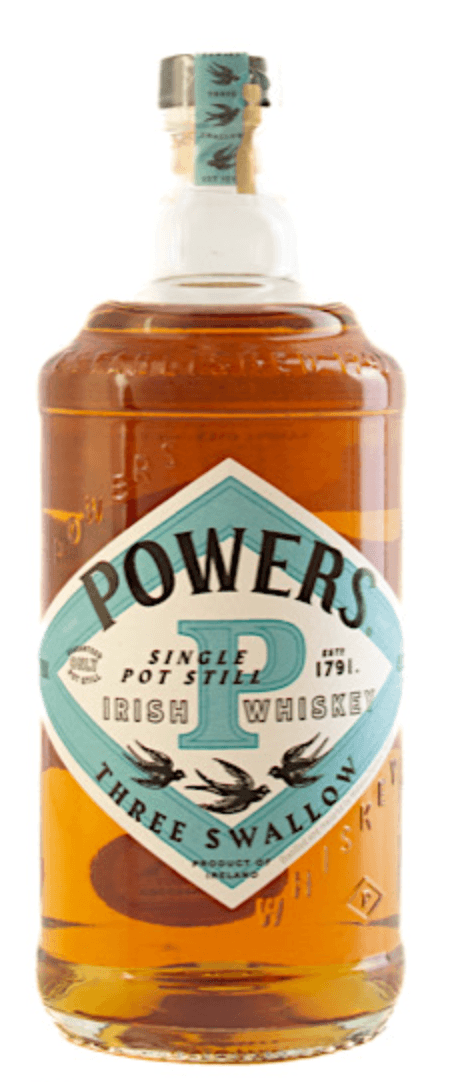
Powers Three Swallow Release
Irish Distillers / Pernod Ricard (Powers, est. 1791)
Powers’ obsession is pot still whiskey — the uniquely Irish style made from a mash of both malted and unmalted barley that produces a heavier, spicier, more characterful spirit than any other whiskey tradition on earth. When Irish whiskey collapsed in the twentieth century and blends took over, Powers never abandoned the pot still. The Three Swallow release takes its name from the quality mark that Powers’ tasters once stamped on approved casks — three swallows of whiskey, three stamps of approval. The 3% sherry component adds just enough dried fruit complexity to round the edges without softening the muscular pot still character. At $35–42, this is one of the most underpriced whiskeys in the world for what it delivers.
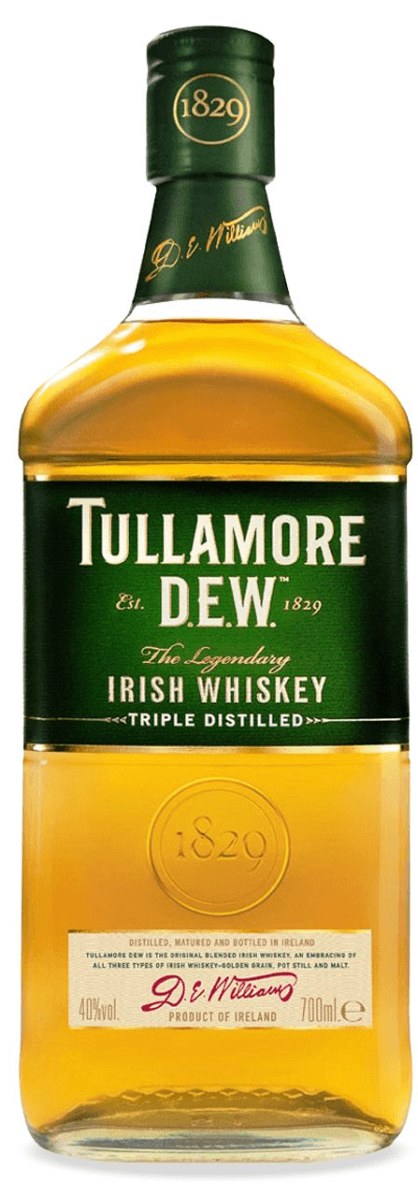
Tullamore D.E.W. Original
William Grant & Sons (Tullamore D.E.W., est. 1829)
Tullamore D.E.W. went against the grain in the most dramatic way possible: it came back from the dead. When the old Tullamore distillery closed in 1954, the brand survived as a label without a home, its whiskey sourced from other distilleries for sixty years. Then in 2014, William Grant & Sons built a brand-new €35 million distillery in Tullamore — the first new greenfield distillery in Ireland in over a century — bringing whiskey-making back to the town whose name is literally on the bottle. The triple blend of pot still, malt, and grain — triple distilled and triple cask matured — delivers surprising complexity at a price point that makes it one of the best introductions to Irish whiskey on the market.
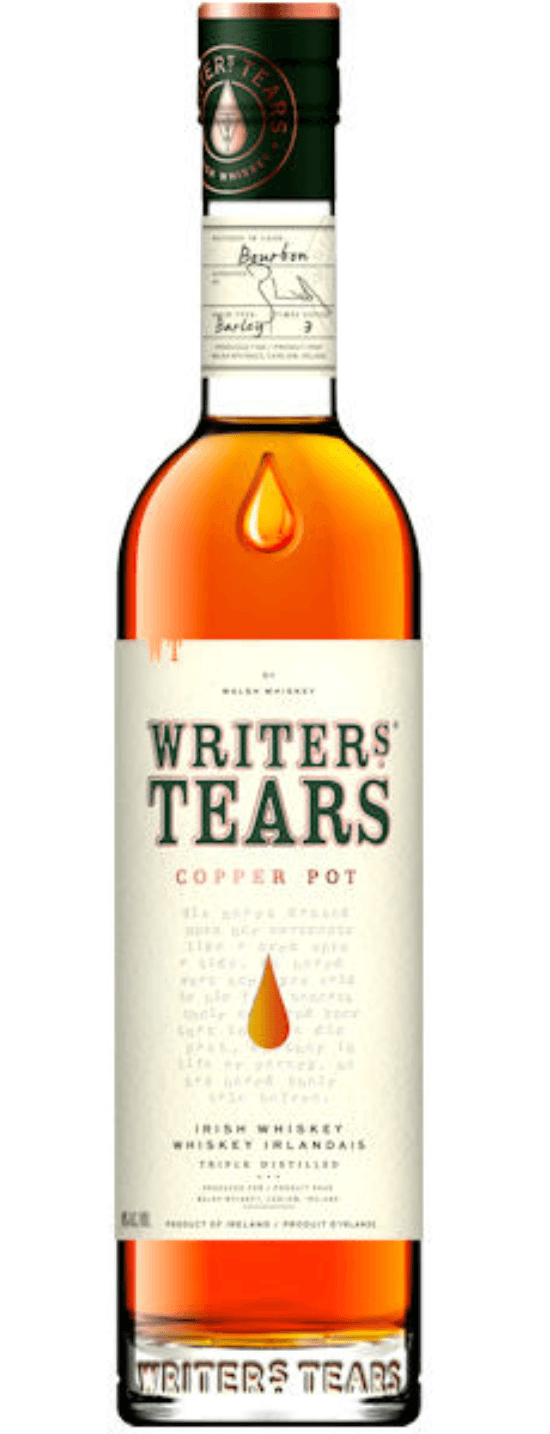
Writers’ Tears Copper Pot
Walsh Whiskey Distillery (Bernard & Rosemary Walsh, founders)
Writers’ Tears earns its literary name. Oscar Wilde, James Joyce, Brendan Behan — Irish writers and Irish whiskey have been inseparable for centuries, and the Walshes bottled that romance into something genuinely beautiful. The blend of single pot still and single malt creates a texture that’s both silky and spiced, with the unmalted barley adding the characteristic Irish “pot still bite” that gives it backbone. At under $40, it punches well above its price point and serves as a perfect introduction to what makes Irish whiskey different from Scotch.
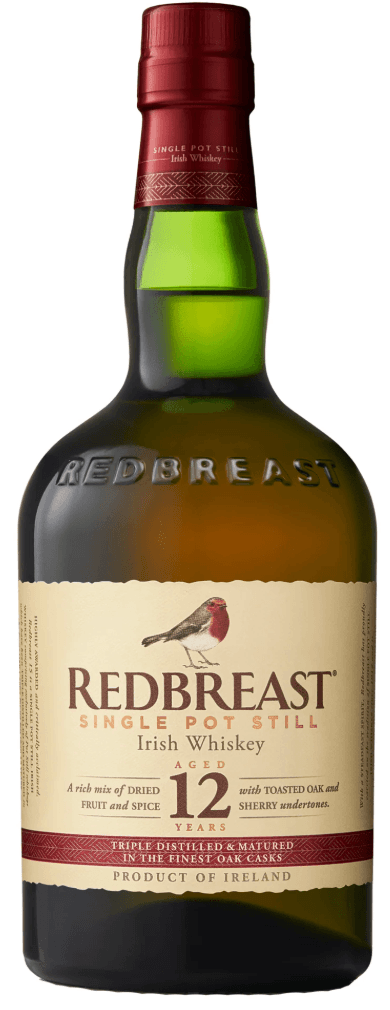
Redbreast 12 Year Old
Pernod Ricard (Irish Distillers)
Redbreast 12 is the definitive pot still Irish whiskey — the one that shows you what the fuss is about. The 50/50 split of malted and unmalted barley creates a texture that’s impossible to achieve with malt alone: creamy, spicy, and full-bodied in a way that triple distillation normally smooths out. The combination of ex-bourbon honey and sherry dried fruit is seamless. The name comes from a bird-loving Gilbeys chairman in 1912, but the whiskey itself has roots stretching back much further — it’s one of only two single pot still brands produced nearly continuously since the early 1900s.

Waterford Sheestown Edition 6.1 Single Malt Irish Whiskey
Waterford
Waterford's single-farm approach strips away blending shortcuts and asks whether Irish terroir is real. Sheestown 6.1 answers emphatically. This is a whiskey defined by what it doesn't add — no peat, no heavy cask influence — letting the grain speak in its own voice.

Ardmore 12 Year Old Highland Single Malt Scotch Whisky
Ardmore
Ardmore occupies a rare middle ground—a Highland distillery that embraces peat without surrendering to it. This 12-year-old expression shows what happens when smoke serves as seasoning rather than the main course. It's an essential bottle for anyone exploring the spectrum between Speyside sweetness and Islay intensity.

Method and Madness Single Malt Irish Whiskey Finished in Acacia Wood Casks
Method and Madness
Method and Madness is Midleton's playground for pushing Irish whiskey's boundaries, and this acacia wood finish captures the issue's theme with remarkable precision. The experimental cask choice creates a whiskey that tastes like it was pulled from the wood at the exact perfect moment—ripe, radiant, and exquisitely balanced. A day earlier and the wood influence would whisper; a day later it might shout. As it stands, the timing was everything.

Kilbeggan 14 Year Old Single Malt Irish Whiskey
Kilbeggan
Kilbeggan's 14-year single malt demonstrates the quiet elegance possible from one of Ireland's oldest licensed distilleries. Extended maturation has allowed the spirit's natural honeyed character to develop real complexity, resulting in a whiskey that feels unhurried and assured.

Yamazaki 12 Year
Yamazaki
Yamazaki 12 is a masterclass in balance and subtlety. It doesn't shout — it earns your attention through precision, layering flavors in a way that rewards patience. This is the bottle that put Japanese whisky on the global map, and it remains a benchmark for what elegance in single malt can look like.

Waterford Ballymorgan Edition 4.1 Single Malt Irish Whiskey
Waterford
Waterford's single-farm origin approach is controversial to some, revelatory to others. Ballymorgan 4.1 makes a compelling case — this is whiskey that tastes like somewhere specific. The distillery's commitment to traceability gives this pour a philosophical weight to match its palate density.

Waterford Knockeen Edition 1.1 Single Malt Irish Whiskey
Waterford
Waterford's terroir-driven approach produces whiskies that taste like somewhere, not just something. The Knockeen farm's barley delivers a distinctive mineral quality that separates this from the typical Irish malt profile. At 50% ABV without chill filtration, the texture and detail are fully intact.

Waterford Rathclogh Edition 4.1 Single Malt Irish Whiskey
Waterford
Waterford's obsession with terroir continues to produce genuinely distinctive whiskey. Rathclogh Edition 4.1 draws from barley grown on the Rathclogh farm in County Kilkenny, and the resulting spirit carries a minerality and freshness that sets it apart. This is Irish whiskey that asks you to think about soil.

Nephin Single Malt Irish Whiskey
Nephin Whiskey
Nephin represents the new wave of small-batch Irish whiskey from Ireland's western coast. It doesn't try to compete on age or power — instead it leans into elegance and terroir-driven character. A worthy discovery for anyone who thinks Irish whiskey begins and ends in Midleton.

Waterford Tinnashrule Edition 3.1 Single Malt Irish Whiskey
Waterford
Waterford's single-farm origin philosophy makes the binding agent literal: a specific piece of earth, a single barley harvest. Edition 3.1 from Tinnashrule shows how terroir concepts, once reserved for wine, can produce meaningful variation in whiskey. The earthy mineral thread running through this dram is the proof.

Waterford Dunmore Edition 3.1 Single Malt Irish Whiskey
Waterford
Waterford's terroir-driven approach finds its purest expression in single-farm bottlings like Dunmore. This third edition shows a whiskey that is simultaneously mineral-heavy and feather-light — grounded in the earth it came from, yet lifted by careful distillation and precise cask management.

Waterford Clonellan Edition 1.1 Single Malt Irish Whiskey
Waterford
Waterford's terroir-driven approach reaches its most compelling form in lesser-known farm editions like this one. The Clonellan barley imparts a distinctive cereal richness that sets it apart from its siblings. This is Irish whiskey asking you to think about dirt, rainfall, and latitude.

Waterford Sheestown Edition 4.1 Single Malt Irish Whiskey
Waterford
Waterford's terroir-driven project continues to produce compelling results. This fourth edition from the Sheestown farm shows how Irish barley's origin shapes whiskey in meaningful ways. The mineral backbone here sets it apart from conventional Irish single malts — it drinks like a specific place, not a style.