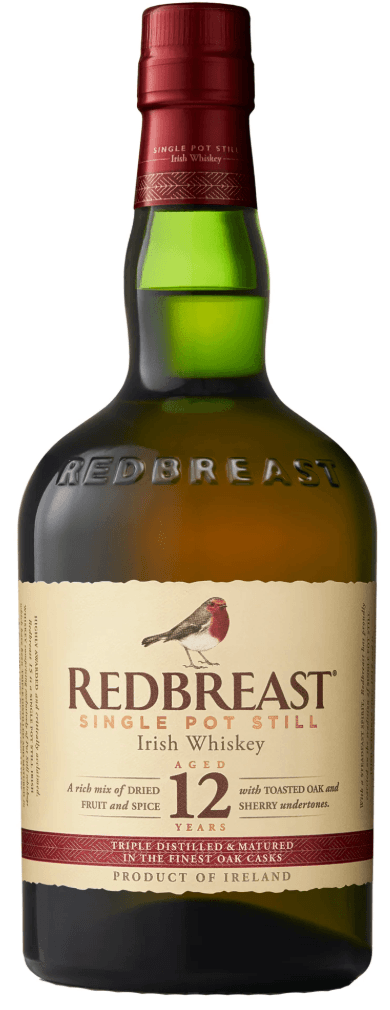
Redbreast 12 Year Old
Pernod Ricard (Irish Distillers) · Midleton Distillery, Midleton, County Cork, Ireland
Redbreast 12 is the definitive pot still Irish whiskey — the one that shows you what the fuss is about. The 50/50 split of malted and unmalted barley creates a texture that’s impossible to achieve with malt alone: creamy, spicy, and full-bodied in a way that triple distillation normally smooths out. The combination of ex-bourbon honey and sherry dried fruit is seamless. The name comes from a bird-loving Gilbeys chairman in 1912, but the whiskey itself has roots stretching back much further — it’s one of only two single pot still brands produced nearly continuously since the early 1900s.
Nose
Dried orange peel, toasted nutmeg, toasted wood, vanilla, gentle spice
Palate
Silky smooth — cinnamon, clove, toffee, marzipan, fragrant vanilla, dried fruits, walnut
Finish
Lengthy and satisfying with lingering baking spices, custard, and balanced malt sweetness
- Mash Bill
- 50% Malted Barley, 50% Unmalted Barley (Munster-sourced)
- Distillation
- Triple Distilled in Copper Pot Stills
- Maturation
- Ex-bourbon barrels and Oloroso sherry butts
Cocktail Suggestion
Cocktail — The Redbreast Orchard: 2 oz Redbreast 12 · 1 oz fresh pressed apple cider · 1/2 oz honey syrup · 2 dashes Angostura bitters. Stir with ice, strain into a rocks glass over a large cube. Garnish with a thin apple fan.
Food Pairing
Pair with: Warm apple crumble with vanilla custard — the orchard fruit and baking spice in both are a natural match.
Be the first to comment.
Leave a comment
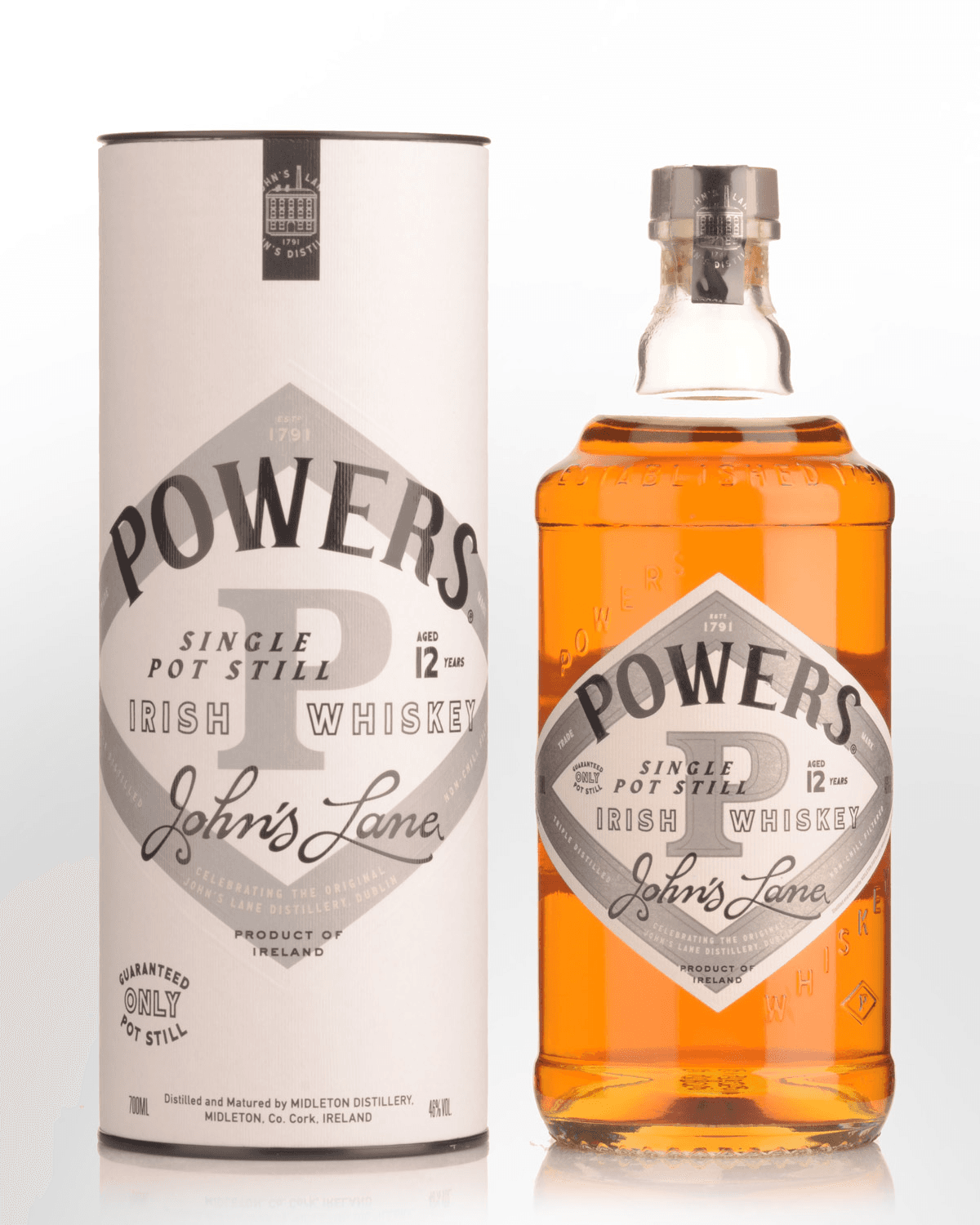
Powers John's Lane 12 Year Old
Pernod Ricard (Irish Distillers)
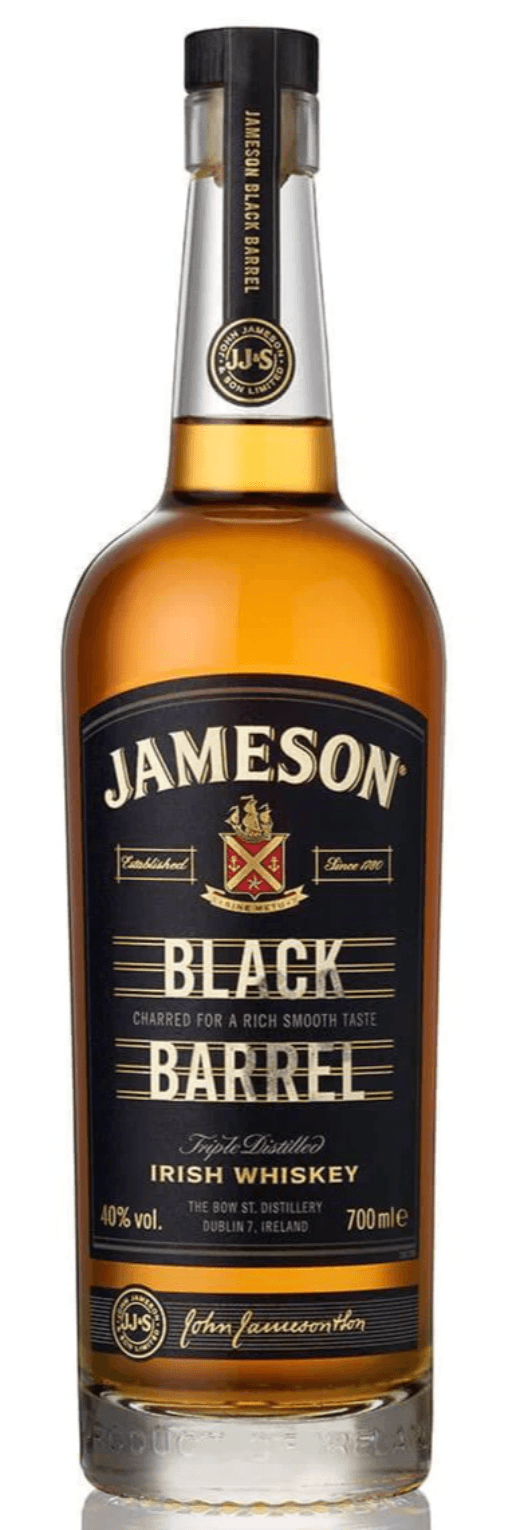
Jameson Black Barrel
Irish Distillers (Pernod Ricard; Jameson, est. 1780)
Jameson Black Barrel is what happens when the world's most approachable Irish whiskey gets a lesson in patience. The key difference from standard Jameson is the double-charred bourbon barrels — a process where spent barrels are re-charred before the whiskey goes in, reactivating the wood's sugars and deepening the flavor extraction. It's an extra step that takes extra time, and the result is a whiskey with noticeably more weight, complexity, and character. The pot still component adds a creamy, spicy backbone that the grain whiskey alone couldn't provide, and the char gives everything a toasty, caramelized edge. At its price point, Black Barrel may be the best value in Irish whiskey — complex enough to sip neat, versatile enough for cocktails, and proof that patience in the cooperage pays dividends in the glass.

The Fighting 69th Irish Whiskey
The Fighting 69th
A crowd-pleasing blended Irish whiskey that punches above its modest price point, delivering honest grain character and an easy-drinking profile that suits both newcomers and seasoned enthusiasts. Its honeyed, cereal-forward nature makes it a natural companion for the harvest table. A straightforward dram that speaks to the generosity of grain without pretension.

Mourne Dew Blended Irish Whisky
Mourne Dew
Mourne Dew is an unpretentious, everyday Irish blend that delivers gentle oak influence and balanced sweetness at a friendly price point. It's an honest dram that lets its cask maturation do the talking—simple cartography, drawn in clean, pale oak. A fine aperitif whiskey or mixer that punches above its modest shelf price.

Glendalough Pot Still Irish Oak Finished Irish Whiskey
Glendalough
Glendalough's commitment to foraging the Wicklow Mountains extends to their whiskey-making, using native Irish oak for finishing—a painstaking choice given the scarcity and irregularity of the wood. The result is a pot still whiskey with unmistakable terroir, proving that craft without shortcut yields something no shortcut could replicate.

Mosswood Sherry Aged Irish Whiskey
Mosswood
Mosswood's Sherry Aged Irish Whiskey is a quiet revelation: sourced Irish spirit given a second education in sherry barrels on the California coast, resulting in a contemplative dram rich with dried fruit and nutty complexity. It rewards patience and fits beautifully beside an evening's reading. A compelling example of how cask selection can write the final chapter of a whiskey's story.