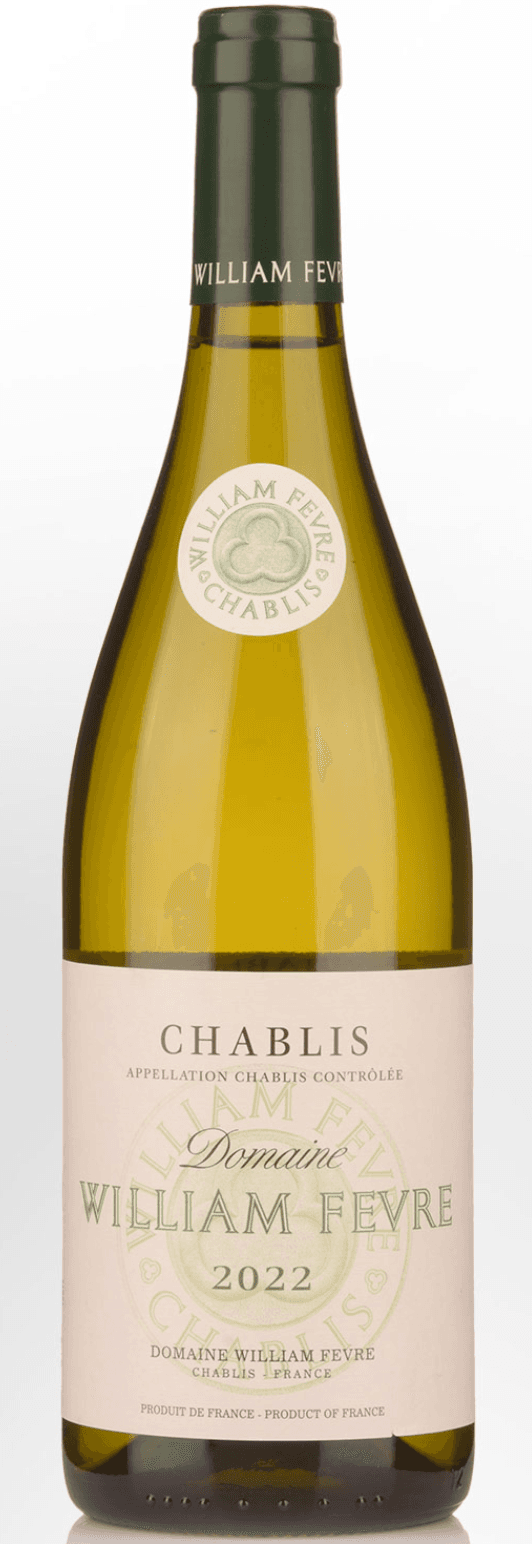
Domaine William Fèvre Chablis 2022
Domaine William Fèvre / Henriôt Group (est. 1959) · Domaine William Fèvre, Chablis, Burgundy, France
If any wine on earth proves that terroir is real, it is Chablis. The appellation sits on Kimmeridgian limestone — a geological formation laid down during the Late Jurassic period when this part of Burgundy was a tropical sea. Dig into a Chablis vineyard and you’ll find fossilized oyster shells (Exogyra virgula) embedded in the marl. William Fèvre understood this better than anyone: he was among the first vignerons to map the precise soil differences between Chablis parcels and to vinify accordingly. The domaine’s village-level Chablis is fermented and aged entirely in stainless steel — a deliberate choice to let the limestone speak without oak interference. The result is a Chardonnay stripped of everything except what the soil and climate put there: mineral tension, razor-sharp acidity, and a saline quality you can taste with your eyes closed. For readers of The Definitive Pocket Guide to Chablis, this is the benchmark.
Nose
Wet stone, green apple, lemon zest, white flowers, chalk dust, crushed seashell, and a briny freshness that recalls the ancient ocean floor.
Palate
Taut and precise — Granny Smith apple, lime, oyster shell minerality, flinty tension, a steely acidity that slices across the palate, and a saline quality that lingers between sips.
Finish
Long and mineral-driven with lingering citrus, chalk, iodine, and an almost electric acidity that makes the mouth water.
- Varietal
- Chardonnay
- Blend
- 100% Chardonnay from Kimmeridgian limestone vineyards
Cocktail Suggestion
Cocktail — The Chablis Spritz: 3 oz Domaine William Fèvre Chablis · 1 oz elderflower liqueur (St-Germain) · 2 oz sparkling water · lemon twist. Build over ice in a large wine glass. The Chablis’s mineral precision keeps this elegant and dry where lesser whites would turn sweet.
Food Pairing
Pair with: Fresh oysters with mignonette. The definitive Chablis pairing — and one that borders on cliché because it works so perfectly. The wine’s fossilized-seabed minerality, briny salinity, and electric acidity were born to meet a raw oyster. Pour the Chablis, shuck the oysters, and taste 150 million years of terroir.
Be the first to comment.
Leave a comment

Domaine Huet Vouvray Le Haut-Lieu Moelleux 2023
Domaine Huet
Domaine Huet's Le Haut-Lieu Moelleux is an exercise in controlled sweetness — the heat of the 2023 vintage concentrated sugars that the biodynamic estate's limestone soils kept in perfect tension with acidity. It is a wine that tempers richness with structure, proof that fire from above (sun) and below (mineral-rich stone) can collaborate to extraordinary effect.

Domaine des Roches Neuves Saumur Blanc Terres Chaudes 2023
Domaine des Roches Neuves
Thierry Germain's biodynamically farmed Chenin Blanc from the Terres Chaudes parcel delivers a wine where the tuffeau limestone substrate is as much a character as the grape. Wood plays virtually no role here — the expression is all terroir, acid, and fruit. A white wine for those who believe restraint is its own form of generosity.

Donnafugata Ben Ryé Passito di Pantelleria DOC 2022
Donnafugata
Ben Ryé is Italy's most celebrated passito, made from Zibibbo grapes sun-dried on the wind-blasted volcanic island of Pantelleria. The heat of the African-influenced climate concentrates sugars, but Donnafugata's meticulous winemaking preserves acidity and freshness. A dessert wine that transcends the category.

Domaine Leflaive Mâcon-Verzé 2022
Domaine Leflaive
Domaine Leflaive's Mâcon-Verzé is a masterclass in value from one of Burgundy's most respected white wine producers. The biodynamic farming and careful winemaking bring a precision to Mâconnais Chardonnay that elevates it well beyond its appellation. For those priced out of Puligny, this is the door in.