Issue 6 · April 1, 2026
Taste the Map
Theme: Terroir Beyond Wine
How place — sea spray, volcanic soil, limestone water, Dartmoor softness — writes itself into every bottle.
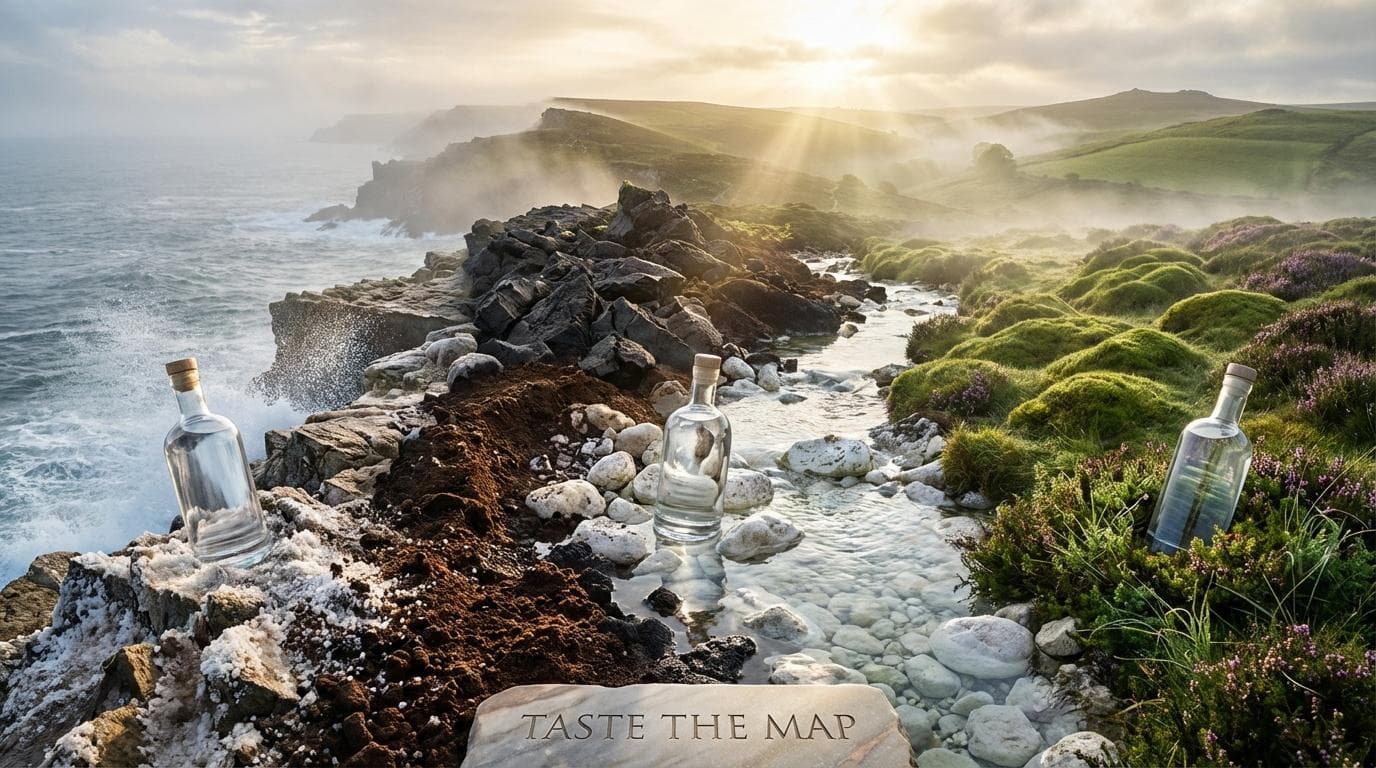

Every bottle in today’s issue tastes like a place. Not a vague sense of “somewhere” — a specific, unmistakable somewhere. Talisker tastes like the Isle of Skye: sea spray, black pepper, peat smoke, and the relentless wind that whips across the Minginish peninsula. Plymouth Gin tastes like the port city it’s named for: soft Dartmoor water, a naval heritage that demanded a gin sturdy enough for the Royal Navy, and a recipe that hasn’t changed since 1793. Flor de Caña tastes like Nicaraguan volcanic soil — because the sugarcane grows in the shadow of an active volcano, and that mineral-rich terroir shows up in the glass twelve years later.
The French call it terroir — the idea that a product is an expression of the land, the climate, and the culture where it’s made. Wine people use the word constantly. But terroir isn’t exclusive to wine. A bourbon filtered through Kentucky limestone water carries that limestone. A tequila made from highland agave carries the altitude. A whisky distilled beside the sea carries the salt air. Today’s eight prove that the best bottles aren’t just made somewhere — they’re from somewhere. You can taste the difference. Let’s pour.
BOURBON Elijah Craig Small Batch
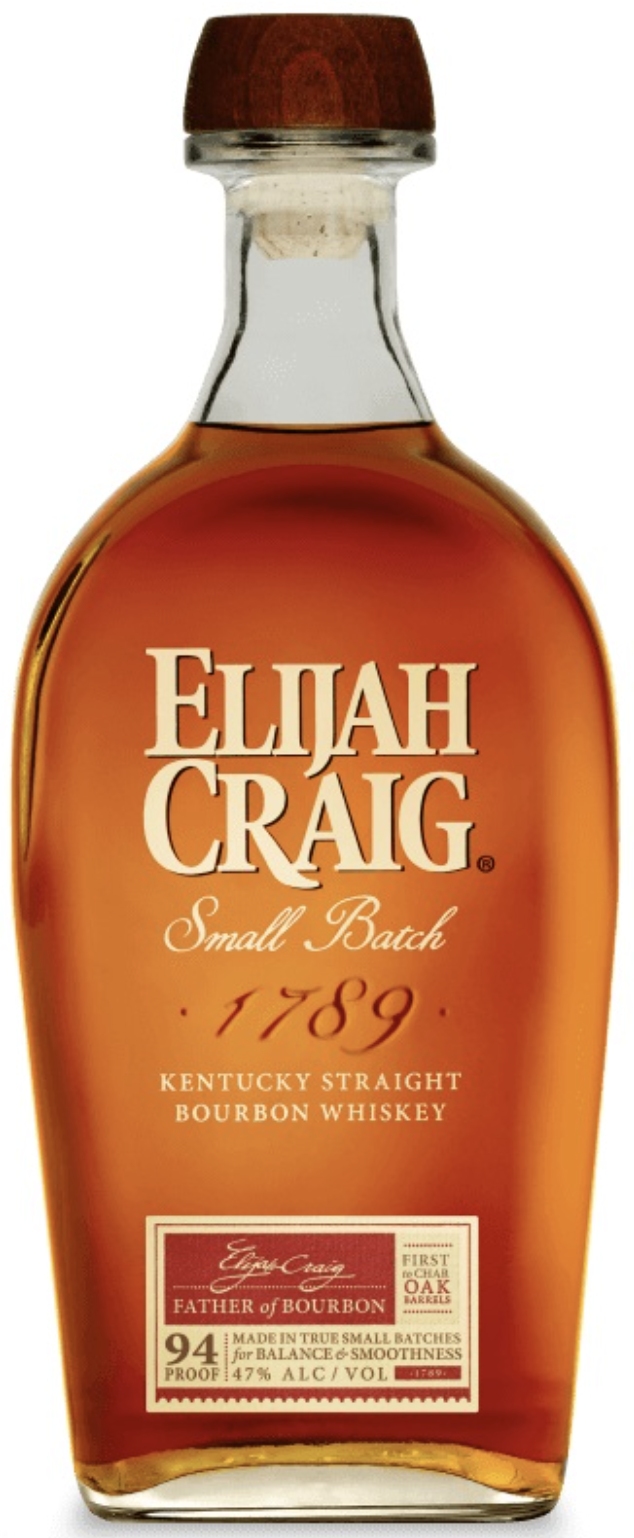
Bardstown, Kentucky — where Heaven Hill ages its bourbon in rickhouses scattered across the rolling hills of Nelson County, each warehouse exposing barrels to different temperatures, humidity levels, and air currents that shape the whiskey inside — and where the brand’s namesake, a Baptist minister, is credited with first charring the inside of an oak barrel in 1789.
Classification: Kentucky Straight Bourbon Whiskey
Company: Heaven Hill Distillery (Elijah Craig, est. 1986)
Distillery: Heaven Hill Bernheim Distillery, Louisville, Kentucky; aged in Bardstown, Kentucky
Proof: 94 (47% ABV)
Age: 8–12 years (blend of ages; no age statement)
Mash Bill: 78% Corn / 10% Rye / 12% Malted Barley
Color: Deep amber with burnt orange highlights
MSRP: $30–$35 (750 mL)
Nose: Warm caramel, toasted oak, vanilla custard, dried cherry, a hint of nutmeg, and a faint smokiness from the deep char.
Palate: Rich and full-bodied — brown sugar, dark chocolate, baking spice, charred oak, orange peel, roasted nuts, and a buttery mid-palate that builds slowly into assertive barrel char.
Finish: Long and warming with lingering toffee, cinnamon, charred wood, and a dry oakiness that slowly fades into sweet vanilla.
Cocktail — The Bardstown Old Fashioned: 2 oz Elijah Craig Small Batch · 1 bar spoon rich demerara syrup · 2 dashes Angostura bitters · 1 dash walnut bitters. Stir with ice 30 seconds, strain over a large cube. Garnish with an orange coin. The 94-proof backbone and deep char character make this an Old Fashioned that leans dark and warm.
Pair with: Smoked brisket with a brown sugar and black pepper rub. The bourbon’s charred oak and caramel match the bark on the brisket, while the baking spice echoes the pepper rub — a Kentucky-meets-Texas pairing.
Awards: Gold, San Francisco World Spirits Competition (multiple years). Wine Enthusiast 90 Points. Named Best Buy Bourbon by multiple publications.
SCOTCH WHISKY Talisker 10 Year Old
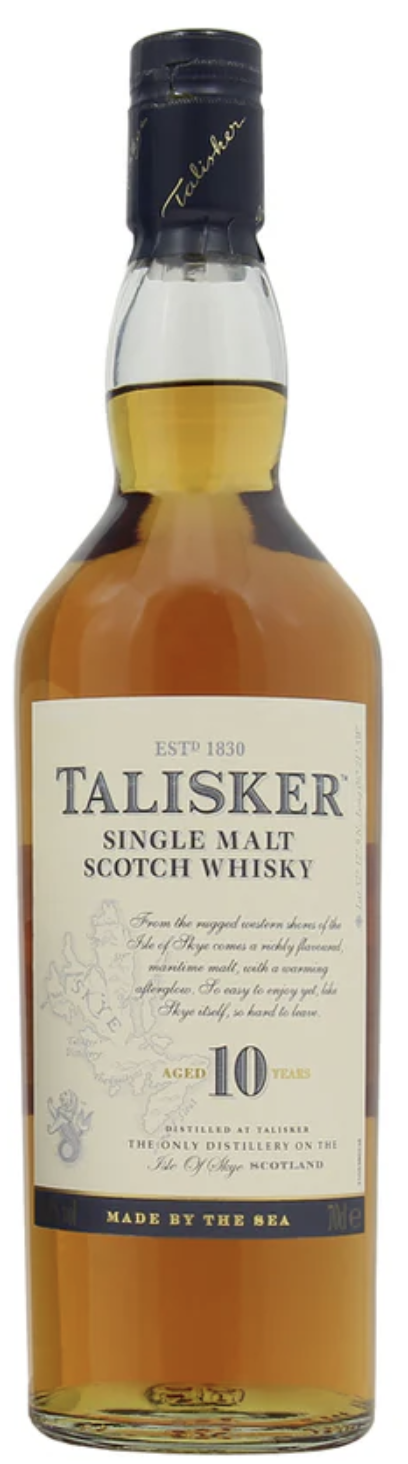
Carbost, Isle of Skye — where Scotland’s oldest surviving island distillery sits on the shore of Loch Harport, battered by Atlantic storms and surrounded by the Cuillin mountain range, producing a whisky so infused with its coastal environment that Robert Louis Stevenson called it “the king o’ drinks.”
Classification: Island Single Malt Scotch Whisky
Company: Diageo (Talisker Distillery, est. 1830)
Distillery: Talisker Distillery, Carbost, Isle of Skye
Proof: 91.6 (45.8% ABV)
Age: 10 Years
Mash Bill: 100% Malted Barley
Distillation: Double distilled in copper pot stills with unique swan-neck lyne arms that loop back on themselves
Maturation: 10 years in refill American oak casks
Filtered: Non-chill filtered
Color: Bright gold with amber edges
MSRP: $55–$70 (750 mL)
Nose: Sea salt, black pepper, bonfire smoke, citrus peel, damp earth, and an iodine note that smells like standing on Skye’s rocky shoreline.
Palate: Explosive and assertive — cracked black pepper, smoked malt, dried chili flakes, sea spray, sweet malt, and a volcanic warmth that builds across the palate like a slow wave.
Finish: Long and peppery with lingering smoke, maritime salt, dried herbs, and a warming sweetness that emerges after the peat recedes.
Cocktail — The Skye Penicillin: 2 oz Talisker 10 · oz fresh lemon juice · oz honey-ginger syrup · oz Laphroaig 10 float. Shake first three ingredients with ice, strain into a rocks glass over fresh ice, float the Laphroaig. The Talisker’s pepper and smoke amplify the ginger while the honey rounds it out.
Pair with: Pan-seared halibut with seaweed butter and crispy capers. The whisky’s maritime salt and smoke mirror the sea flavors, while the black pepper cuts through the richness of the butter.
Awards: 91 Points, Wine Enthusiast. Gold, International Wine & Spirit Competition 2019. Part of Diageo’s Classic Malts of Scotland.
IRISH WHISKEY Teeling Small Batch
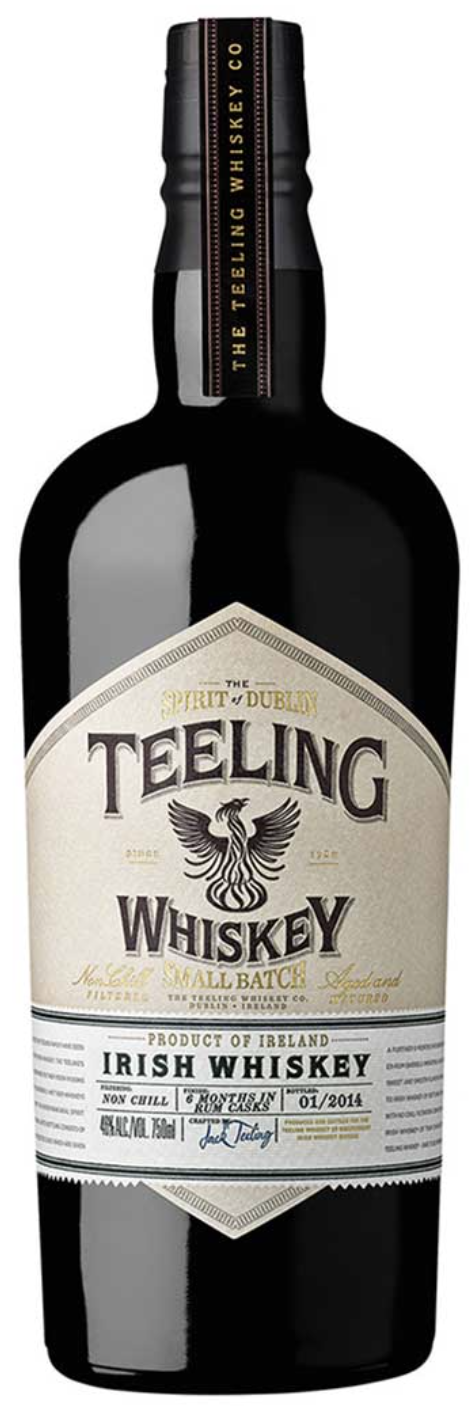
Dublin, Ireland — where the Teeling family opened Dublin’s first new whiskey distillery in 125 years in 2015, reviving whiskey-making in the city’s Liberties district, once home to seventeen distilleries, and where their small batch expression finishes in Central American rum barrels — a technique no other Irish whiskey producer had attempted.
Classification: Blended Irish Whiskey
Company: Teeling Whiskey Company (est. 2012)
Distillery: Teeling Distillery, The Liberties, Dublin 8, Ireland
Proof: 92 (46% ABV)
Age: NAS
Mash Bill: Blend of malt and grain whiskey
Distillation: Triple distilled in copper pot stills
Maturation: Aged in ex-bourbon barrels, finished in Central American rum casks
Color: Rich gold with honeyed highlights
MSRP: $28–$35 (750 mL)
Nose: Vanilla, ripe banana, cinnamon, toasted coconut, dried apricot, and a rum-sweetness that lifts the traditional Irish grain character.
Palate: Smooth and layered — brown sugar, tropical fruit, clove, toasted oak, citrus zest, and a spiced warmth from the rum cask influence that builds without overwhelming the grain backbone.
Finish: Medium-long with lingering caramel, dried tropical fruit, gentle spice, and a dry grain note that anchors the rum cask sweetness.
Cocktail — The Liberties Rum Punch: 2 oz Teeling Small Batch · 1 oz fresh lime juice · oz pineapple juice · oz orgeat · 2 dashes Angostura bitters. Shake with ice, strain over crushed ice. Garnish with a pineapple leaf and grated nutmeg. The rum cask finish makes this Irish whiskey sing in a tropical cocktail.
Pair with: Glazed ham with pineapple and clove. The whiskey’s rum cask sweetness and tropical fruit echo the glaze, while the clove note in the finish mirrors the studded ham.
Awards: World’s Best Irish Blend, World Whiskies Awards 2019. Gold, San Francisco World Spirits Competition 2020. Gold, International Spirits Challenge.
TEQUILA Siete Leguas Reposado
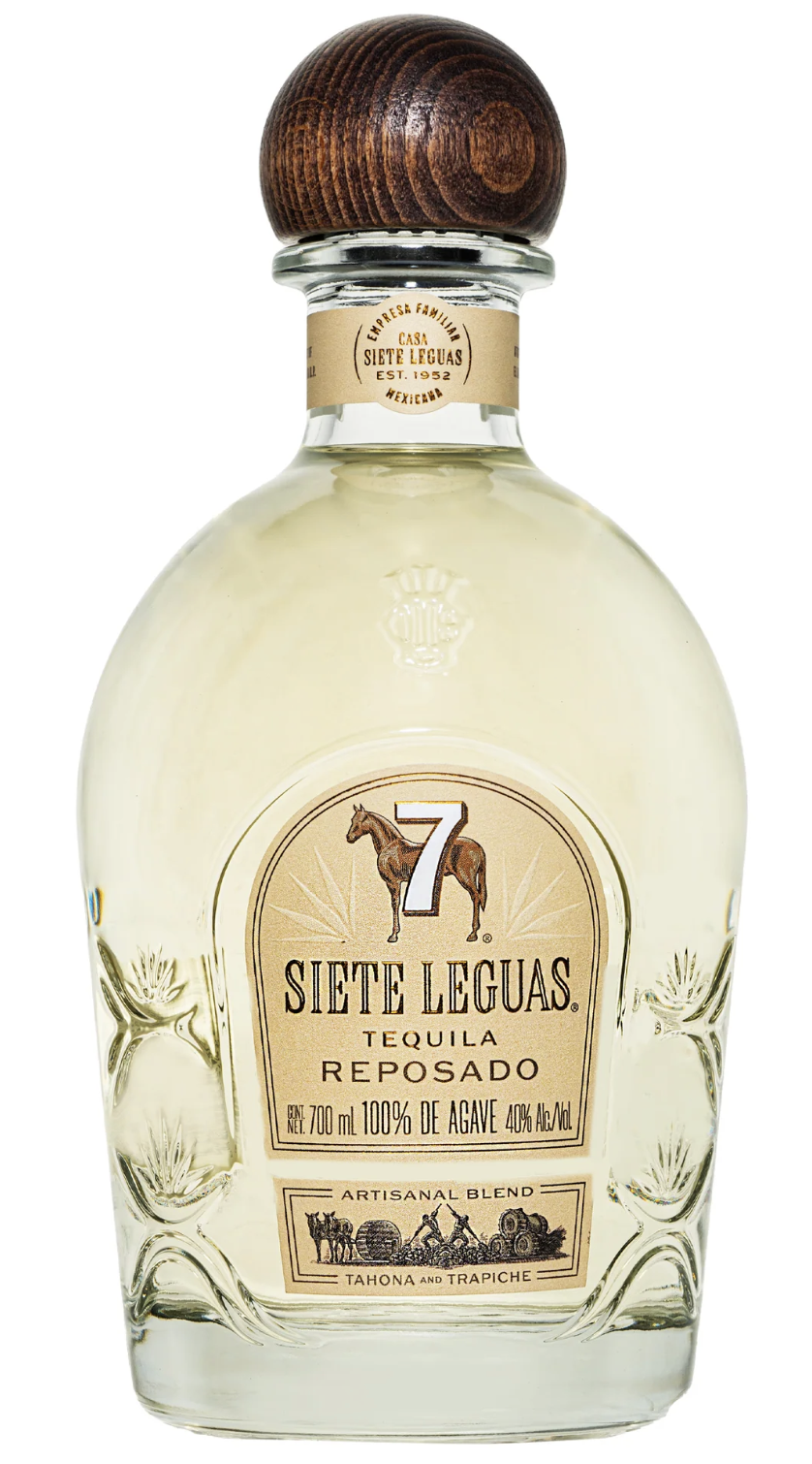
Atotonilco El Alto, Jalisco Highlands — where Don Ignacio González Vargas founded his distillery in 1952, naming it after Pancho Villa’s famous horse, and where today the family still uses brick ovens, tahona stones, and wooden fermentation tanks in a process virtually unchanged in seven decades.
Classification: Tequila Reposado, 100% Agave
Company: Casa Siete Leguas (est. 1952)
Distillery: Siete Leguas Distillery (NOM 1120), Atotonilco El Alto, Jalisco, Mexico
Proof: 80 (40% ABV)
Age: 8 months in American white oak barrels
Agave: 100% Highland Blue Weber Agave
Production: Brick oven roasted (36 hours), tahona stone-crushed, open-air wooden tank fermentation, double distilled in copper pot stills
Color: Light straw gold
MSRP: $50–$60 (750 mL)
Nose: Cooked agave, honey, white pepper, lime zest, damp clay, and a savory herbaceousness that speaks directly to the highland terroir.
Palate: Elegant and earthy — sweet roasted agave, mineral complexity, cinnamon, green olive, butter, and a silky texture from the tahona production that coats the palate.
Finish: Medium-long with lingering agave sweetness, pepper, wet stone minerality, and a clean, dry herbal quality.
Cocktail — The Highland Paloma: 2 oz Siete Leguas Reposado · 1 oz fresh grapefruit juice · oz fresh lime juice · oz agave nectar · 3 oz Topo Chico. Build over ice in a tall glass, stir gently. Salt rim optional. The tahona’s mineral character amplifies the grapefruit’s bitter edge for a paloma with real depth.
Pair with: Carnitas tacos with salsa verde and pickled onions. The tequila’s savory earthiness and herbal quality mirror the pork and salsa, while the agave sweetness balances the acid from the pickled onions.
Awards: Double Gold, San Francisco World Spirits Competition. 95 Points, Tasting Panel Magazine. Widely regarded as one of Mexico’s finest distilleries by industry professionals.
GIN Plymouth Gin
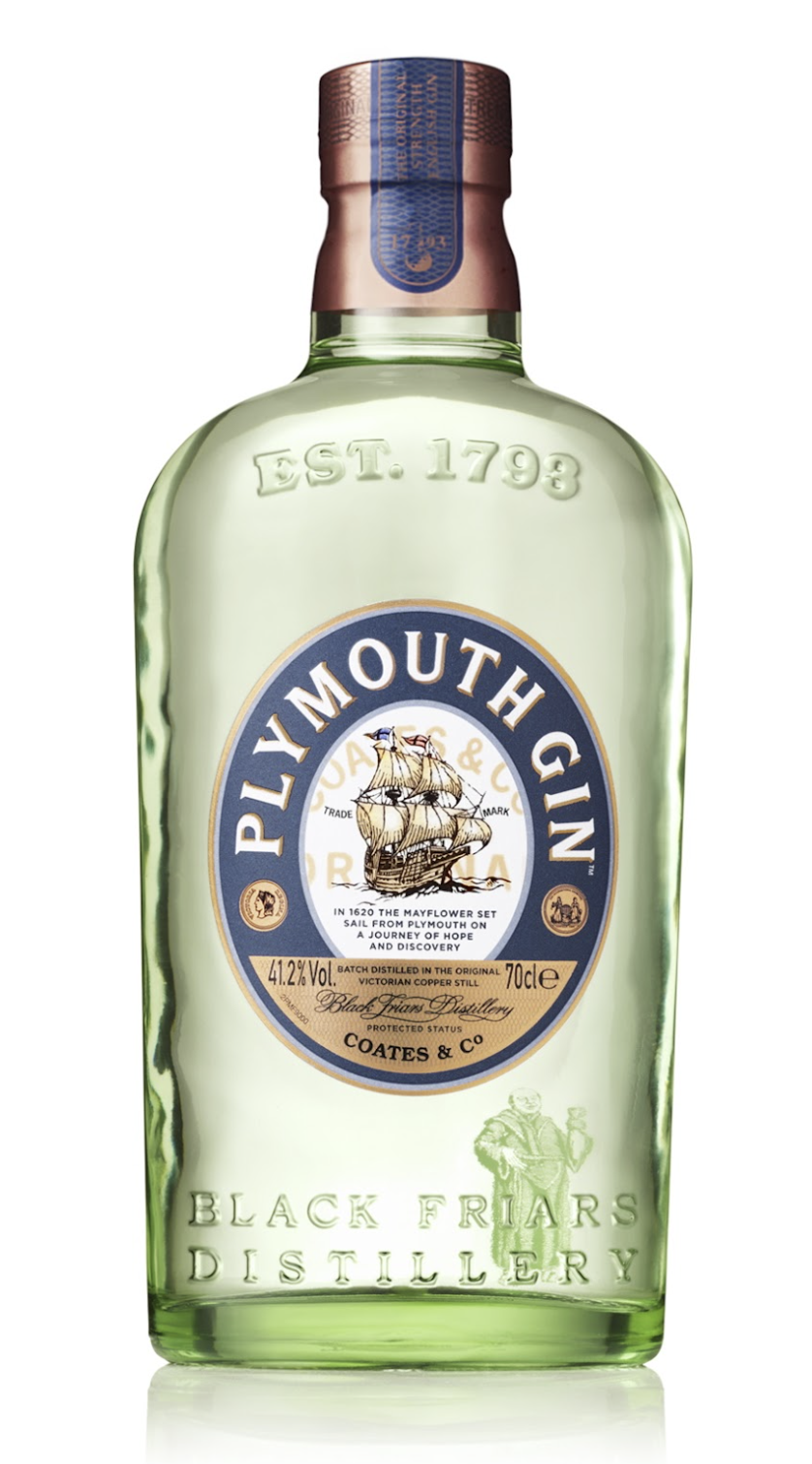
Plymouth, Devon, England — where the Blackfriars Distillery, built as a Dominican monastery in 1431 and the oldest working gin distillery in England, has been producing Plymouth Gin since 1793 using Dartmoor water so soft it barely registers on a mineral scale — creating a gin the Royal Navy chose as its official ration for over a century.
Classification: Plymouth Gin (Protected Geographical Indication)
Company: Pernod Ricard (Plymouth Gin Distillery, est. 1793)
Distillery: Blackfriars Distillery, Plymouth, Devon, England
Proof: 82.4 (41.2% ABV)
Botanicals: Seven botanicals: juniper, coriander seed, orange peel, lemon peel, angelica root, orris root, cardamom
Distillation: Single-shot distillation in a copper pot still; Dartmoor water
Base: Wheat grain spirit
Color: Crystal clear
MSRP: $25–$30 (750 mL)
Nose: Juniper, fresh coriander, earthy angelica, bright citrus peel, cardamom warmth, and a soft, round quality that distinguishes it from sharper London Dry gins.
Palate: Silky and full-bodied — piney juniper, sweet orange, gentle spice, creamy mouthfeel, and a subtle earthiness from the angelica and orris that gives the gin a rooted quality.
Finish: Clean and warming with lingering juniper, citrus oil, gentle spice, and a dry, slightly sweet fade.
Cocktail — The Original Pink Gin: 2 oz Plymouth Gin · 3 dashes Angostura bitters · chilled water (optional). Coat the inside of a chilled glass with Angostura, add the gin. This is the cocktail the Royal Navy invented aboard ship — and Plymouth is the only gin that should be in it.
Pair with: Fish and chips with mushy peas and malt vinegar. The definitive English pairing — Plymouth’s juniper and citrus cut through the batter’s richness, and the soft mouthfeel won’t overwhelm delicate white fish.
Awards: Gold, International Wine & Spirit Competition (multiple years). 92 Points, Wine Enthusiast. One of only three UK spirits with Protected Geographical Indication status.
RUM Flor de Caña 12 Year Old
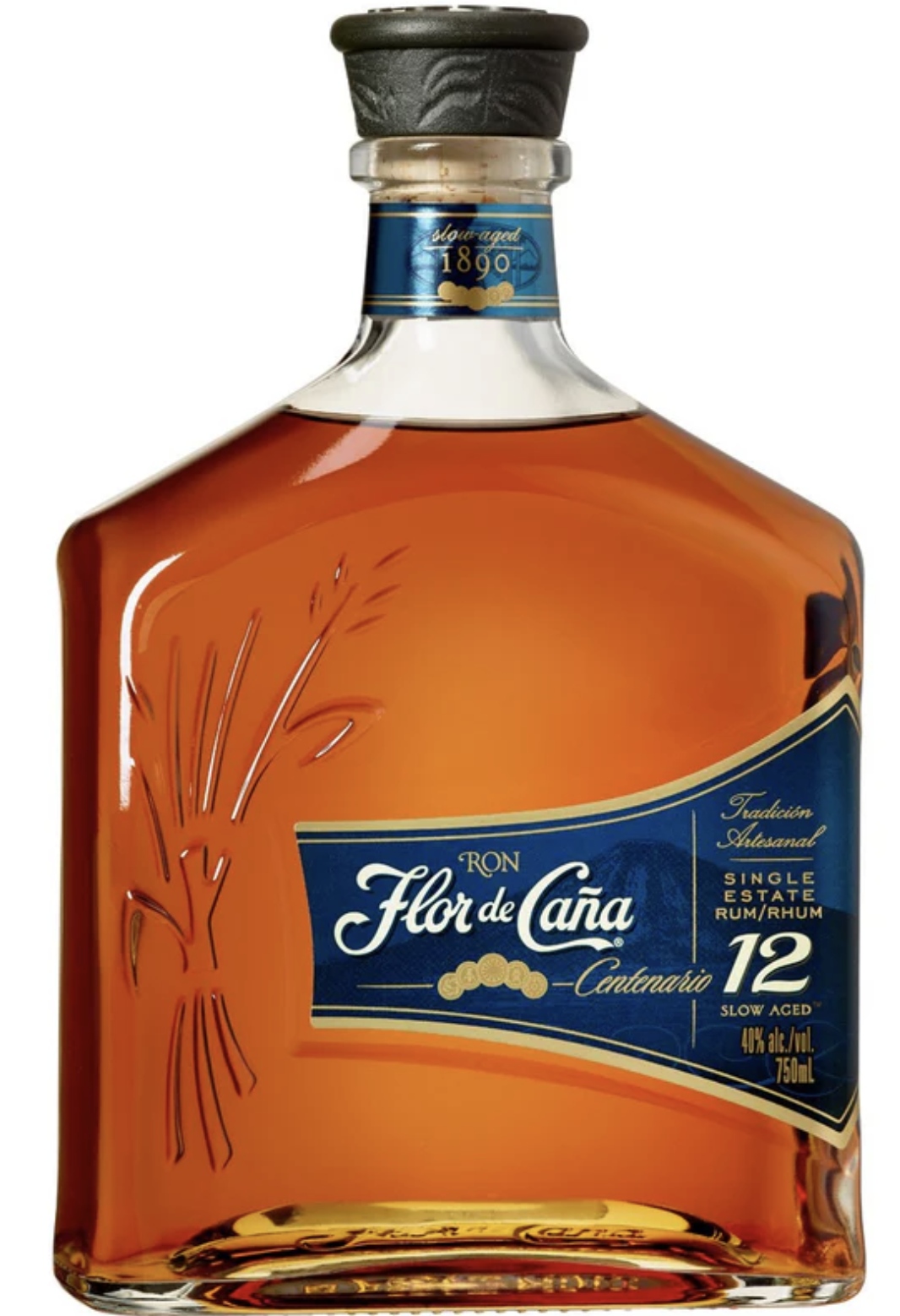
Chichigalpa, Nicaragua — where the Pellas family has been distilling rum at the foot of the San Cristóbal volcano since 1890, using sugarcane enriched by centuries of volcanic ash deposits and naturally filtered water from the volcano’s aquifer — producing one of Central America’s most celebrated rums in a distillery powered entirely by renewable volcanic energy.
Classification: Aged Nicaraguan Rum
Company: Compañía Licorera de Nicaragua (Flor de Caña, est. 1890)
Distillery: Flor de Caña Distillery, Chichigalpa, Nicaragua
Proof: 80 (40% ABV)
Age: 12 Years (naturally aged, no sugar added)
Base: Sugarcane molasses from volcanic soil estates
Distillation: Five-column continuous distillation; aged in ex-bourbon American white oak barrels
Color: Deep amber with copper highlights
MSRP: $28–$35 (750 mL)
Nose: Butterscotch, roasted almond, dried orange peel, tobacco leaf, warm vanilla, and a faint mineral quality that speaks to the volcanic terroir.
Palate: Smooth and complex — caramel, toasted coconut, dark chocolate, cinnamon, dried apricot, a hint of black pepper, and a clean sweetness that never cloys.
Finish: Long and elegant with lingering toffee, toasted oak, dried fruit, and a dry mineral finish that distinguishes it from sweeter Caribbean rums.
Cocktail — The Volcanic Daiquiri: 2 oz Flor de Caña 12 · 1 oz fresh lime juice · oz demerara syrup · pinch of smoked salt. Shake hard with ice, double strain into a coupe. The smoked salt amplifies the rum’s volcanic mineral quality, and the 12-year depth turns a simple daiquiri into something profound.
Pair with: Grilled pineapple with cinnamon and dark chocolate drizzle. The rum’s butterscotch and tropical notes mirror the caramelized pineapple, while the cinnamon and chocolate bridge the oak and cocoa flavors in the finish.
Awards: Gold, Concours Mondial de Bruxelles (multiple years). 93 Points, Ultimate Spirits Challenge. First rum to be certified Fair Trade and carbon neutral.
RED WINE Antinori Tignanello 2021
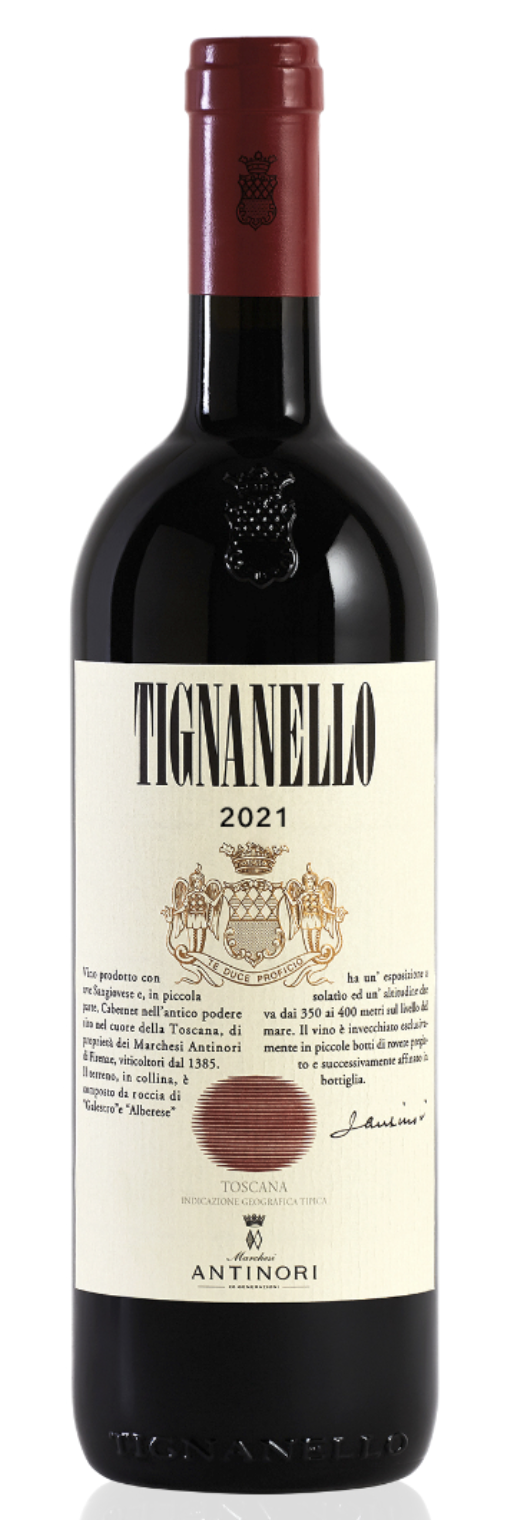
Chianti Classico, Tuscany — where in 1971 the Marchese Piero Antinori and winemaker Giacomo Tachis broke every rule of Italian winemaking by blending Sangiovese with Cabernet Sauvignon, aging in French oak barriques instead of large Slavonian botti, and dropping the traditional white grapes from the blend — creating the original “Super Tuscan” and redefining what Italian wine could be.
Classification: Toscana IGT (Super Tuscan)
Company: Marchesi Antinori (est. 1385, 26th generation)
Winery: Tenuta Tignanello, Chianti Classico, Tuscany, Italy
ABV: 14%
Primary Varietal: Sangiovese
Blend: 80% Sangiovese, 15% Cabernet Sauvignon, 5% Cabernet Franc
Vineyards: Tignanello estate, 320–400m elevation, galestro and albarese soils
Maturation: 14–16 months in new and used French oak barriques, 12 months in bottle
Color: Deep ruby with garnet reflections
MSRP: $95–$120 (750 mL)
Nose: Black cherry, dried violet, leather, espresso, cedar, sweet tobacco, and a savory olive-herb complexity that screams Tuscan hillside.
Palate: Powerful and structured — ripe plum, sour cherry, dark chocolate, rosemary, licorice, fine-grained tannins, and a minerality from the galestro soil that gives the wine its signature tension between fruit and earth.
Finish: Very long with lingering cherry, cedar, dried herbs, cocoa, and a stony mineral persistence that builds on the palate.
Cocktail — The Tuscan Negroni: 1.5 oz gin · 1 oz Campari · 1 oz sweet vermouth · 1 oz Tignanello (float). Stir gin, Campari, and vermouth with ice, strain into a rocks glass, float the Tignanello. An Italian cocktail with an Italian wine — the Sangiovese’s cherry and herbal notes transform the classic.
Pair with: Bistecca alla Fiorentina — a thick-cut, rare-grilled T-bone seasoned only with salt, olive oil, and lemon. The quintessential Tuscan pairing: the wine’s tannins cut through the fat, the cherry fruit echoes the char, and the mineral backbone matches the simplicity of the preparation.
Awards: 96 Points, James Suckling. 95 Points, Wine Advocate. Named among Italy’s greatest wines by Gambero Rosso Tre Bicchieri (multiple vintages).
WHITE WINE Domaine William Fèvre Chablis 2022
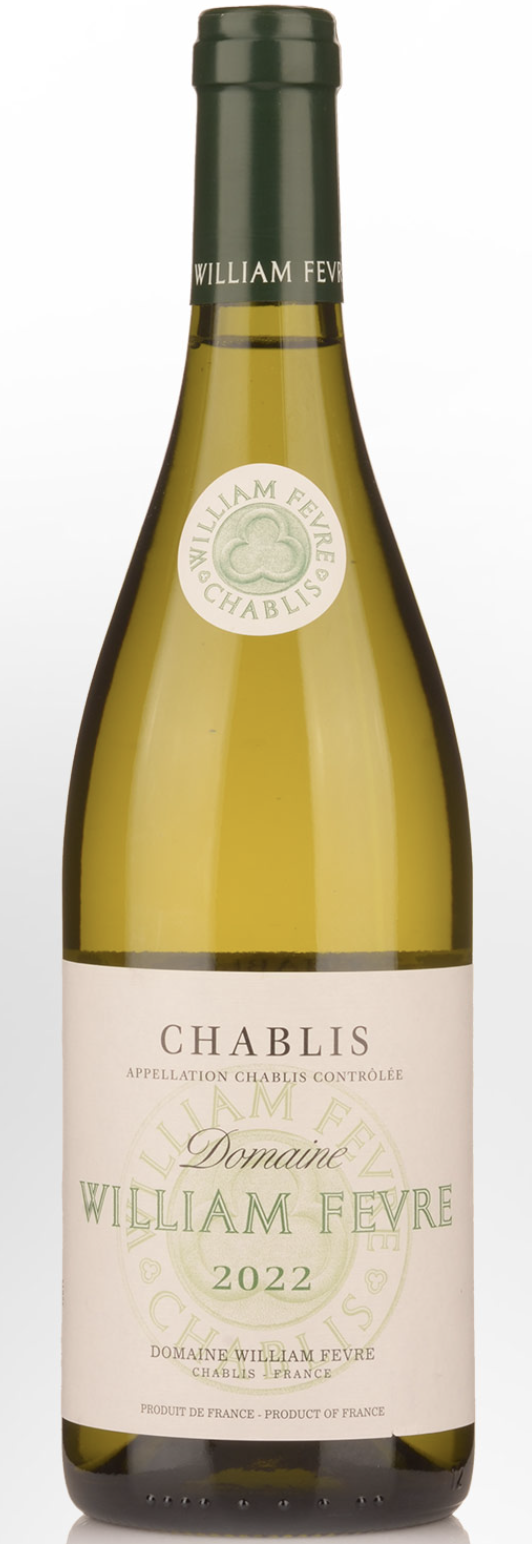
Chablis, Burgundy, France — where the vineyards sit on 150 million-year-old Kimmeridgian limestone studded with fossilized oyster shells from a prehistoric sea, producing Chardonnay of such mineral purity that the wine tastes less like grapes and more like the ancient seabed beneath the vines.
Classification: Chablis AOC
Company: Domaine William Fèvre / Henrit Group (est. 1959)
Winery: Domaine William Fèvre, Chablis, Burgundy, France
ABV: 12.5%
Primary Varietal: Chardonnay
Blend: 100% Chardonnay from Kimmeridgian limestone vineyards
Vinification: Stainless steel fermentation and aging; no malolactic fermentation; minimal intervention to preserve terroir expression
Color: Pale gold with green-silver highlights
MSRP: $25–$32 (750 mL)
Nose: Wet stone, green apple, lemon zest, white flowers, chalk dust, crushed seashell, and a briny freshness that recalls the ancient ocean floor.
Palate: Taut and precise — Granny Smith apple, lime, oyster shell minerality, flinty tension, a steely acidity that slices across the palate, and a saline quality that lingers between sips.
Finish: Long and mineral-driven with lingering citrus, chalk, iodine, and an almost electric acidity that makes the mouth water.
Cocktail — The Chablis Spritz: 3 oz Domaine William Fèvre Chablis · 1 oz elderflower liqueur (St-Germain) · 2 oz sparkling water · lemon twist. Build over ice in a large wine glass. The Chablis’s mineral precision keeps this elegant and dry where lesser whites would turn sweet.
Pair with: Fresh oysters with mignonette. The definitive Chablis pairing — and one that borders on cliché because it works so perfectly. The wine’s fossilized-seabed minerality, briny salinity, and electric acidity were born to meet a raw oyster. Pour the Chablis, shuck the oysters, and taste 150 million years of terroir.
Awards: 92 Points, Wine Advocate. 93 Points, Decanter. William Fèvre is the largest Grand Cru vineyard owner in Chablis.
Train Your Nose: Today’s Aroma Spotlight
The Terroir Effect — When Place Becomes Flavor
Today’s selections offer a rare opportunity to train your nose for terroir — the flavors that come not from a recipe or a technique, but from the land itself. Start with the William Fèvre Chablis and the Talisker 10 side by side. Both are shaped by ancient geology: Chablis by 150-million-year-old Kimmeridgian limestone packed with fossilized oyster shells, Talisker by the volcanic basalt and maritime exposure of the Isle of Skye. Both deliver a pronounced mineral character — but the minerals taste completely different. The Chablis gives you chalk, wet stone, and iodine; Talisker gives you sea salt, black pepper, and volcanic warmth. Using your Wine and Whisky Aroma Masterclass Kits, see if you can isolate the “mineral” note in each. This is what terroir tastes like: the same concept, expressed through radically different geology.
Now compare the two tequilas you’ve tasted this week: yesterday’s El Tesoro and today’s Siete Leguas. Both use tahona stones. Both use highland agave. Both come from Jalisco’s Los Altos region. But they taste different — because they come from different estates, different soil compositions, and different microclimates. El Tesoro’s Arandas terroir tends toward citrus and bright minerality; Siete Leguas’s Atotonilco fruit leans more herbal and earthy. Using your Tequila & Mezcal Aroma Masterclass Kit, identify the “cooked agave” note in both and then ask: what’s different around it? That difference is terroir — and learning to spot it is what separates a casual tequila drinker from a true connoisseur.
Try This: Pour the Flor de Caña 12 alongside yesterday’s El Dorado 12. Both are 12-year-old rums, both aged in ex-bourbon oak. But one comes from volcanic Nicaraguan soil and the other from Guyanese river delta. Using your Rum Aroma Masterclass Kit, find the “toffee” note in each and notice what surrounds it: El Dorado’s toffee sits in a bed of tropical fruit and raw sugar; Flor de Caña’s toffee is wrapped in almond, tobacco, and dry mineral. Same age. Same oak. Different earth. That’s terroir.
Aroma Training Kit Quick Reference
Explore the School of Wine and Spirits
Today’s eight bottles prove that the best products taste like the places they come from. Our books on Amazon take you deeper into those places — from the limestone hollows of Kentucky in America’s Spirit, the misty distilleries of Scotland’s Spirit and Ireland’s Spirit, the volcanic highlands of The Tequila y Mezcal Revolution, the ancient vineyards of The Ultimate Northern Italian Wine Journey, and the fossilized seabeds of Burgundy in our Chablis and Cte d’Or pocket guides.
Explore our Aroma Masterclass Kits and books at schoolofwineandspirits.com
Join the School of Wine and Spirits Community
Connect with fellow connoisseurs, share tasting notes, and go deeper into every pour. Sign up at skool.com/schoolofwineandspirits
Our kits make the perfect gift for the curious drinker in your life — because once you learn to identify aromas, you never taste the same way again.
Know someone who would enjoy The Still & The Vine? Forward this issue to a fellow enthusiast — or share it on social media and tag @SchoolofWineandSpirits. We grow by word of mouth.
Until tomorrow’s pour — cheers.
About the Author
Robert R. Mohr, CPA, CGMA, WSET Level 3, WSG Certified Spirits Specialist — author of America’s Spirit, Scotland’s Spirit, Ireland’s Spirit, The Ultimate Northern Italian Wine Journey, The Tequila y Mezcal Revolution, The Definitive Pocket Guide to Chablis, The Definitive Pocket Guide to the Cte d’Or, and Strategic Tuning. Published author of the Aroma Academy Tequila/Mezcal and Distiller’s training kits.
The Still & The Vine is a daily publication of the School of Wine and Spirits.
schoolofwineandspirits.com · Amazon Author Page
Today's Kit Reference
| Today’s Product | Key Aromas | Train With |
|---|---|---|
| Elijah Craig Small Batch | Caramel, Charred Oak, Vanilla, Cherry, Brown Spices | Bourbon Aroma Masterclass Kit |
| Talisker 10 | Peaty, Smoky, Medicinal, Malt, Orange | Whisky Aroma Masterclass Kit |
| Teeling Small Batch | Vanilla, Peach, Clove Spice, Coconut, Malt | Whisky Aroma Masterclass Kit |
| Siete Leguas Reposado | Agave (Cooked), Honey, Earth (Mineral, Soil Notes), Pepper, Herbal (Mint, Thyme, Eucalyptus) | Tequila & Mezcal Aroma Masterclass Kit |
| Plymouth Gin | Juniper (Herbaceous/Waxy), Coriander, Lemon, Angelica, Orris Root | Gin Aroma Masterclass Kit |
| Flor de Caña 12 | Toffee, Nut (Almond/Coconut), Vanilla, Tobacco, Oak | Rum Aroma Masterclass Kit |
| Antinori Tignanello 2021 | Cherry, Violet, Woody, Cedar, Blackcurrant | Wine Aroma Masterclass Kit |
| William Fèvre Chablis 2022 | Apple (Green), Citrus (Generic), Honey, Toasted, Gooseberry | Wine Aroma Masterclass Kit |
Explore the School of Wine and Spirits
Today’s eight bottles prove that the best products taste like the places they come from. Our books on Amazon take you deeper into those places — from the limestone hollows of Kentucky in America’s Spirit, the misty distilleries of Scotland’s Spirit and Ireland’s Spirit, the volcanic highlands of The Tequila y Mezcal Revolution, the ancient vineyards of The Ultimate Northern Italian Wine Journey, and the fossilized seabeds of Burgundy in our Chablis and Cte d’Or pocket guides.
Explore our Aroma Masterclass Kits and books at schoolofwineandspirits.com
Explore our Aroma Masterclass kits and books at schoolofwineandspirits.com
Join the School of Wine and Spirits Community
Connect with fellow connoisseurs, share tasting notes, and go deeper into every pour. Sign up at skool.com/schoolofwineandspirits
Sign up at skool.com/schoolofwineandspirits
Our kits make the perfect gift for the curious drinker in your life — because once you learn to identify aromas, you never taste the same way again.
Know someone who would enjoy The Still & The Vine? Forward this issue to a fellow enthusiast — or share it on social media and tag @SchoolofWineandSpirits. We grow by word of mouth.
Robert R. Mohr, CPA, CGMA, WSET Level 3, WSG Certified Spirits Specialist — author of America’s Spirit, Scotland’s Spirit, Ireland’s Spirit, The Ultimate Northern Italian Wine Journey, The Tequila y Mezcal Revolution, The Definitive Pocket Guide to Chablis, The Definitive Pocket Guide to the Cte d’Or, and Strategic Tuning. Published author of the Aroma Academy Tequila/Mezcal and Distiller’s training kits.
The Still & The Vine is a daily publication of the School of Wine and Spirits.
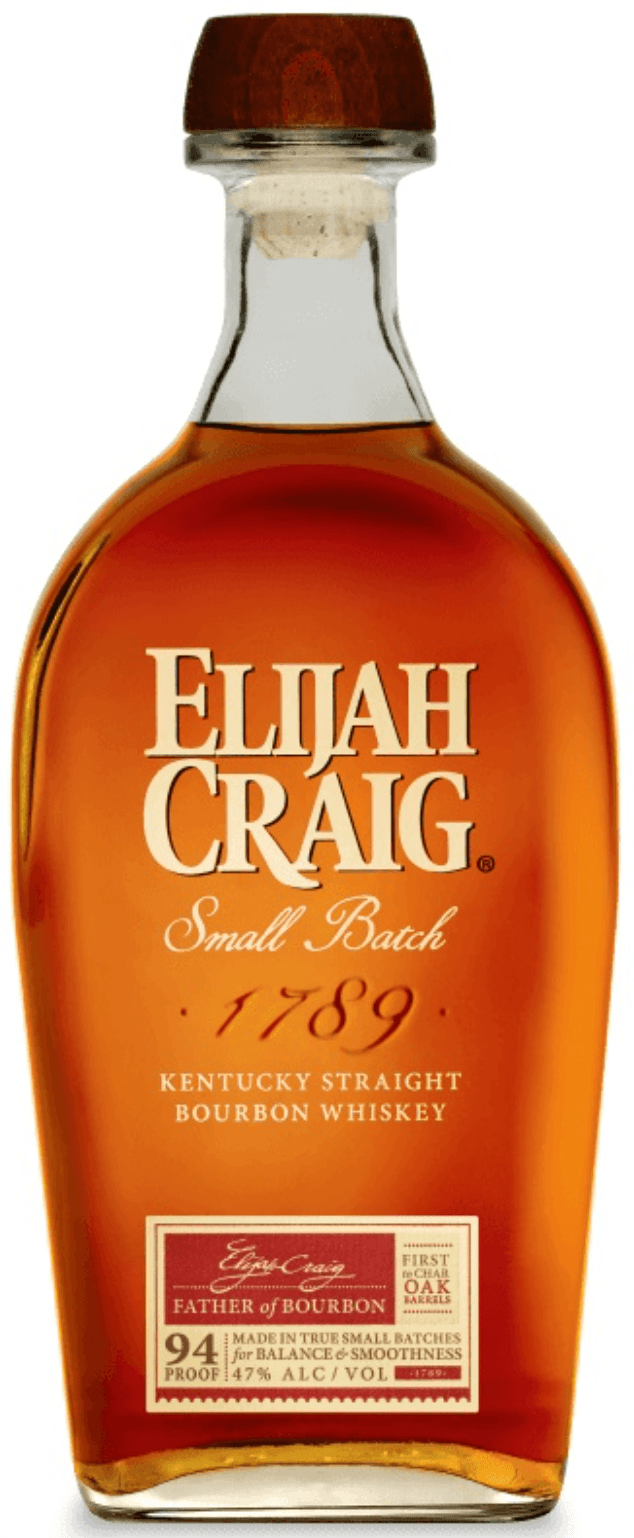
Elijah Craig Small Batch
Heaven Hill Distillery (Elijah Craig, est. 1986)
Elijah Craig Small Batch is the bourbon that punches so far above its price point that it makes you wonder what everyone else is doing with their money. Heaven Hill’s corn-heavy mash bill (78%) creates a sweet, approachable base, but the real story is the aging: barrels are drawn from multiple floors of Heaven Hill’s Bardstown rickhouses, where summer temperatures in the top floors can exceed 130°F while ground-floor barrels barely reach 80°F. This temperature differential means each barrel develops a different flavor profile — more caramel and char from the heat, more fruit and grain from the cool — and the blender’s job is to combine them into something greater than any single barrel. At 94 proof and 8–12 years old, the result is a bourbon with the complexity of bottles costing twice as much. The deep char (Heaven Hill uses a Number 3 char) gives it a distinctive smoky backbone that separates it from sweeter, lighter bourbons.
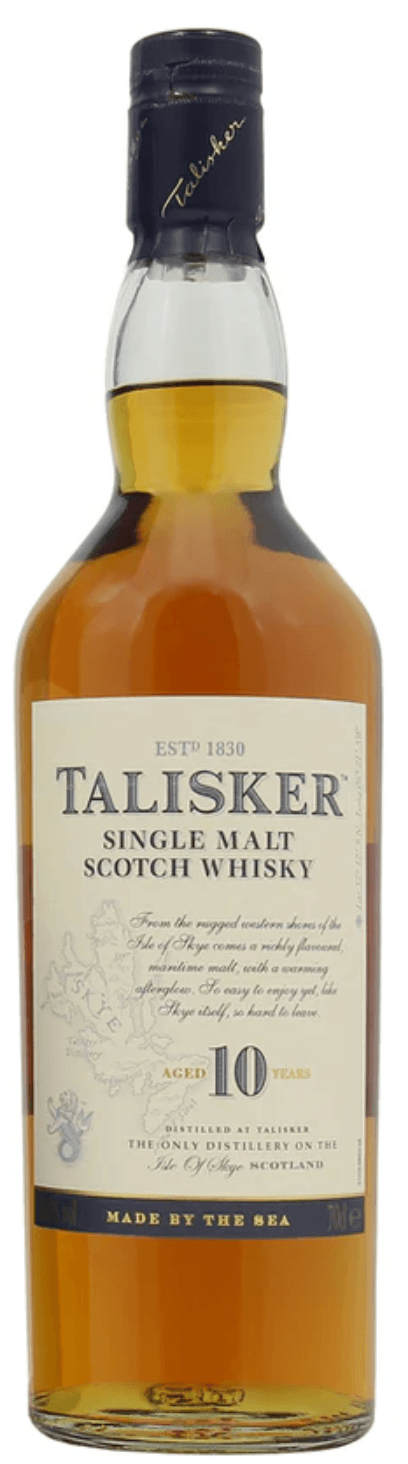
Talisker 10 Year Old
Diageo (Talisker Distillery, est. 1830)
Talisker doesn’t just taste like Skye — it tastes like it was made by the island itself. The distillery’s unique setup includes swan-neck lyne arms that loop back on themselves, sending heavier flavor compounds back through the still for a second pass of copper contact. This creates a spirit that’s simultaneously smoky and sweet, peaty and peppery. The peat used to dry the malt is local, carrying Skye’s distinctive maritime character into the smoke. And then there’s the maturation: sea air penetrates the warehouses year-round, the casks breathing in salt and iodine with every expansion and contraction. Diageo named Talisker one of their Classic Malts in 1988, representing the Islands — and there is no whisky that more completely embodies its geography. At 45.8% ABV (higher than most standard bottlings), it has the strength to deliver every ounce of that Skye character.
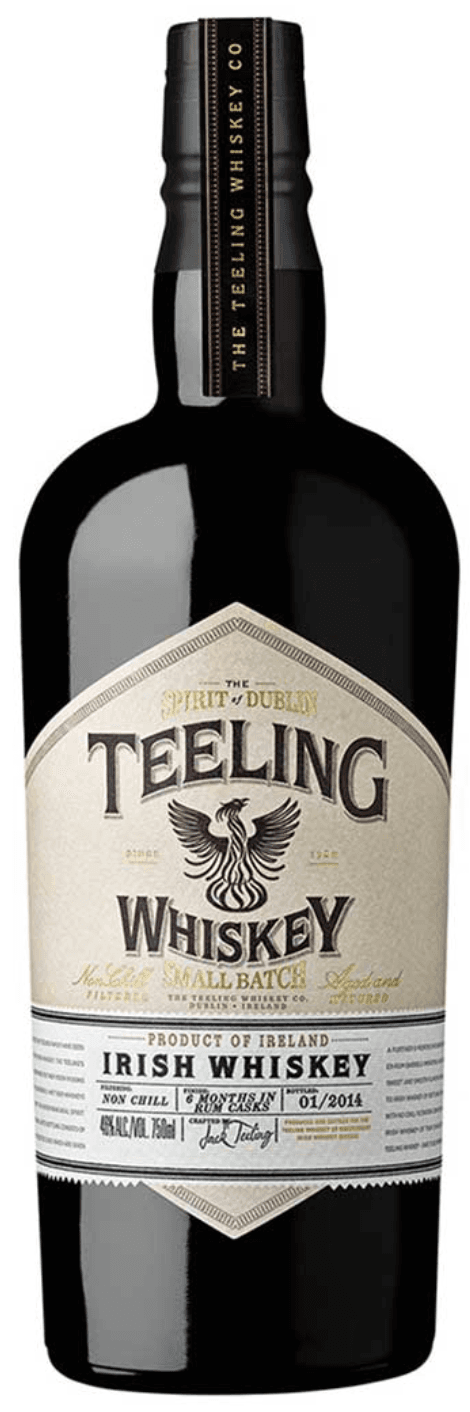
Teeling Small Batch
Teeling Whiskey Company (est. 2012)
The Teelings’ terroir isn’t soil — it’s Dublin itself. Jack and Stephen Teeling built their distillery in the Liberties, a neighborhood that had been the beating heart of Irish whiskey for two centuries before the industry collapsed. The Liberties once held more distilleries per square mile than anywhere on earth. The Teelings’ bet was that Dublin’s whiskey DNA still mattered — that making whiskey in the city, near the original water sources and in the cultural context that shaped Irish whiskey, would produce something different from the industrial parks where most Irish whiskey is now made. The Small Batch expression showcases their innovation: finishing in Central American rum barrels adds a tropical sweetness that no other Irish whiskey offers, while bottling at 46% ABV (non-chill filtered) preserves the full texture. It’s a whiskey that tastes like a city reclaiming its birthright.
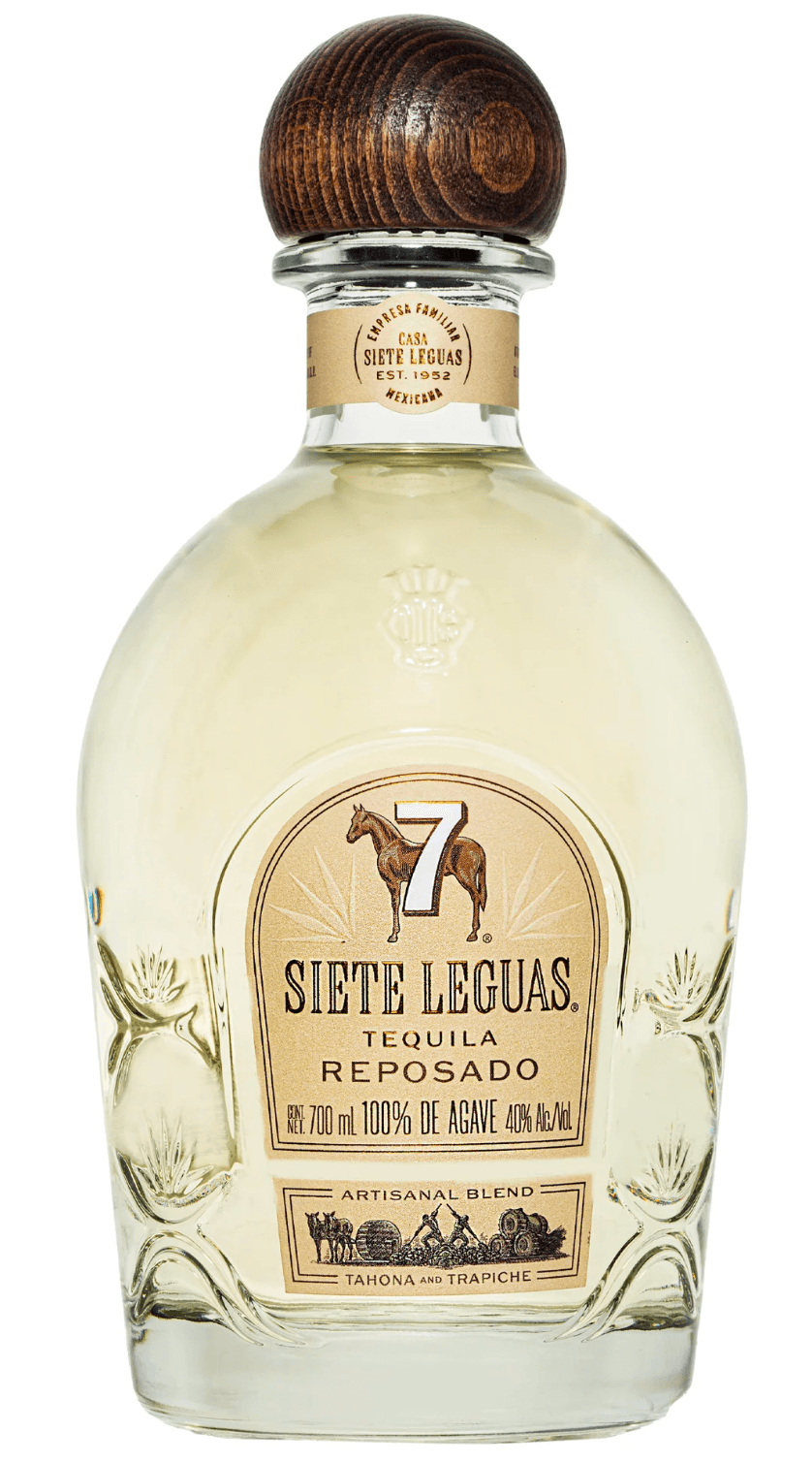
Siete Leguas Reposado
Casa Siete Leguas (est. 1952)
If El Tesoro is the tequila nerd’s tequila, Siete Leguas is the tequila maker’s tequila. This is the distillery where Don Julio González originally made his tequila before launching his own brand — yes, Don Julio tequila was born at Siete Leguas. The family has refused every shortcut the modern tequila industry has embraced: they still use brick ovens when autoclaves are faster, tahona stones when roller mills are cheaper, wooden fermentation tanks when stainless steel is easier to clean, and copper pot stills when column stills would be more efficient. The result is a tequila with a mineral complexity and savory depth that industrial methods simply cannot replicate. The Reposado’s eight months in American oak adds just enough vanilla and warmth without obscuring the agave and terroir. When tequila professionals talk about “the old way,” this is what they mean.
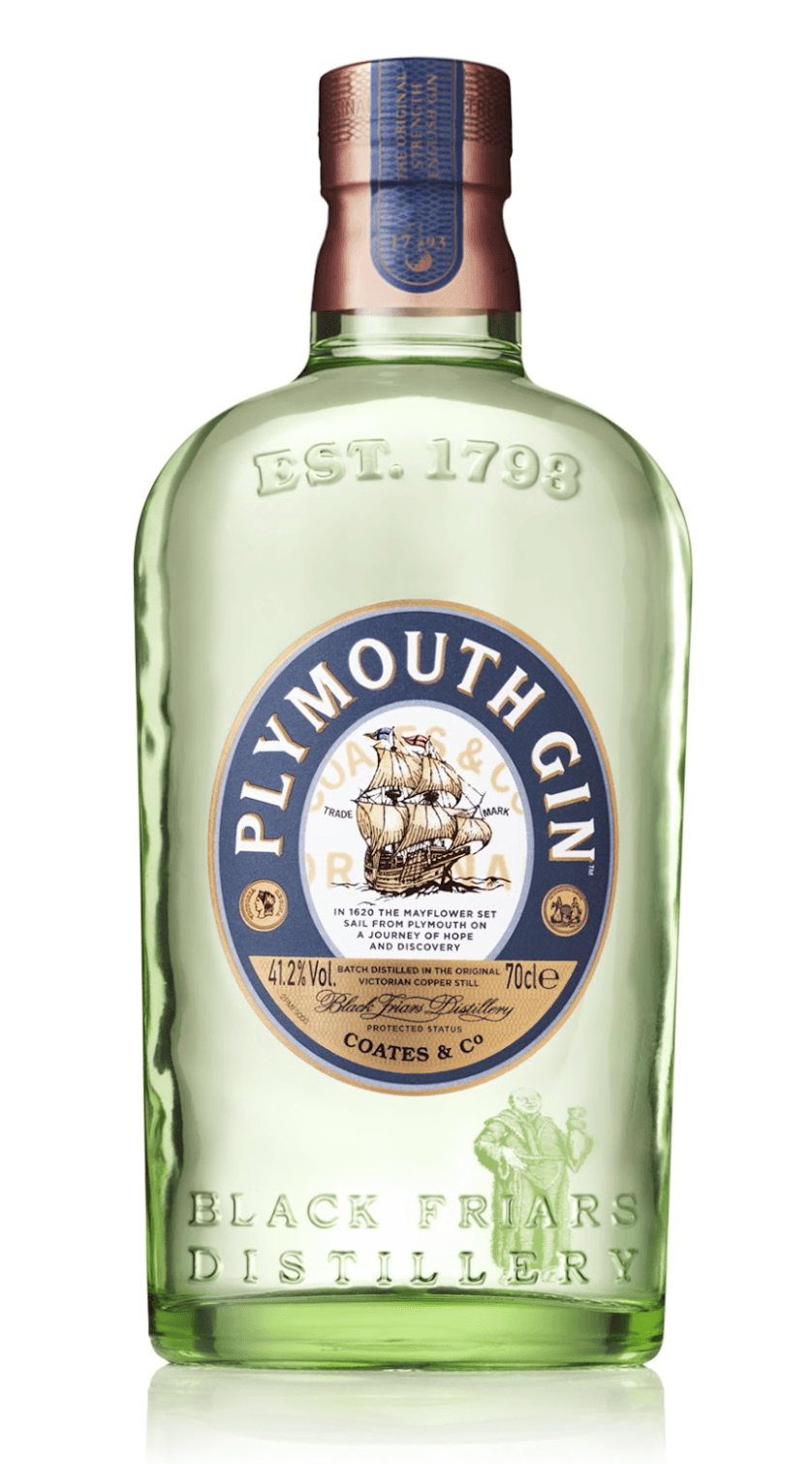
Plymouth Gin
Pernod Ricard (Plymouth Gin Distillery, est. 1793)
Plymouth Gin holds one of only three geographic indications for a spirit in the UK: it can only be made in Plymouth. But the real terroir is in the water. Dartmoor’s extremely soft water creates a gin with a rounder, fuller mouthfeel than London Dry gins made with harder water — the low mineral content lets the botanicals express themselves without interference. The recipe uses only seven botanicals (compared to Monkey 47’s forty-seven), and the restraint is the point: each botanical is individually perceptible, and none dominates. This is the gin the Royal Navy chose for its officers’ daily ration, the gin that was specified in the original recipe for a Pink Gin, and the gin that appeared in the earliest known recipe for a dry martini. At 41.2% ABV, it’s slightly gentler than most gins — a conscious choice that lets the Dartmoor water’s softness come through.
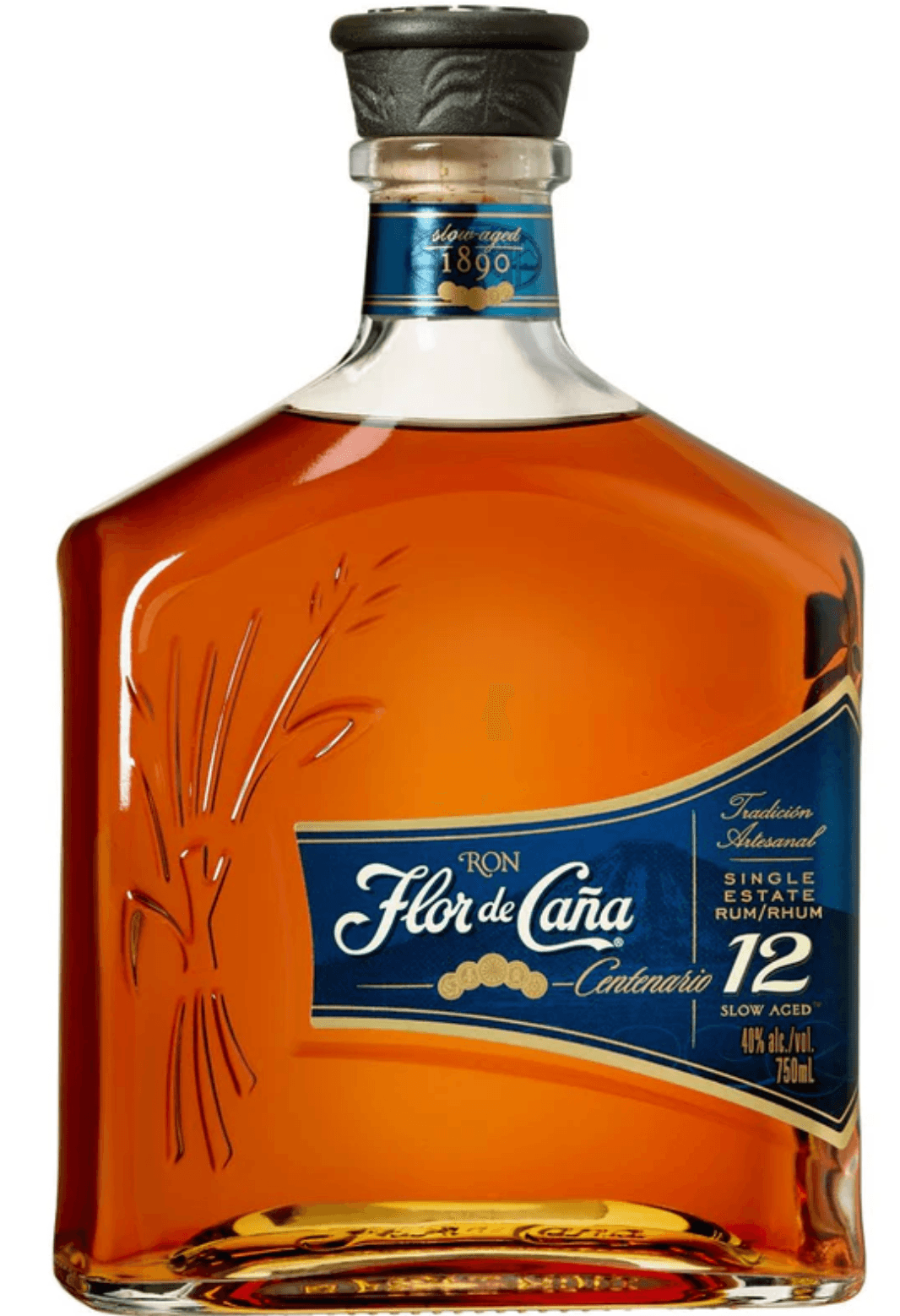
Flor de Caña 12 Year Old
Compañía Licorera de Nicaragua (Flor de Caña, est. 1890)
Flor de Caña’s terroir is literal: the distillery sits at the base of the San Cristóbal volcano, Nicaragua’s tallest and most active. The sugarcane grows in soil enriched by centuries of volcanic ash deposits — mineral-rich, naturally fertile, and fundamentally different from Caribbean island soil. The water comes from the volcano’s natural aquifer, filtered through volcanic rock. Even the aging is shaped by geography: Nicaragua’s consistently warm tropical climate (averaging 30°C year-round) accelerates the interaction between rum and oak, meaning twelve years in Nicaragua extracts flavors that might take twenty years in cooler climates. The Pellas family was also among the first rum producers to commit to full transparency: Flor de Caña is certified Fair Trade, carbon neutral, and carries no added sugar — a rarity in a category where dosing is widespread. What you taste is the volcano.
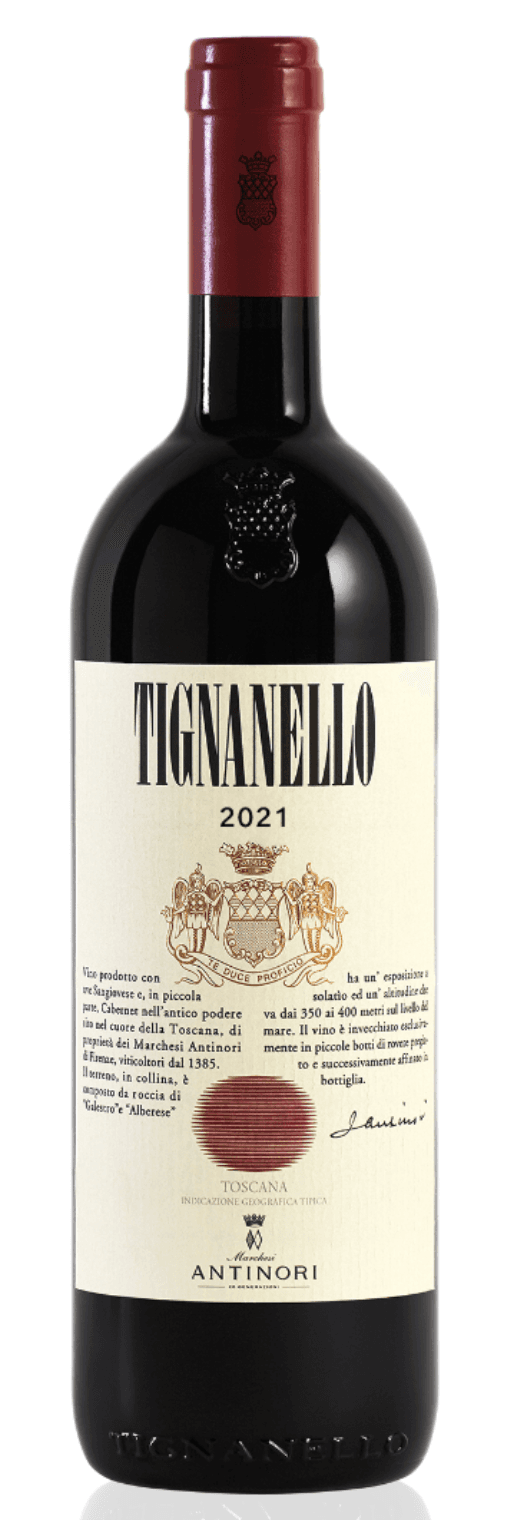
Antinori Tignanello 2021
Marchesi Antinori (est. 1385, 26th generation)
Tignanello is the wine that proved terroir could be revolutionary. When Piero Antinori released the 1971 vintage — a Sangiovese-Cabernet blend aged in French barriques, made outside every regulation that governed Chianti — the Italian wine establishment was outraged. The wine was declassified to “Vino da Tavola,” Italy’s lowest designation. Antinori didn’t care. He believed the Tignanello vineyard’s galestro and albarese soils (a mix of calcium-rich marl and hard limestone found only in central Tuscany) could produce wines that rivaled Bordeaux — if freed from rules requiring white grapes in a red wine. History proved him right. The 2021 vintage benefits from a warm but balanced growing season, with the Sangiovese delivering its characteristic sour cherry and herbal complexity while the Cabernet adds structure and depth. At 26 generations and 640 years, Antinori is the oldest family-owned wine company on earth — and Tignanello remains their most radical creation.
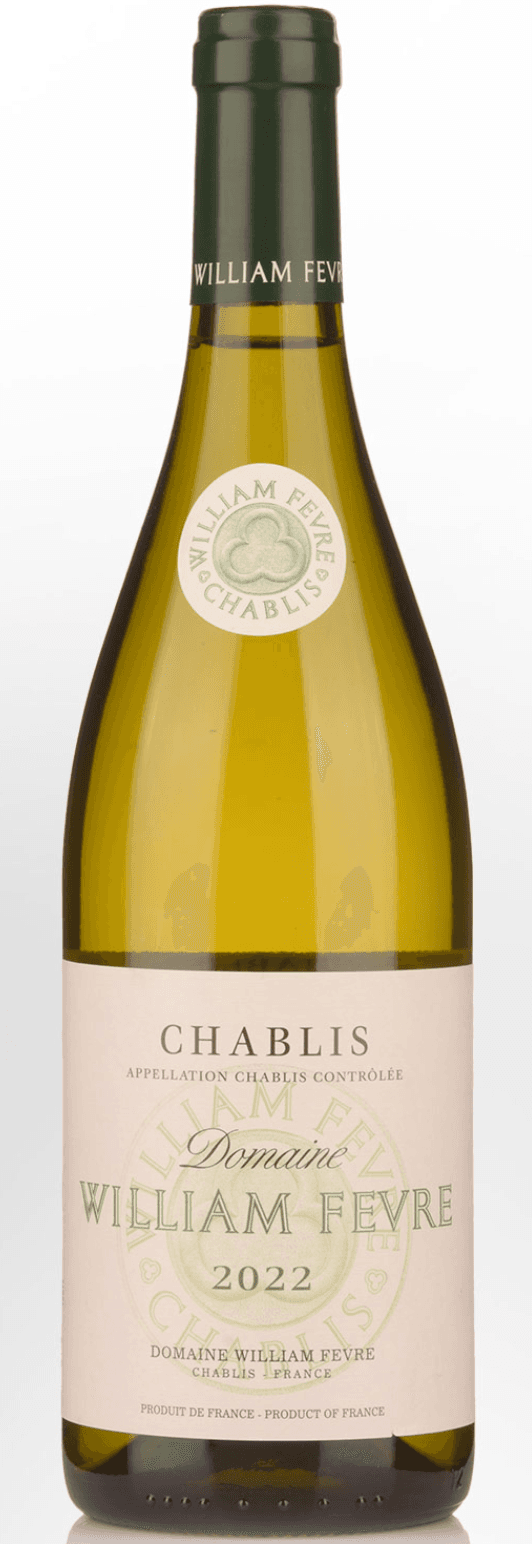
Domaine William Fèvre Chablis 2022
Domaine William Fèvre / Henriôt Group (est. 1959)
If any wine on earth proves that terroir is real, it is Chablis. The appellation sits on Kimmeridgian limestone — a geological formation laid down during the Late Jurassic period when this part of Burgundy was a tropical sea. Dig into a Chablis vineyard and you’ll find fossilized oyster shells (Exogyra virgula) embedded in the marl. William Fèvre understood this better than anyone: he was among the first vignerons to map the precise soil differences between Chablis parcels and to vinify accordingly. The domaine’s village-level Chablis is fermented and aged entirely in stainless steel — a deliberate choice to let the limestone speak without oak interference. The result is a Chardonnay stripped of everything except what the soil and climate put there: mineral tension, razor-sharp acidity, and a saline quality you can taste with your eyes closed. For readers of The Definitive Pocket Guide to Chablis, this is the benchmark.
Be the first to comment.