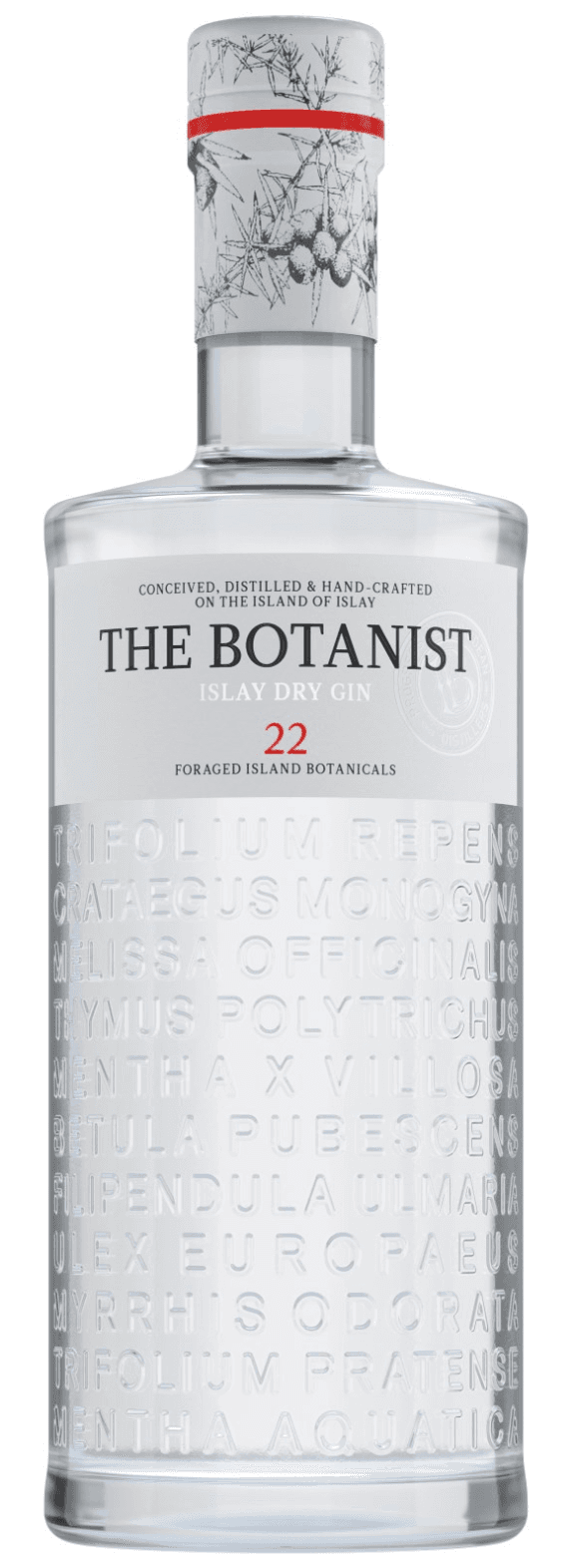
The Botanist Islay Dry Gin
Rémy Cointreau (Bruichladdich Distillery) · Bruichladdich Distillery, Islay, Scotland
The Botanist is the gin that proves terroir isn’t just a wine concept. Those 22 wild Islay botanicals — foraged by hand over 30 weeks each year from bogs, shores, and hillsides — give it a sense of place that no factory gin can replicate. The rescued Lomond still allows a 17-hour distillation, four times longer than whisky, extracting complexity that faster methods miss entirely. At 46% ABV and under $40, it’s one of the most characterful gins on the planet, and the subtle coastal salinity at the finish reminds you that this spirit was born on an island battered by the Atlantic.
Nose
Bright herbal freshness, citrus zest, sweet menthol mint, wildflower bouquet, pine
Palate
Silky and balanced — juniper, lemon, coriander with aniseed undertones, honey from thistle, coconut from gorse
Finish
Lingering herbal notes, coastal salinity, faint anise, and earthy warmth
- Botanicals
- 31 total — 22 hand-foraged wild Islay botanicals + 9 classic gin botanicals
- Base Spirit
- 100% wheat spirit + Islay spring water
- Distillation
- 17-hour slow distillation in Lomond pot still (“Ugly Betty”)
Cocktail Suggestion
Cocktail — The Islay Garden: 2 oz The Botanist · 3/4 oz fresh lemon juice · 1/2 oz elderflower liqueur · 3 oz tonic water · Fresh thyme sprig and cucumber ribbon. Build in a large wine glass over ice.
Food Pairing
Pair with: Grilled salmon with dill and lemon — the herbal, citrus gin and the herb-crusted fish are made for each other.
Be the first to comment.
Leave a comment

St. George Dry Rye Reposado Gin
St. George Spirits
St. George's barrel-aged rye gin sits at the crossroads of whiskey and gin, using fire twice — once to dry-roast botanicals, once through barrel maturation. The result is a gin with structure and warmth that holds up beautifully in stirred cocktails where a London Dry would feel thin. A bridge bottle for whiskey lovers exploring gin.

Beefeater Burrough's Reserve Oak Rested Gin
Beefeater
Master Distiller Desmond Payne's vision of what happens when the spirit meets the cask is brought to vivid life in Burrough's Reserve Oak Rested. Rested in hand-selected Jean de Lillet oak casks — previously used to age the storied French aperitif — this gin embodies the issue's theme at its most literal: the barrel's inner skin imparts golden color, vanilla richness, and a gentle tannic framework without ever eclipsing the juniper-forward London Dry character. It occupies a fascinating middle ground between gin and aged spirit, rewarding both neat sipping and barrel-aged cocktails.

Bols Genever Barrel Aged 18 Month
Bols
A masterclass in patience applied to the gin family tree. Where most gins celebrate the instant brightness of distillation, Bols Barrel Aged 18 Month embraces the slow alchemy of oak and time. The result is a spirit that bridges the worlds of aged whiskey and botanical distillate — furnace-forged grain spirit tempered into something deeply contemplative. Perfectly aligned with "The Furnace of Patience," this genever proves that even the juniper berry bows to time's authority.

Tanqueray Flor de Sevilla Gin
Tanqueray
Tanqueray Flor de Sevilla takes the classic London dry structure and overlays it with actual Seville orange botanicals, creating a gin that bridges tradition and accessibility. The bitterness of the orange is key — this is not a sweetened citrus gin but a genuine botanical expression. A versatile bottle for cocktails and a solid G&T anchor.