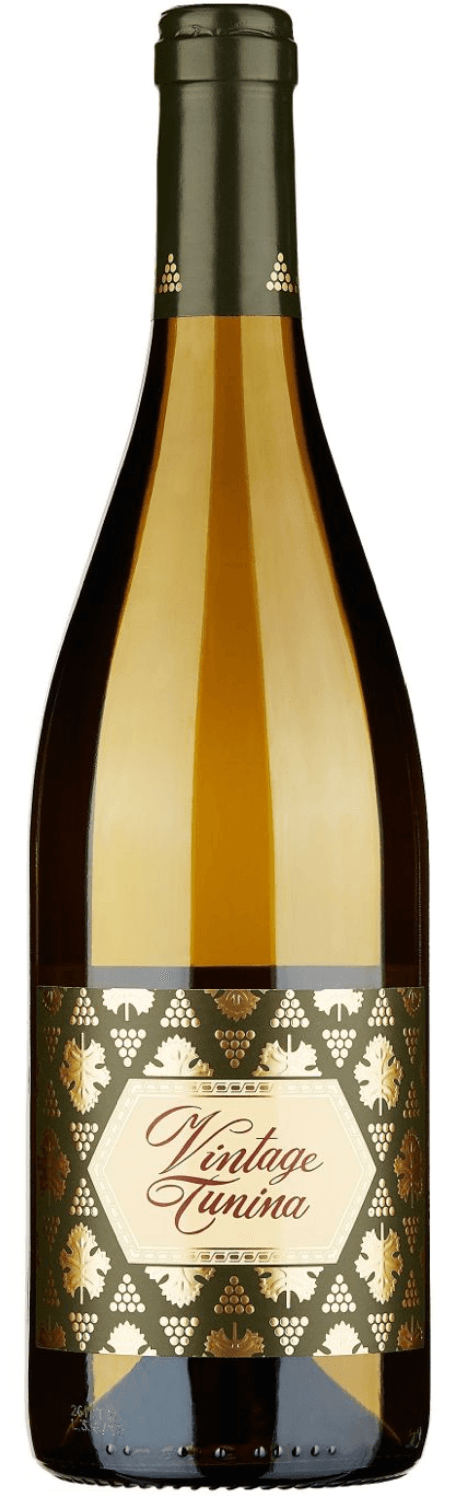
Jermann Vintage Tunina 2022
Jermann (est. 1881, fourth generation) · Jermann, Villanova di Farra, Friuli-Venezia Giulia, Italy
Vintage Tunina is Silvio Jermann’s obsessive masterpiece — a white wine assembled from five grapes, each harvested at a different moment of optimal ripeness, fermented separately, and blended only when Jermann decides each component has found its voice. Sauvignon Blanc brings aromatics and acidity. Chardonnay adds body and structure. Ribolla Gialla contributes mineral tension. Malvasía Istriana lends waxy texture and floral perfume. And Picolit — Friuli’s rare native dessert grape, used here in tiny proportion — adds a honeyed complexity that ties everything together. Most winemakers would simplify this into two or three varieties. Jermann insists on five because he believes the wine isn’t complete without all of them. At $38–48, this is one of Italy’s great white wines and a masterclass in the art of the blend.
Nose
White peach, acacia blossom, toasted almond, honey, flint, and a subtle smoky complexity from the partial oak aging — each sniff reveals a different grape speaking.
Palate
Rich and layered — ripe apricot, hazelnut, lemon curd, white pepper, a waxy mouthfeel from the Malvasía, and a mineral backbone from the Ribolla Gialla that gives the wine its structure.
Finish
Long and evolving with lingering stone fruit, toasted almond, saline minerality, and a gentle bitterness that’s distinctly Friulian.
- Varietal
- Sauvignon Blanc
- Blend
- Sauvignon Blanc, Chardonnay, Ribolla Gialla, Malvasía Istriana, Picolit
Cocktail Suggestion
Cocktail — The Friulian Spritz: 3 oz Jermann Vintage Tunina · 1.5 oz Aperol · 2 oz prosecco · splash of sparkling water · orange slice. Build over ice in a large wine glass. The Tunina’s complexity and weight make this a spritz with real substance.
Food Pairing
Pair with: Prosciutto di San Daniele with burrata and grilled peaches. The wine’s stone fruit and honey notes echo the peach, the creamy texture matches the burrata, and the Friulian minerality cuts through the richness of the prosciutto — a northeastern Italian table at its finest.
Be the first to comment.
Leave a comment

Domaine Huet Vouvray Le Haut-Lieu Moelleux 2023
Domaine Huet
Domaine Huet's Le Haut-Lieu Moelleux is an exercise in controlled sweetness — the heat of the 2023 vintage concentrated sugars that the biodynamic estate's limestone soils kept in perfect tension with acidity. It is a wine that tempers richness with structure, proof that fire from above (sun) and below (mineral-rich stone) can collaborate to extraordinary effect.

Domaine des Roches Neuves Saumur Blanc Terres Chaudes 2023
Domaine des Roches Neuves
Thierry Germain's biodynamically farmed Chenin Blanc from the Terres Chaudes parcel delivers a wine where the tuffeau limestone substrate is as much a character as the grape. Wood plays virtually no role here — the expression is all terroir, acid, and fruit. A white wine for those who believe restraint is its own form of generosity.

Donnafugata Ben Ryé Passito di Pantelleria DOC 2022
Donnafugata
Ben Ryé is Italy's most celebrated passito, made from Zibibbo grapes sun-dried on the wind-blasted volcanic island of Pantelleria. The heat of the African-influenced climate concentrates sugars, but Donnafugata's meticulous winemaking preserves acidity and freshness. A dessert wine that transcends the category.

Domaine Leflaive Mâcon-Verzé 2022
Domaine Leflaive
Domaine Leflaive's Mâcon-Verzé is a masterclass in value from one of Burgundy's most respected white wine producers. The biodynamic farming and careful winemaking bring a precision to Mâconnais Chardonnay that elevates it well beyond its appellation. For those priced out of Puligny, this is the door in.