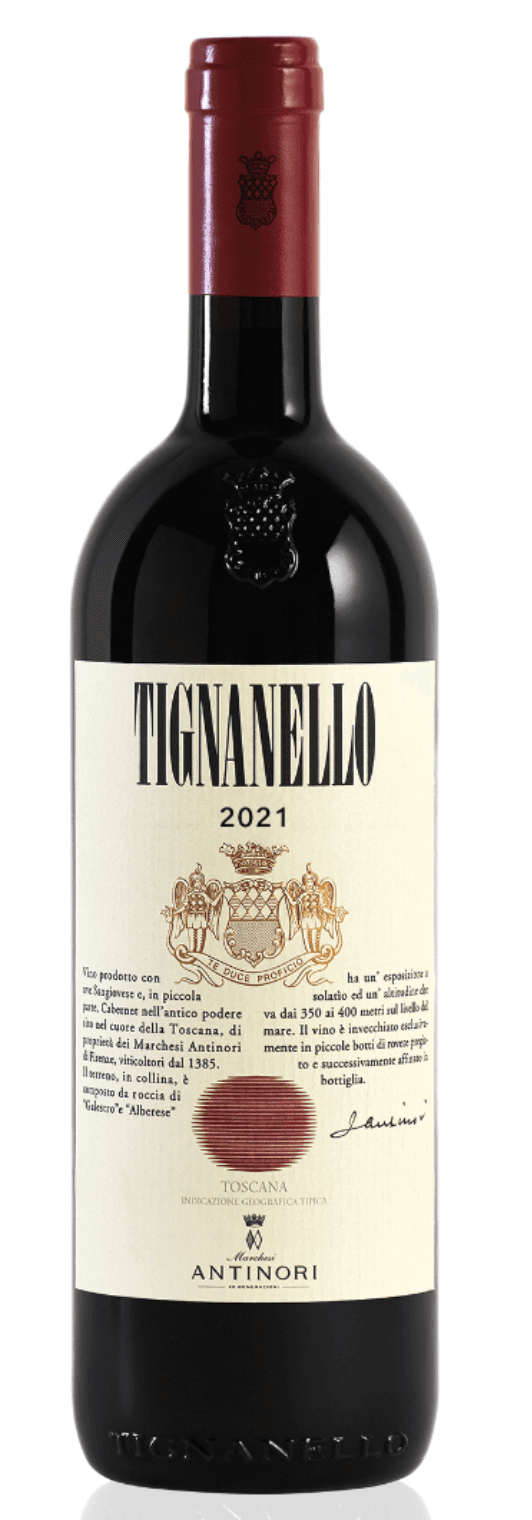
Antinori Tignanello 2021
Marchesi Antinori (est. 1385, 26th generation) · Tenuta Tignanello, Chianti Classico, Tuscany, Italy
Tignanello is the wine that proved terroir could be revolutionary. When Piero Antinori released the 1971 vintage — a Sangiovese-Cabernet blend aged in French barriques, made outside every regulation that governed Chianti — the Italian wine establishment was outraged. The wine was declassified to “Vino da Tavola,” Italy’s lowest designation. Antinori didn’t care. He believed the Tignanello vineyard’s galestro and albarese soils (a mix of calcium-rich marl and hard limestone found only in central Tuscany) could produce wines that rivaled Bordeaux — if freed from rules requiring white grapes in a red wine. History proved him right. The 2021 vintage benefits from a warm but balanced growing season, with the Sangiovese delivering its characteristic sour cherry and herbal complexity while the Cabernet adds structure and depth. At 26 generations and 640 years, Antinori is the oldest family-owned wine company on earth — and Tignanello remains their most radical creation.
Kit Aromas
Nose
Black cherry, dried violet, leather, espresso, cedar, sweet tobacco, and a savory olive-herb complexity that screams Tuscan hillside.
Palate
Powerful and structured — ripe plum, sour cherry, dark chocolate, rosemary, licorice, fine-grained tannins, and a minerality from the galestro soil that gives the wine its signature tension between fruit and earth.
Finish
Very long with lingering cherry, cedar, dried herbs, cocoa, and a stony mineral persistence that builds on the palate.
- Varietal
- Sangiovese
- Blend
- 80% Sangiovese, 15% Cabernet Sauvignon, 5% Cabernet Franc
- Vineyards
- Tignanello estate, 320–400m elevation, galestro and albarese soils
Cocktail Suggestion
Cocktail — The Tuscan Negroni: 1.5 oz gin · 1 oz Campari · 1 oz sweet vermouth · 1 oz Tignanello (float). Stir gin, Campari, and vermouth with ice, strain into a rocks glass, float the Tignanello. An Italian cocktail with an Italian wine — the Sangiovese’s cherry and herbal notes transform the classic.
Food Pairing
Pair with: Bistecca alla Fiorentina — a thick-cut, rare-grilled T-bone seasoned only with salt, olive oil, and lemon. The quintessential Tuscan pairing: the wine’s tannins cut through the fat, the cherry fruit echoes the char, and the mineral backbone matches the simplicity of the preparation.
Be the first to comment.
Leave a comment

Reininger Syrah Walla Walla
Reininger
Reininger's Walla Walla Syrah captures the rugged altitude and basalt-rich terroir of eastern Washington's most celebrated valley. It delivers old-world structure and restraint at a new-world price point, making it an outstanding weeknight pour or a serious partner for hearty fare.

Barolo, Bartolo Mascarello
Bartolo Mascarello
Bartolo Mascarello's Barolo is the embodiment of tradition as revelation—a wine that opens no doors with force but invites you to turn the handle yourself. This is classically composed Barolo from one of the last great traditionalists, blended from multiple crus in Barolo village to create a whole greater than its parts. For those willing to look inward, this bottle rewards with uncommon depth and grace.

Brovia Barolo DOCG 2019
Brovia
Brovia's entry-level Barolo is a serious wine at a fair price. The 2019 vintage offers generous fruit without sacrificing the structure and austerity that make Barolo compelling. It's an honest expression of Castiglione Falletto — floral, firm, and deeply rewarding.

Fattoria di Selvapiana Chianti Rufina DOCG 2021
Selvapiana
Selvapiana's entry-level Chianti Rufina consistently over-delivers. The 2021 vintage captures the Rufina sub-zone's cooler-climate Sangiovese character — higher acidity, more tension, and a savory edge that makes it an exceptional food wine. One of Tuscany's great bargains.