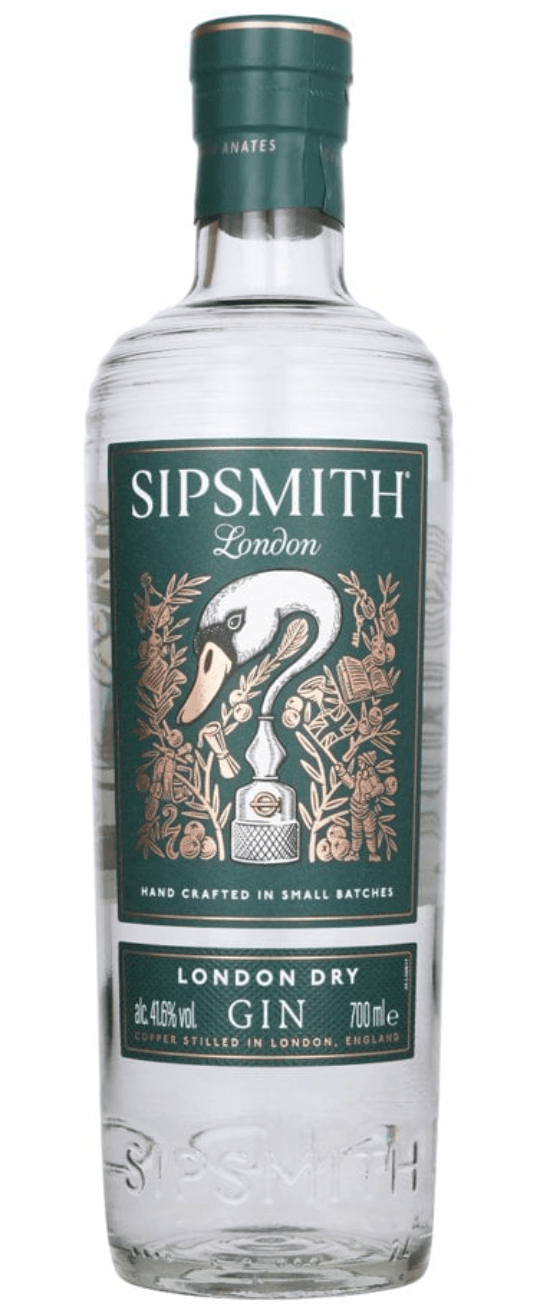
Sipsmith London Dry Gin
Beam Suntory (founded by Fairfax Hall, Sam Galsworthy & Jared Brown) · Sipsmith Distillery, Chiswick, London, England
Sipsmith didn’t just make a great gin — they changed the law to do it. In 2009, London had no small-batch copper pot gin distilleries because regulations required stills ten times larger than what craft producers could use. Hall and Galsworthy lobbied Parliament, got the law changed, and installed a tiny 300-liter copper pot still they named Prudence. The gin that came out was a love letter to London Dry — juniper-led, citrus-bright, and unapologetically classic. It launched a thousand craft gins, and it’s still one of the best.
Nose
Bold juniper, zesty lemon, floral meadow, gentle coriander, hint of marmalade
Palate
Juniper-forward and classically dry — bright citrus, peppery warmth, clean botanicals, silky texture
Finish
Long and dry with lingering juniper, lemon oil, and a whisper of liquorice
- Botanicals
- 10 carefully selected botanicals including juniper, coriander, angelica root, liquorice, orris root, almonds, cassia bark, cinnamon, Seville orange peel, lemon peel
- Distillation
- One-shot distillation in copper pot stills (Prudence, Constance, Patience)
Cocktail Suggestion
Cocktail — The Proper G&T: 2 oz Sipsmith London Dry · 4 oz premium Indian tonic water · Generous squeeze of fresh lemon. Build in a Copa glass filled with ice. Stir once. Garnish with a lemon wheel.
Food Pairing
Pair with: Fish and chips with malt vinegar — a gin born in London, paired with London’s most iconic dish.
Be the first to comment.
Leave a comment

Conniption Navy Strength Gin
Conniption
Durham Distillery's navy strength offering takes the clean, contemporary profile of the original Conniption and amplifies it to dramatic effect. The higher proof doesn't bully — it illuminates, making this an exceptional gin for cocktails that need backbone without losing botanical nuance.

St. George Dry Rye Reposado Gin
St. George Spirits
St. George's barrel-aged rye gin sits at the crossroads of whiskey and gin, using fire twice — once to dry-roast botanicals, once through barrel maturation. The result is a gin with structure and warmth that holds up beautifully in stirred cocktails where a London Dry would feel thin. A bridge bottle for whiskey lovers exploring gin.

Beefeater Burrough's Reserve Oak Rested Gin
Beefeater
Master Distiller Desmond Payne's vision of what happens when the spirit meets the cask is brought to vivid life in Burrough's Reserve Oak Rested. Rested in hand-selected Jean de Lillet oak casks — previously used to age the storied French aperitif — this gin embodies the issue's theme at its most literal: the barrel's inner skin imparts golden color, vanilla richness, and a gentle tannic framework without ever eclipsing the juniper-forward London Dry character. It occupies a fascinating middle ground between gin and aged spirit, rewarding both neat sipping and barrel-aged cocktails.

Bols Genever Barrel Aged 18 Month
Bols
A masterclass in patience applied to the gin family tree. Where most gins celebrate the instant brightness of distillation, Bols Barrel Aged 18 Month embraces the slow alchemy of oak and time. The result is a spirit that bridges the worlds of aged whiskey and botanical distillate — furnace-forged grain spirit tempered into something deeply contemplative. Perfectly aligned with "The Furnace of Patience," this genever proves that even the juniper berry bows to time's authority.