Price
$50 – $100
60 reviews
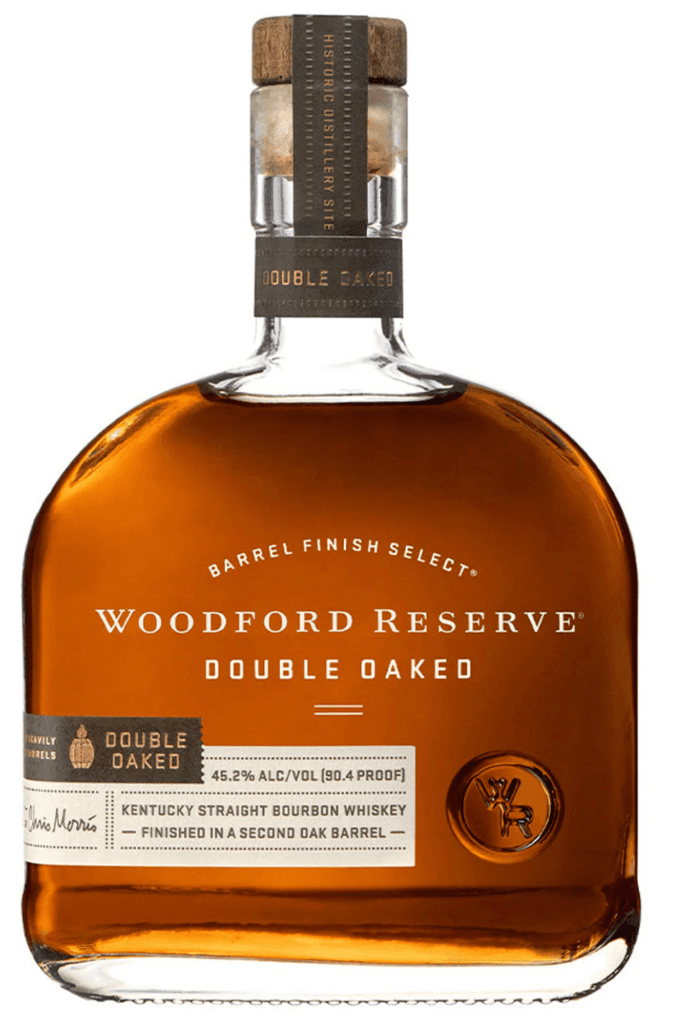
Woodford Reserve Double Oaked
Brown-Forman Corporation
Double Oaked is a masterclass in what a second barrel can do. The first barrel gives you a solid bourbon; the second one — deeply toasted before a light char — unlocks layers of caramel and dark fruit you didn’t know were possible. It’s sweet without being cloying, complex without being difficult. Sip it neat to appreciate the full evolution from nose to finish.
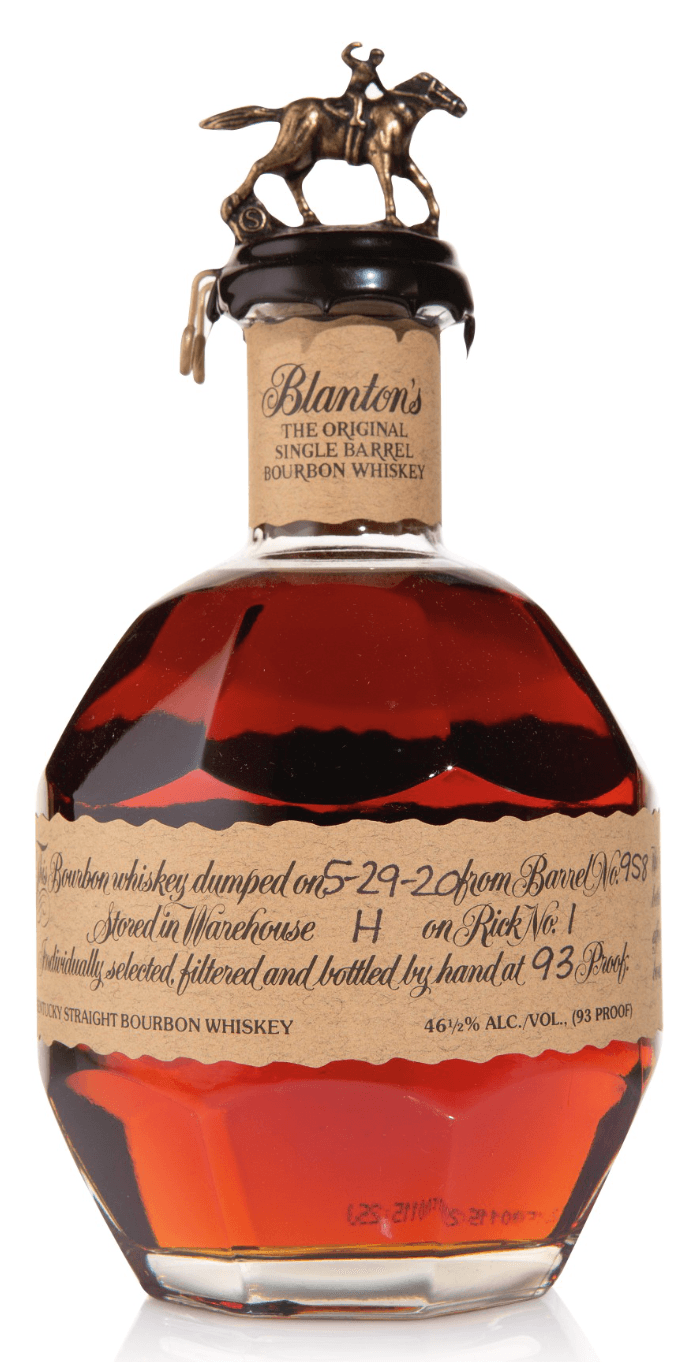
Blanton's Original Single Barrel
Sazerac Company (Buffalo Trace, est. 1773)
Blanton's Original Single Barrel didn't just create a bourbon — it created a category. When Elmer T. Lee bottled the first single barrel in 1984, he proved that elegance and bourbon weren't contradictions.
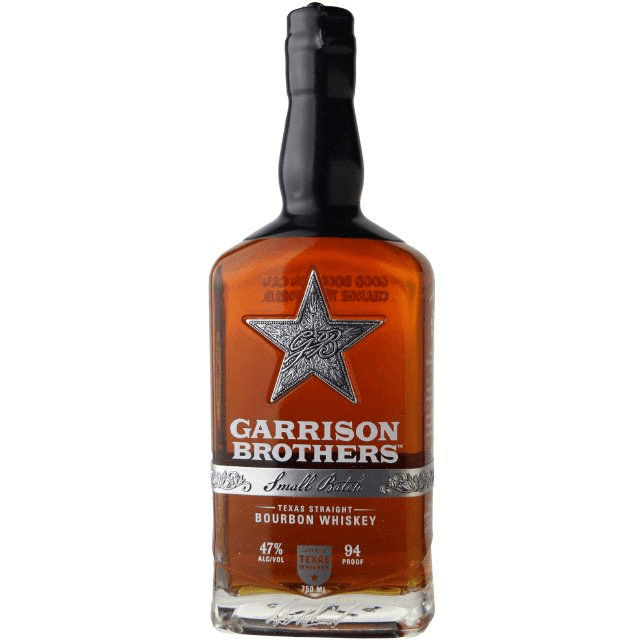
Garrison Brothers Small Batch Texas Straight Bourbon
Garrison Brothers Distillery
Garrison Brothers makes a convincing case that exceptional bourbon doesn't require a Kentucky zip code. The Texas climate does what years of barrel rotation cannot — it pushes the spirit hard against new oak from the first summer, extracting a depth of caramel and vanilla that rivals aged Kentucky expressions at twice the price. The Small Batch is approachable enough for newcomers and complex enough to challenge experienced palates. This is the bourbon that makes you reconsider every assumption about terroir and tradition.
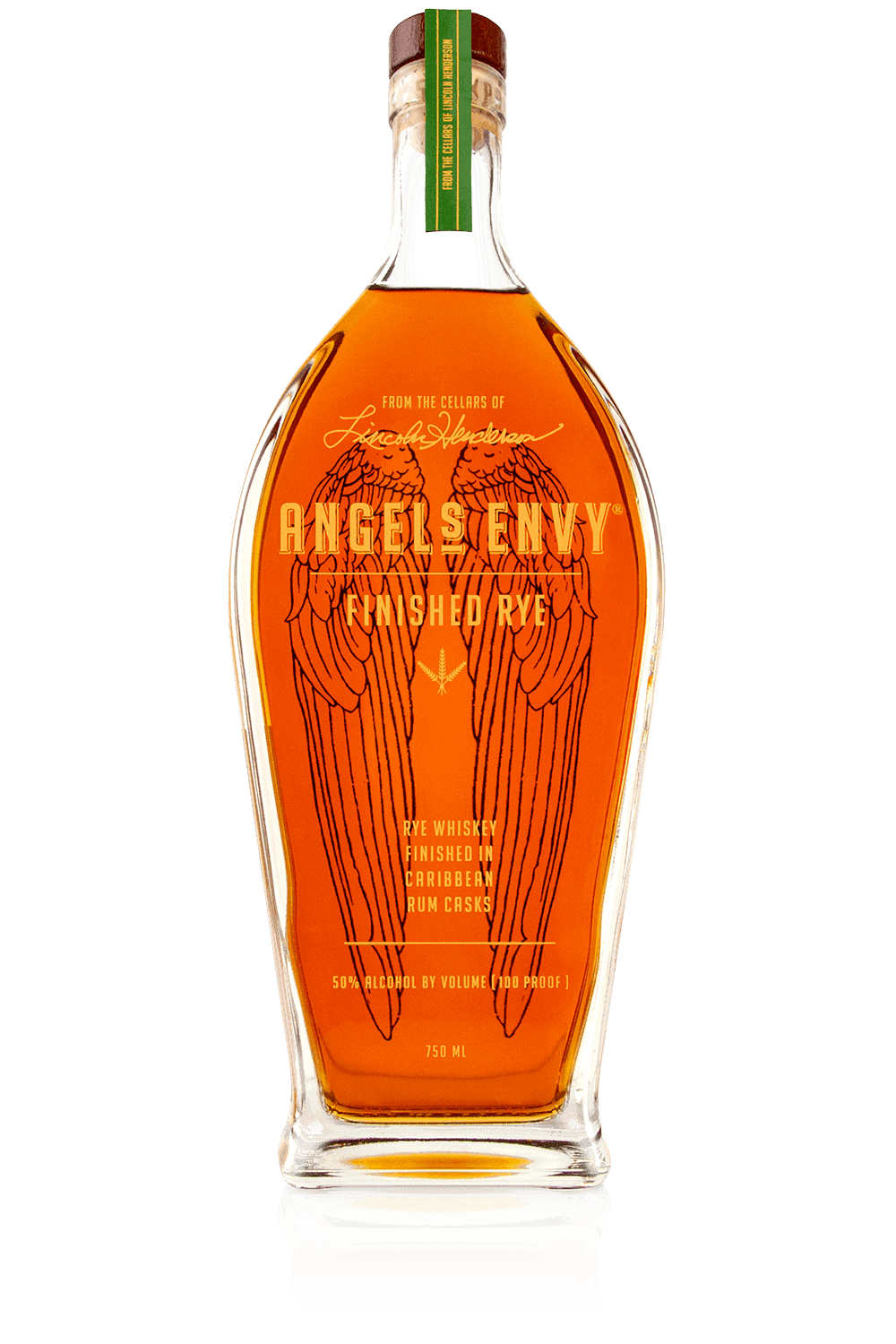
Angel's Envy Rye Finished in Rum Barrels
Louisville Distilling Company (Bacardi)
Lincoln Henderson spent decades perfecting bourbon at Woodford Reserve. Then, after four decades at Brown-Forman and a brief retirement, he started over. Angel's Envy Rye is the fruit of that second act — a rye finished in Caribbean rum barrels that adds layers of tropical sweetness to the grain's natural spice.
Compass Box Spice Tree
Compass Box Whisky Company
Caol Ila 12 Year Old
Diageo
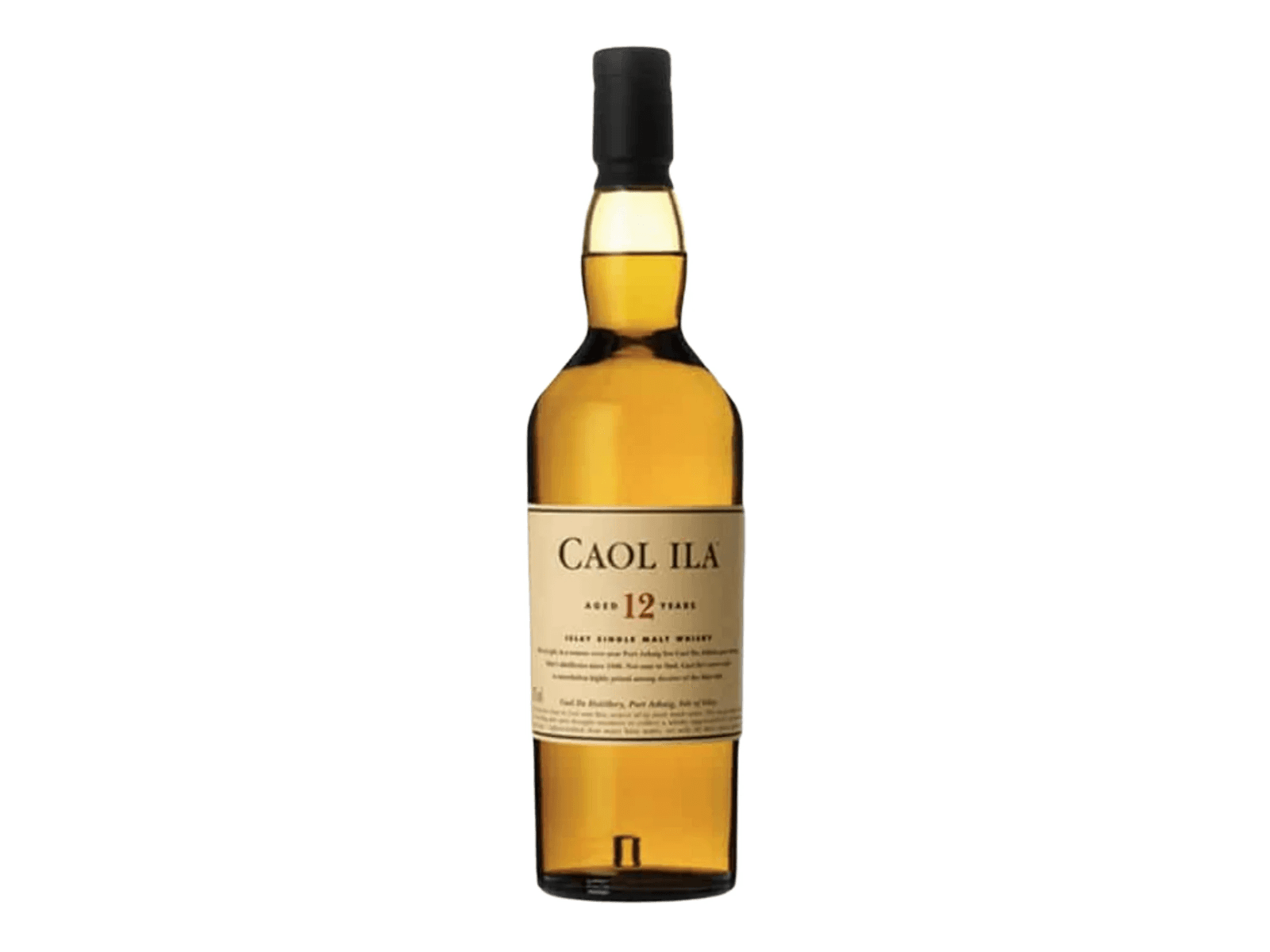
Caol Ila is Islay’s quiet giant. It is the largest distillery on the island, producing more whisky than any of its neighbors, yet most of that output disappears into Diageo’s blended Scotch portfolio. The 12 Year Old single malt bottling is what happens when you give Caol Ila a chance to speak for itself — and it speaks with an elegance that surprises anyone expecting another peat bomb. The smoke here is maritime and measured, threaded through with citrus brightness and a saline minerality that tastes like the shoreline where the distillery stands. At its price point, Caol Ila 12 is one of the most undervalued single malts in the Diageo portfolio — hidden in plain sight behind Lagavulin’s fame.
Glenfiddich 15 Year Old Solera
William Grant & Sons
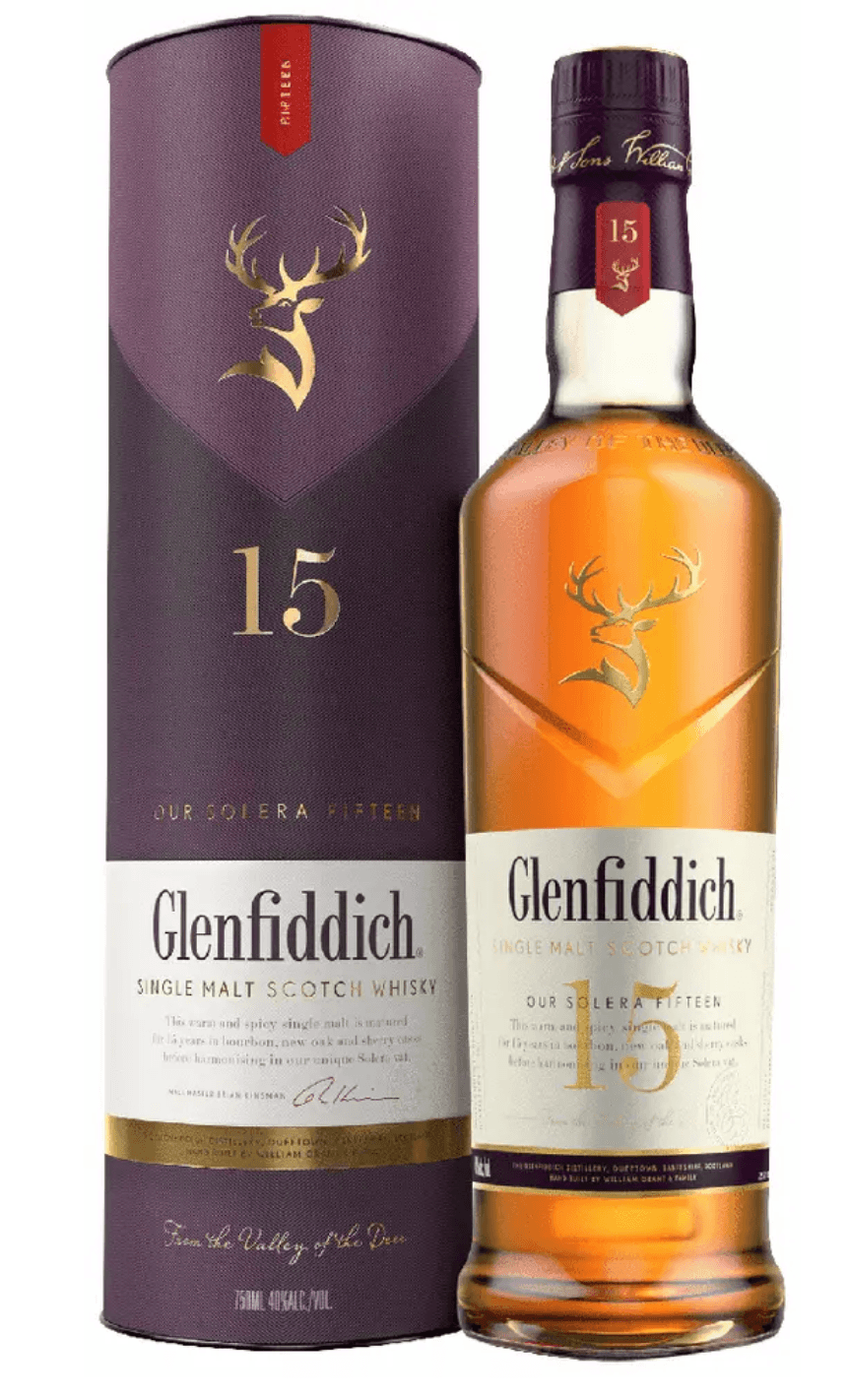
The solera process is what sets this apart from every other 15-year-old Scotch on the shelf. By marrying whiskies in a vat that’s been continuously replenished for nearly three decades, Glenfiddich creates a consistency and depth that batch-by-batch production can’t replicate. It’s rich without being heavy — a Speyside that welcomes newcomers and still rewards experienced palates.
Highland Park 12 Year Old
The Edrington Group
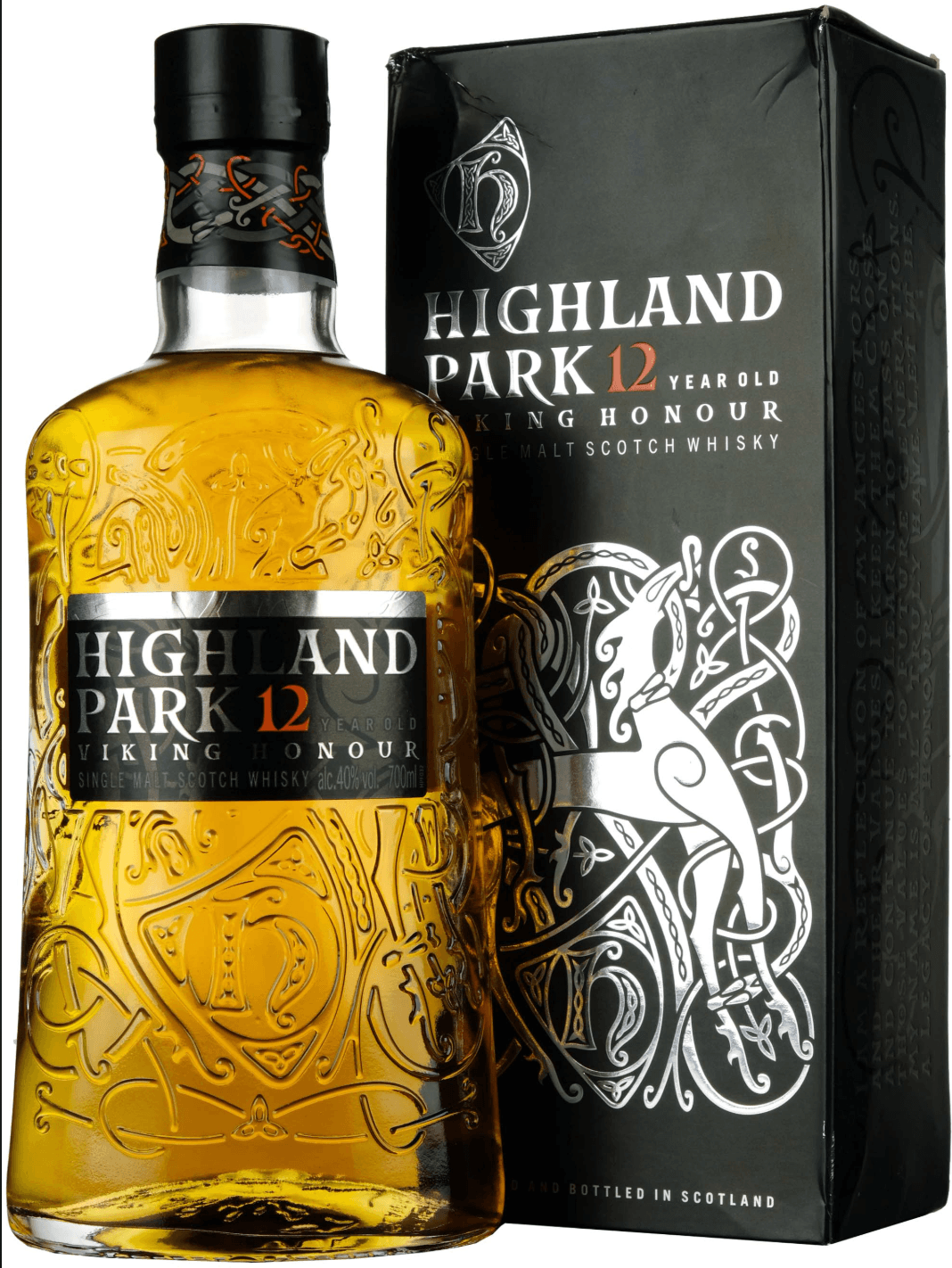
Highland Park 12 is the great balancing act in Scotch whisky. It’s peated but not aggressively so, because Orkney’s peat is infused with heather rather than the woody roots found on Islay — the result is floral smoke rather than campfire smoke. Add in the sherry cask sweetness and the unmistakable coastal salinity from water drawn from Cattie Maggie’s Spring for over two centuries, and you get a whisky that bridges the gap between Speyside smoothness and Island intensity. It’s the single malt that converts people who think they don’t like peat.
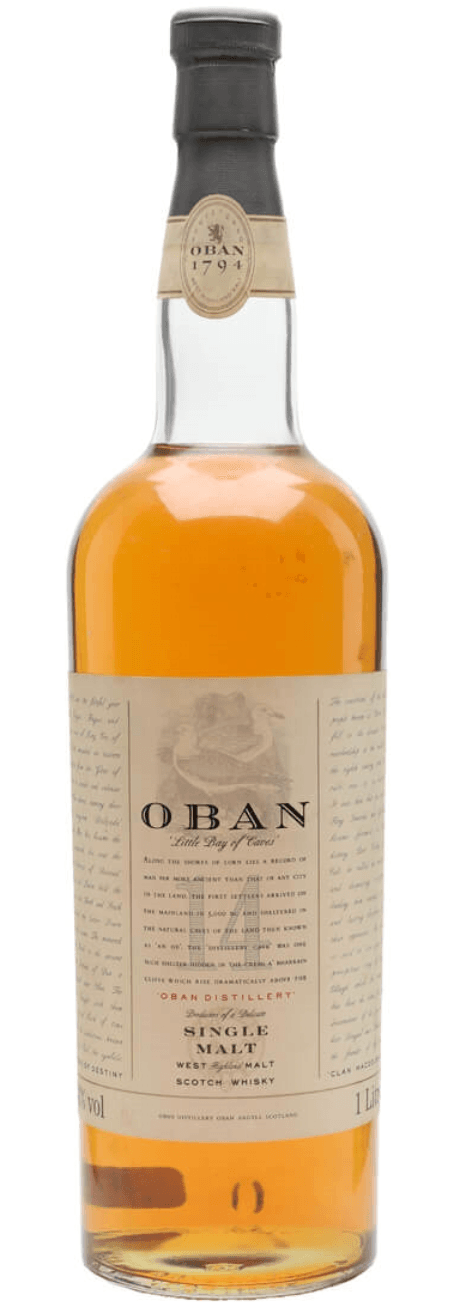
Oban 14 Year Old
Diageo (Oban Distillery, est. 1794)
Oban’s obsession is constraint. The distillery sits wedged between the harbor and a cliff — physically unable to expand — with just two of the smallest pot stills in Scotland. Where other distilleries chase scale, Oban has embraced its limitations: the tiny stills force a slow, careful distillation that produces a spirit with remarkable concentration. The lantern shape of those stills creates more copper contact, stripping away harsh sulfur compounds and leaving behind a whisky that bridges two worlds — the gentle honey and fruit of the Highlands with the maritime salt and smoke of the western coast. Diageo named it one of their six “Classic Malts” in 1988 for a reason: at 14 years old, it’s one of the most perfectly balanced whiskies in Scotland.
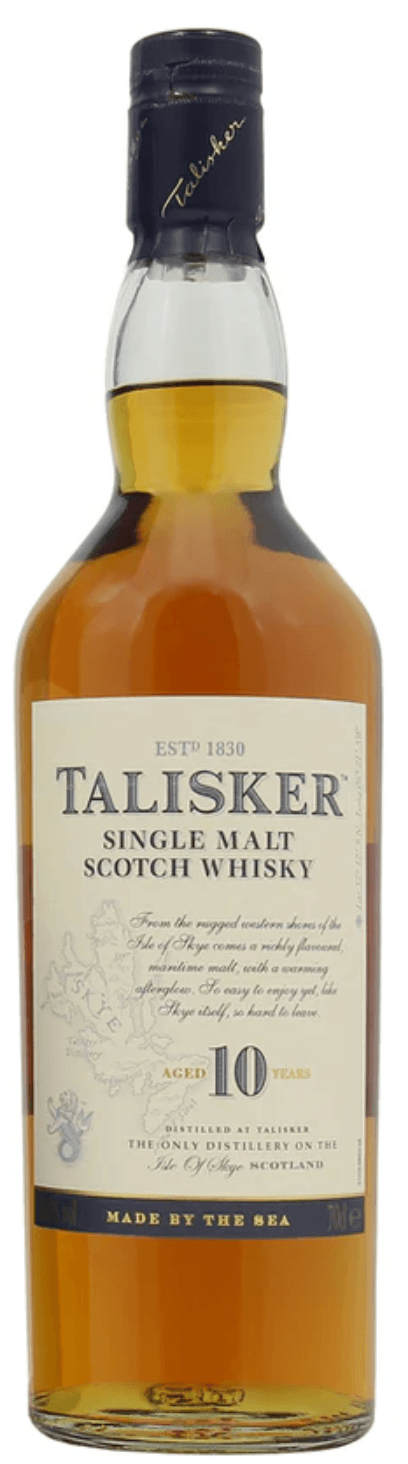
Talisker 10 Year Old
Diageo (Talisker Distillery, est. 1830)
Talisker doesn’t just taste like Skye — it tastes like it was made by the island itself. The distillery’s unique setup includes swan-neck lyne arms that loop back on themselves, sending heavier flavor compounds back through the still for a second pass of copper contact. This creates a spirit that’s simultaneously smoky and sweet, peaty and peppery. The peat used to dry the malt is local, carrying Skye’s distinctive maritime character into the smoke. And then there’s the maturation: sea air penetrates the warehouses year-round, the casks breathing in salt and iodine with every expansion and contraction. Diageo named Talisker one of their Classic Malts in 1988, representing the Islands — and there is no whisky that more completely embodies its geography. At 45.8% ABV (higher than most standard bottlings), it has the strength to deliver every ounce of that Skye character.
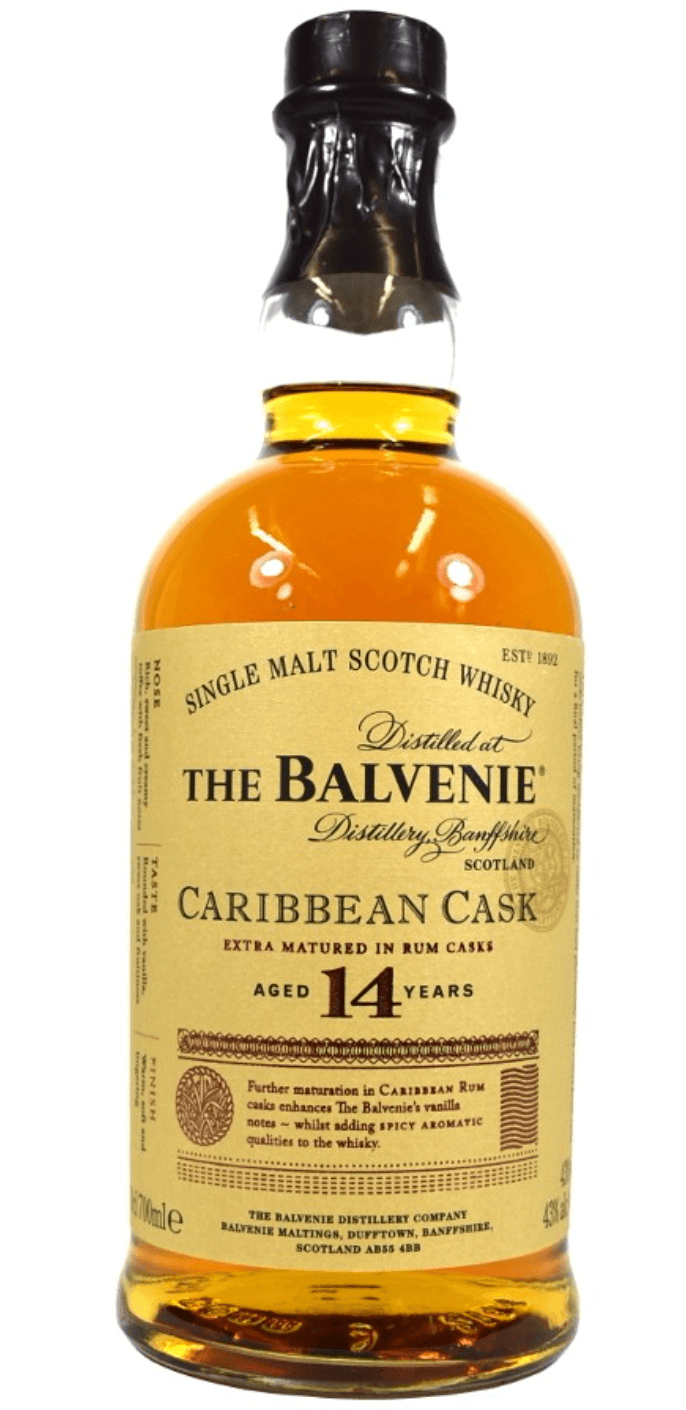
The Balvenie 14 Year Old Caribbean Cask
William Grant & Sons (The Balvenie, est. 1892)
The Balvenie Caribbean Cask 14 is a masterclass in the elegance of cask finishing.
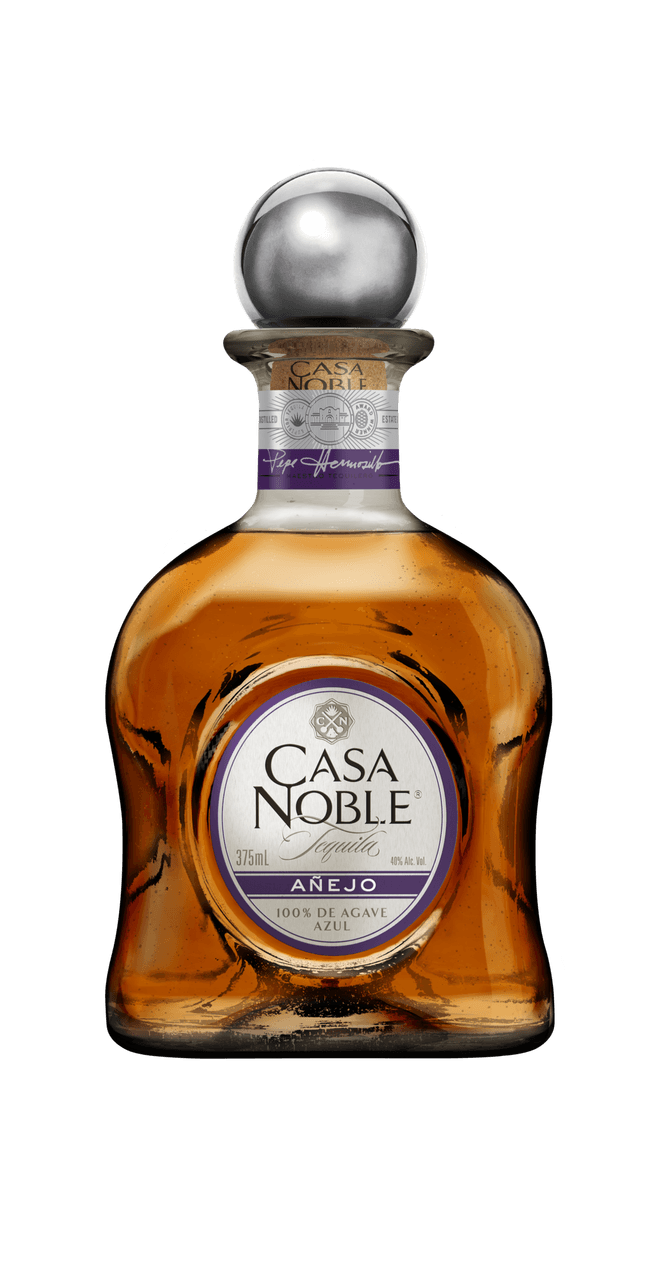
Casa Noble Anejo
Constellation Brands
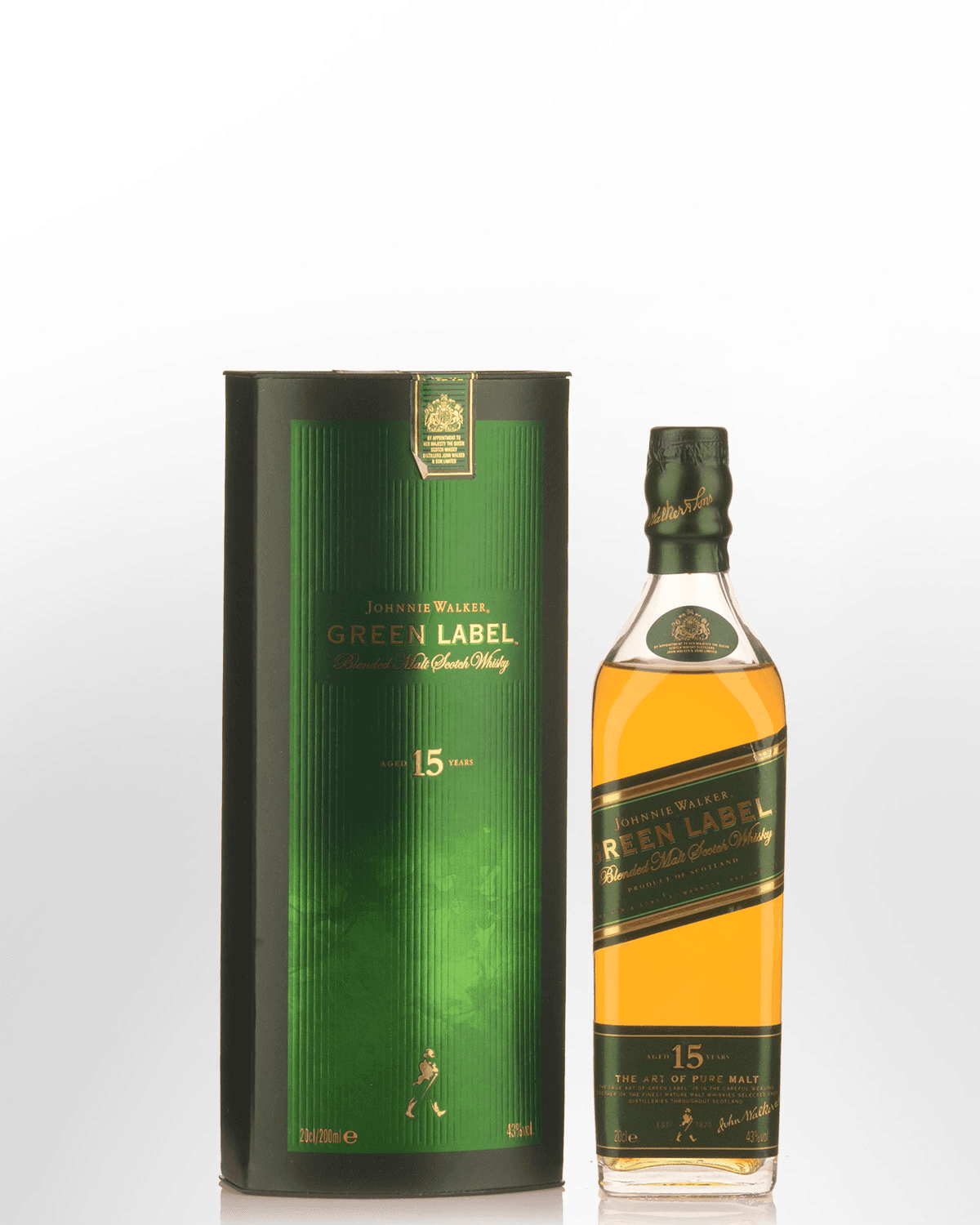
Johnnie Walker Green Label 15 Year Old
Diageo
Green Label is among the most underappreciated whiskies in the Johnnie Walker family. Pure malt — four single malts combined into one harmonious whole.
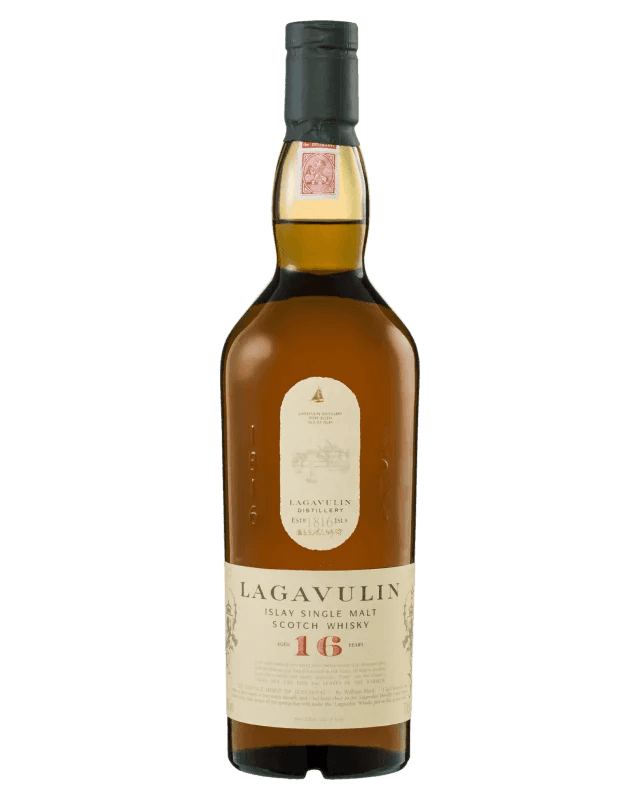
Lagavulin 16 Year Old
Diageo plc
If bourbon taught you to love whisky, Lagavulin 16 will teach you to love Scotch. This is the definitive Islay expression — complex enough to reward repeated exploration but immediately compelling to any drinker willing to meet it halfway. The 16-year age statement matters: it's the minimum time needed for Lagavulin's peat to resolve into this degree of integrated complexity.
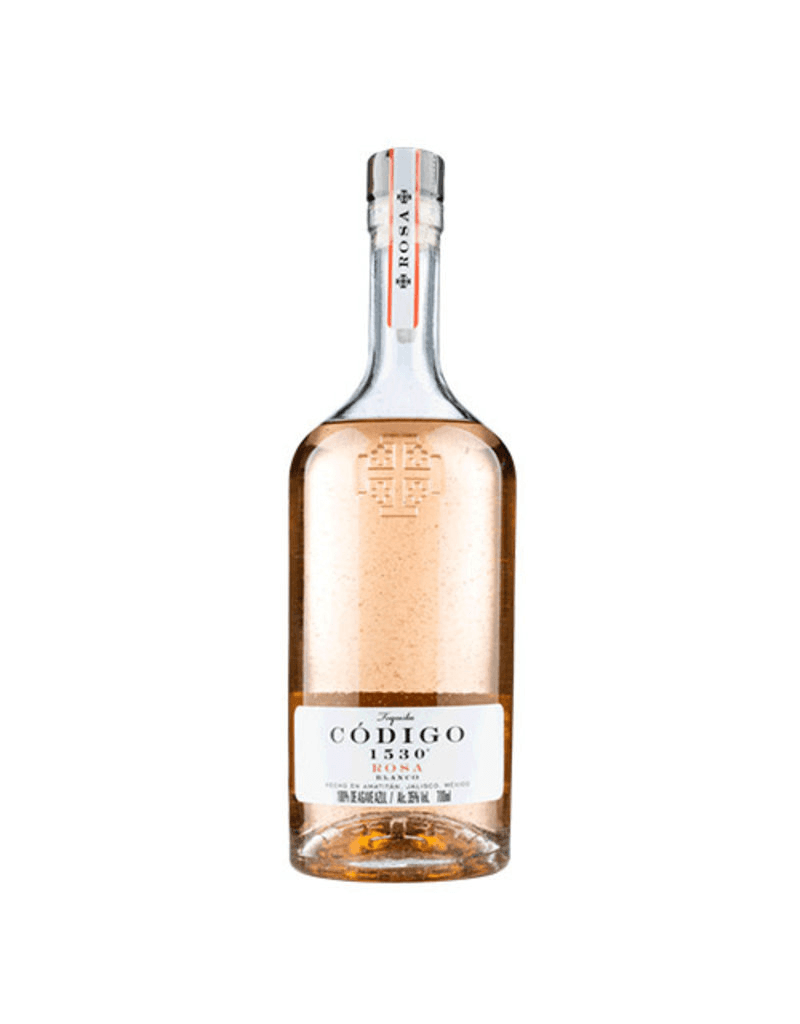
Código 1530 Rosa
Código 1530
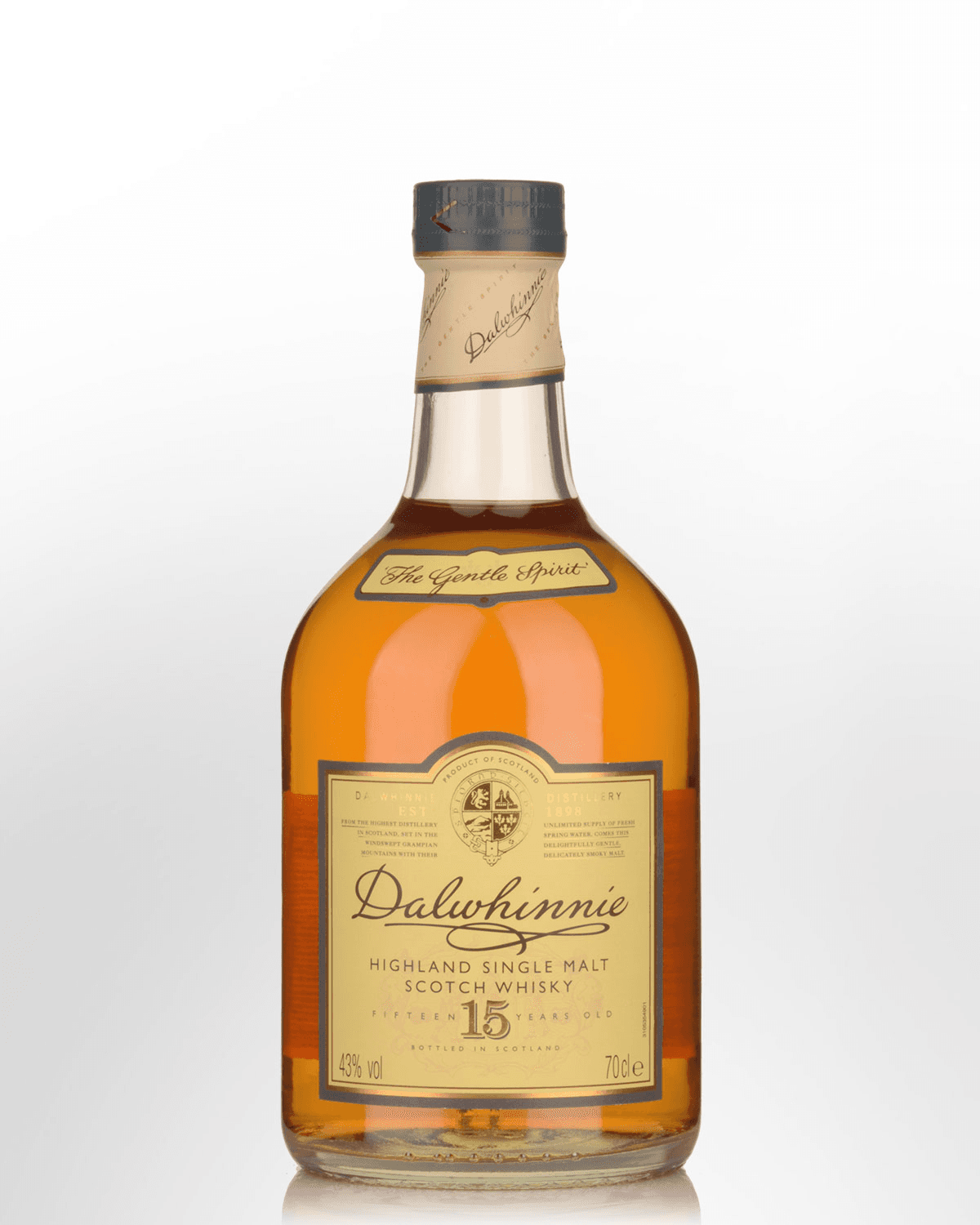
Dalwhinnie 15 Year Old
Diageo
Dalwhinnie 15 is the whisky world's best argument that altitude matters.
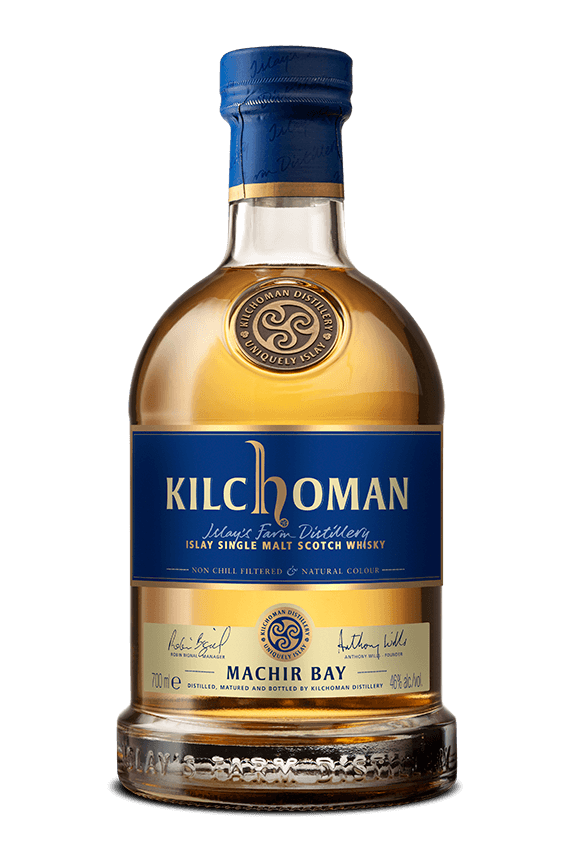
Kilchoman Machir Bay
Kilchoman Distillery Co. (Independent)
Kilchoman is what happens when someone decides to do everything the hard way — and gets it spectacularly right. Anthony Wills didn't just build a new distillery on Islay; he built one that grows its own barley, malts it over its own peat-fired kiln, and distills in tiny copper pot stills.
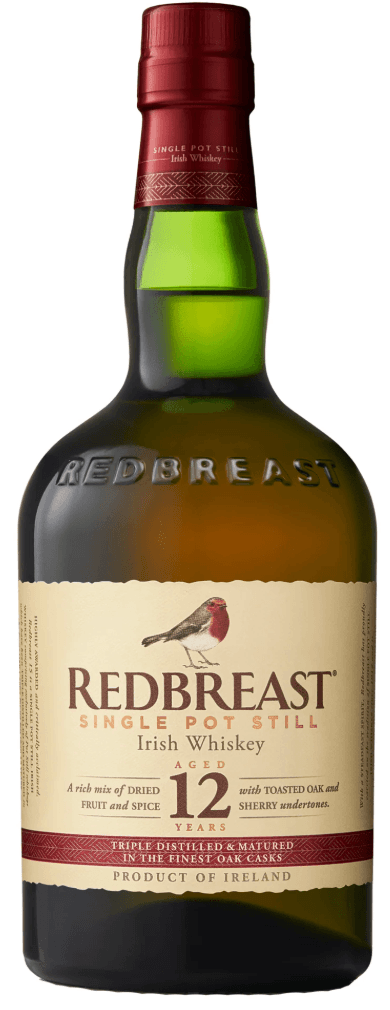
Redbreast 12 Year Old
Pernod Ricard (Irish Distillers)
Redbreast 12 is the definitive pot still Irish whiskey — the one that shows you what the fuss is about. The 50/50 split of malted and unmalted barley creates a texture that’s impossible to achieve with malt alone: creamy, spicy, and full-bodied in a way that triple distillation normally smooths out. The combination of ex-bourbon honey and sherry dried fruit is seamless. The name comes from a bird-loving Gilbeys chairman in 1912, but the whiskey itself has roots stretching back much further — it’s one of only two single pot still brands produced nearly continuously since the early 1900s.
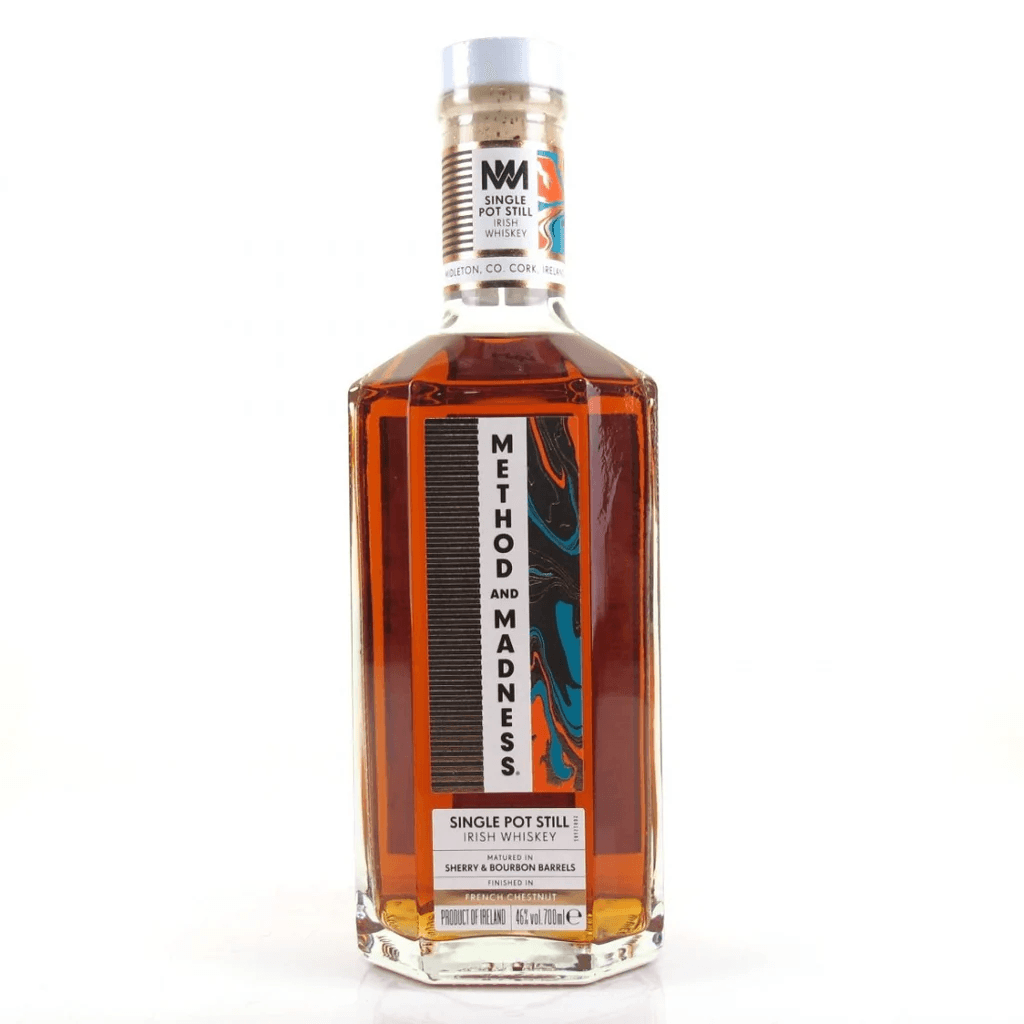
Method and Madness Single Pot Still
Irish Distillers (Pernod Ricard)
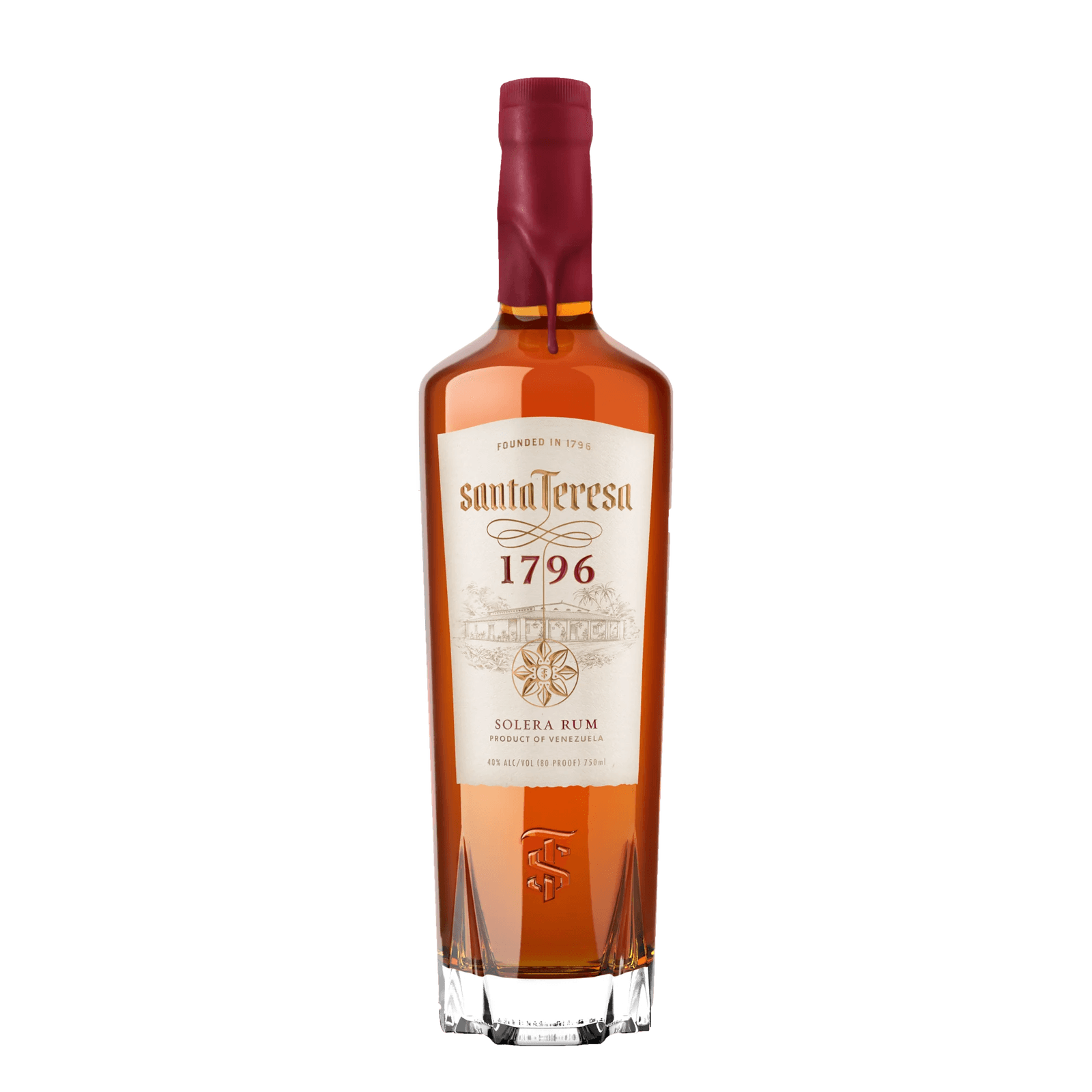
Santa Teresa 1796
Santa Teresa
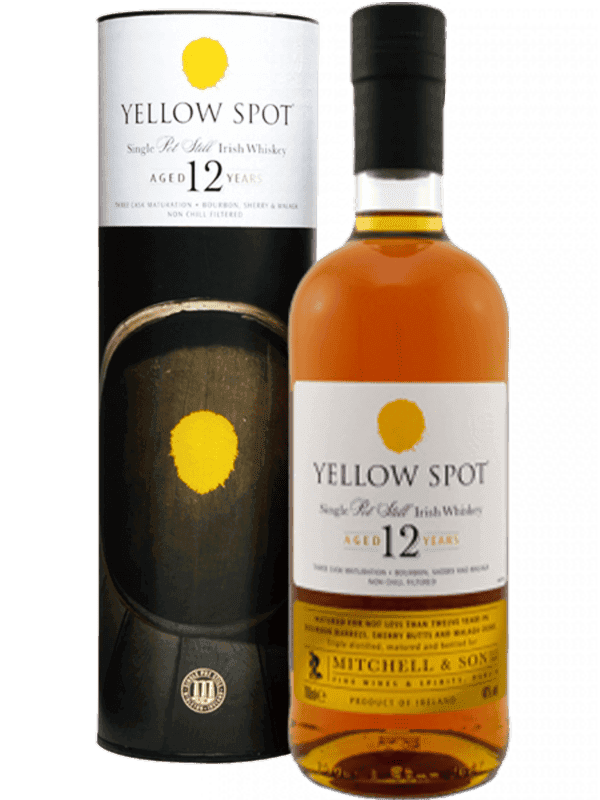
Yellow Spot 12 Year Old
Irish Distillers (Pernod Ricard)
Yellow Spot is the middle child of the Spot range, and arguably the most balanced. Three-cask blend: bourbon, sherry, and Malaga.
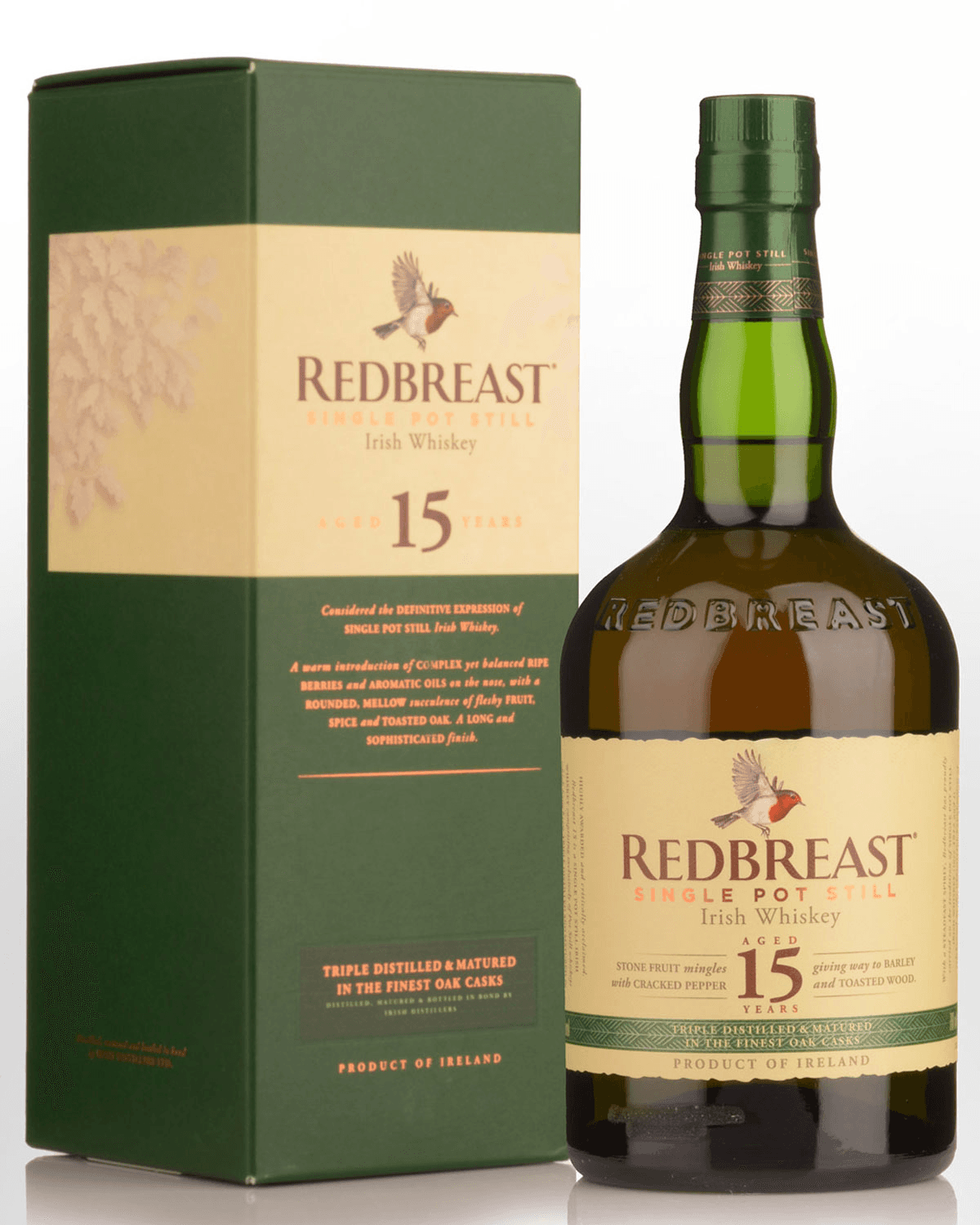
Redbreast 15 Year Old
Irish Distillers (Pernod Ricard)
Redbreast 15 is where Irish whiskey proves its claim to greatness. Every additional year beyond the 12-year expression adds another dimension — more dried fruit, deeper oak integration, and a creaminess that recalls the finest aged spirits from anywhere in the world.
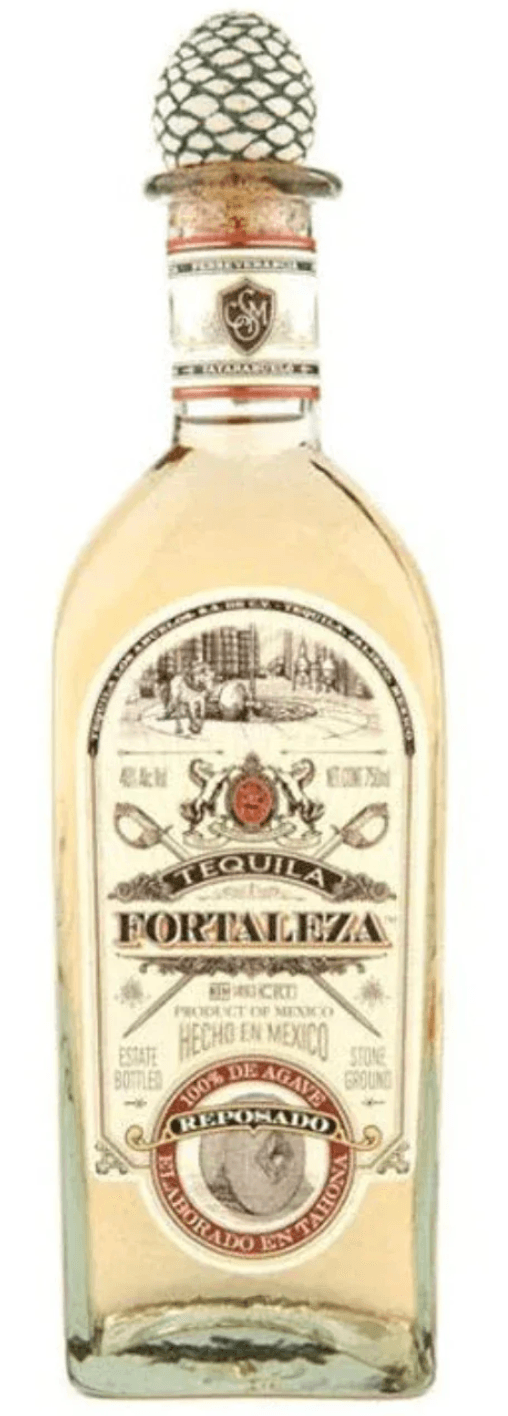
Fortaleza Reposado
Destilería La Fortaleza (Guillermo Erickson Sauza)
Fortaleza is tequila made the way it was meant to be made. While most modern producers use autoclaves and diffusers for speed and efficiency, Guillermo Sauza — great-great-grandson of Don Cenobio Sauza, the “Father of Tequila” — insists on the tahona, the brick oven, and the wooden fermentation tanks. The volcanic spring water that feeds the distillery carries minerals from deep within the stratovolcano, and you can taste the terroir in every sip. The reposado rests just long enough to gain warmth and vanilla from the barrel without losing the agave’s voice.
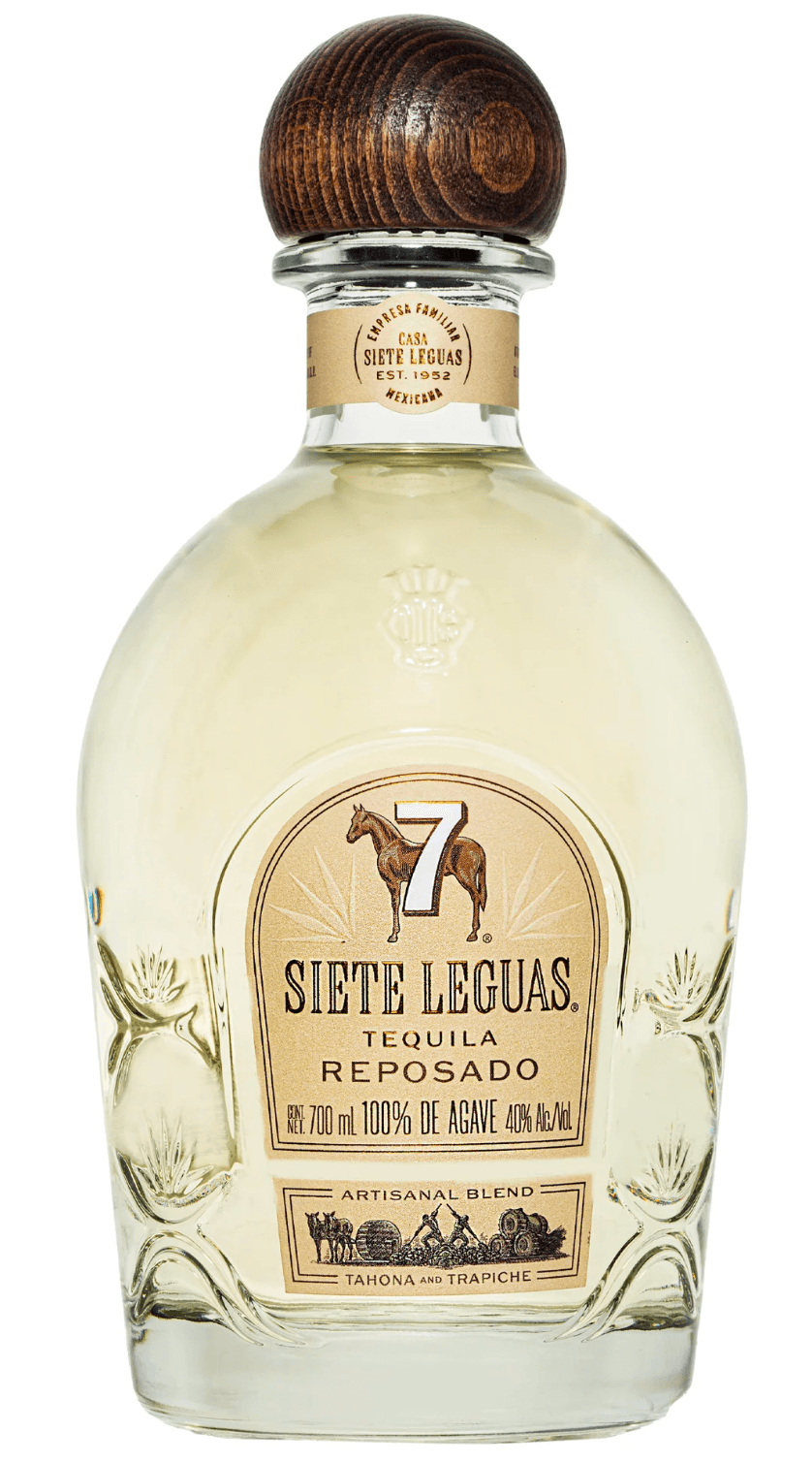
Siete Leguas Reposado
Casa Siete Leguas (est. 1952)
If El Tesoro is the tequila nerd’s tequila, Siete Leguas is the tequila maker’s tequila. This is the distillery where Don Julio González originally made his tequila before launching his own brand — yes, Don Julio tequila was born at Siete Leguas. The family has refused every shortcut the modern tequila industry has embraced: they still use brick ovens when autoclaves are faster, tahona stones when roller mills are cheaper, wooden fermentation tanks when stainless steel is easier to clean, and copper pot stills when column stills would be more efficient. The result is a tequila with a mineral complexity and savory depth that industrial methods simply cannot replicate. The Reposado’s eight months in American oak adds just enough vanilla and warmth without obscuring the agave and terroir. When tequila professionals talk about “the old way,” this is what they mean.