Issue 7 · April 2, 2026
The Long Game
Theme: Patience as Craft
Port-barrel finishing, decade-old agave, sherry cask maturation — producers who let time do the work.
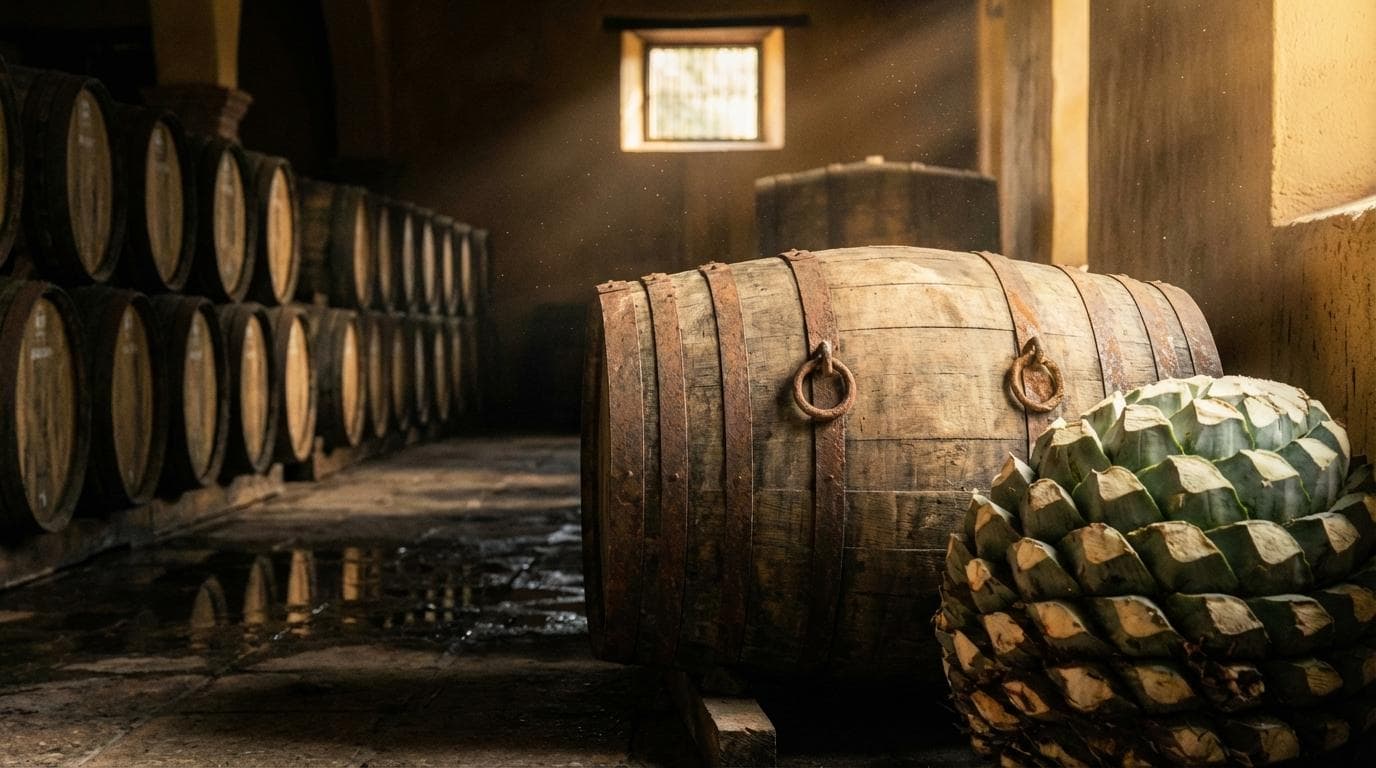

Every bottle in today's issue was shaped by patience. Not the passive kind — not merely waiting — but the deliberate, purposeful kind: the decision to take longer when faster was an option, to let time do work that shortcuts cannot replicate.
A bourbon finished in port barrels from Portugal. A Scotch matured exclusively in hand-picked sherry casks from Jerez. A tequila whose agave waited nearly a decade before harvest, then cooked for 72 hours. A rum aged on two continents over two decades. A gin whose botanicals span an entire year of seasonal harvest. Today's eight selections share a single conviction: that the extra time — the unhurried cook, the second aging, the patient harvest — is what separates good from unforgettable. This is Issue 7: Patience.
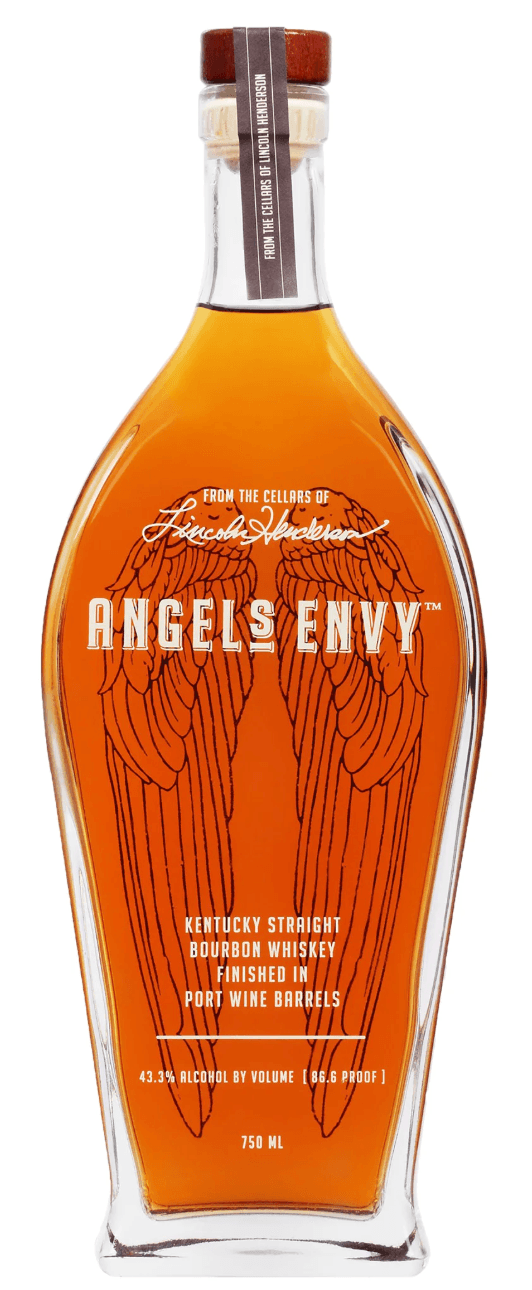
BOURBON Angel's Envy Kentucky Straight Bourbon
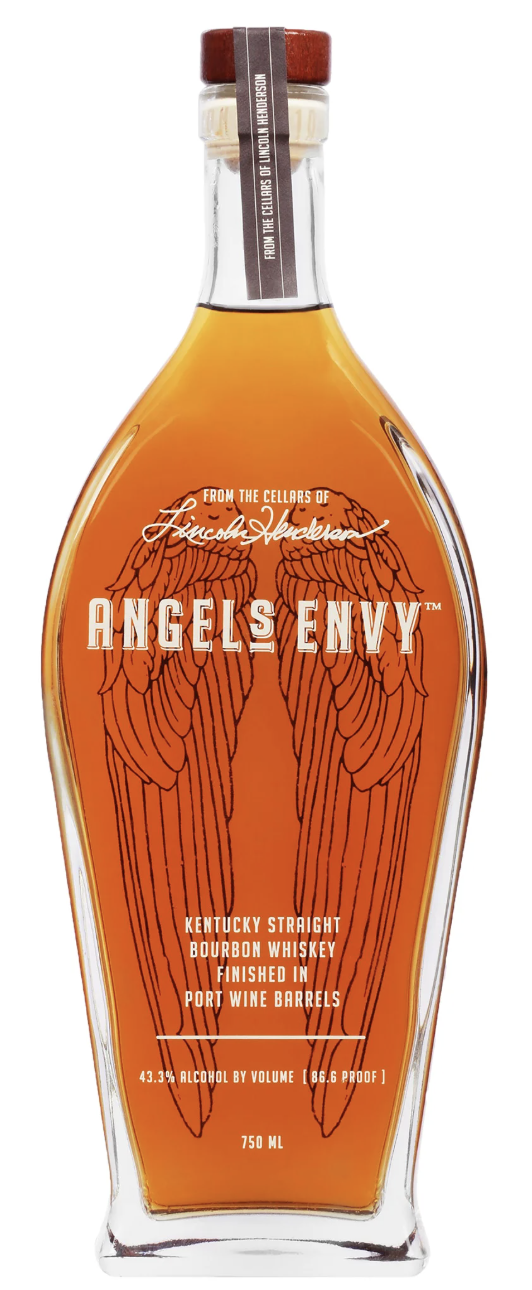
Louisville, Kentucky — where Lincoln Henderson, a master distiller with four decades of experience at Brown-Forman, came out of retirement at 72 to build something he'd been thinking about for years: a bourbon finished in port wine barrels, marrying American whiskey tradition with Old World patience.
Classification: Kentucky Straight Bourbon Whiskey, Port Wine Barrel Finished
Company: Louisville Distilling Company (Angel's Envy, est. 2010)
Distillery: Angel's Envy Distillery, Louisville, Kentucky
Proof: 86.6 (43.3% ABV)
Age: 4–6 years in new charred American oak, finished up to 6 months in port wine barrels from Portugal
Mash Bill: 72% Corn / 18% Rye / 10% Malted Barley
Color: Deep amber with ruby highlights from the port finish
MSRP: $50–$55 (750 mL)
Nose: Ripe cherry, maple syrup, vanilla bean, toasted oak, dried apricot, a whisper of dark berry sweetness from the port finish, and a warm baking spice complexity that rewards slow, deliberate nosing.
Palate: Lush and velvety — caramel, ripe plum, dark chocolate, orange peel, maple, and a port-wine sweetness that emerges mid-palate and builds. The rye spice keeps everything in check, preventing the sweetness from becoming cloying.
Finish: Long and warming with lingering cherry, vanilla, oak tannins, maple, and a dry, slightly fruity fade that makes you want to wait — and then sip again.
Cocktail — The Port of Call: 2 oz Angel's Envy · oz fresh lemon juice · oz ruby port · oz honey syrup · 2 dashes Angostura bitters. Shake with ice, strain into a coupe. Garnish with a brandied cherry. The port amplifies the bourbon's finish while the lemon lifts the honey into something bright.
Pair with: Duck breast with a cherry-port reduction. The bourbon's port-barrel sweetness and cherry notes mirror the sauce, while the rye spice cuts the richness of the duck fat. A pairing that rewards patience — sear the duck slowly, let the fat render, and the meal will match the whiskey sip for sip.
Awards: Double Gold, San Francisco World Spirits Competition (multiple years). 92 Points, Wine Enthusiast. Named one of the Top 10 Bourbons by Whisky Advocate.
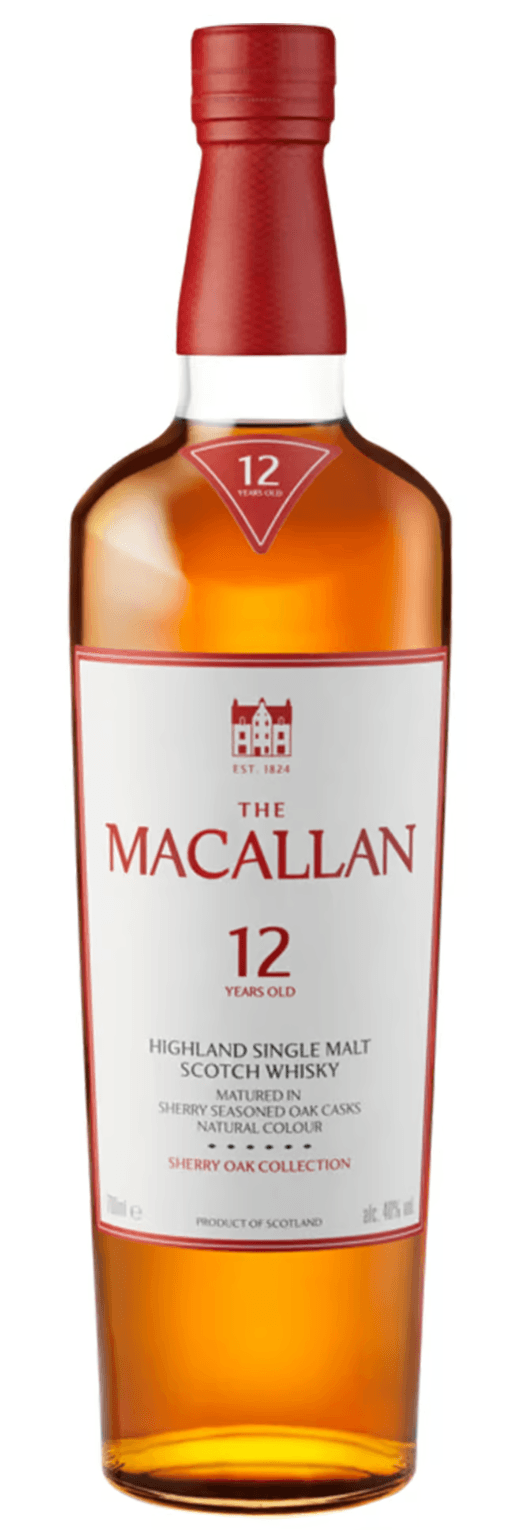
SCOTCH WHISKY Macallan 12 Year Old Sherry Oak
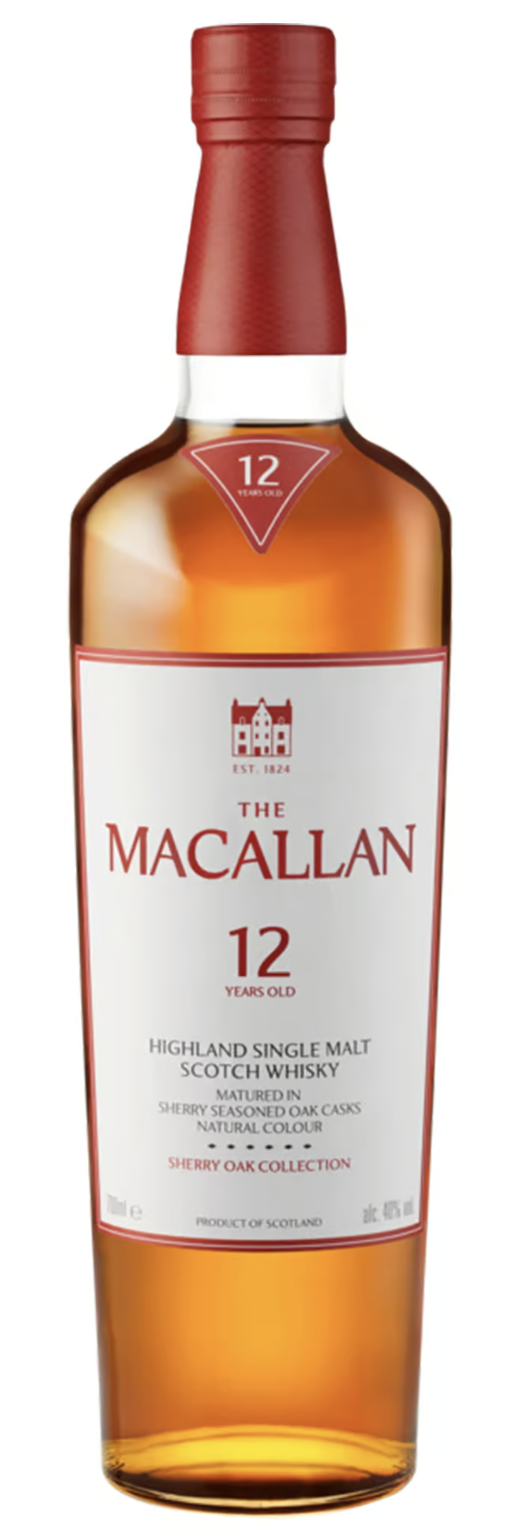
Craigellachie, Speyside — where The Macallan's Easter Elchies House has presided over the Spey Valley since 1700, and where the distillery's obsession with sherry-seasoned oak casks has defined single malt Scotch for over a century.
Classification: Highland (Speyside) Single Malt Scotch Whisky
Company: Edrington Group (The Macallan, est. 1824)
Distillery: The Macallan Distillery, Easter Elchies, Craigellachie, Speyside
Proof: 86 (43% ABV)
Age: 12 Years
Mash Bill: 100% Golden Promise Malted Barley
Distillation: Double distilled in the smallest copper pot stills on Speyside
Maturation: 12 years exclusively in hand-picked sherry-seasoned oak casks from Jerez, Spain
Filtered: Natural color, non-chill filtered
Color: Rich amber with mahogany edges
MSRP: $65–$80 (750 mL)
Nose: Dried fruit, sherry sweetness, orange marmalade, warm ginger, clove, toasted oak, and a rich, almost Christmas cake–like complexity that deepens with every pass.
Palate: Full-bodied and sherry-forward — raisins, dates, dark chocolate, cinnamon, orange peel, vanilla, dried fig, and a woodiness that is firm but never overpowering. The small still character gives it a concentrated, oily richness.
Finish: Long and warming with lingering dried fruit, ginger spice, dark chocolate, and a dry oak note that fades gracefully into sherry sweetness.
Cocktail — The Speyside Rob Roy: 2 oz Macallan 12 Sherry Oak · 1 oz sweet vermouth (Carpano Antica) · 2 dashes Angostura bitters · 1 dash orange bitters. Stir over ice for 30 seconds, strain into a chilled coupe. Garnish with a brandied cherry. The sherry oak and vermouth create a layered sweetness.
Pair with: Aged Manchego cheese with quince paste and Marcona almonds. The sherry-cask whisky and Spanish cheese share a lineage — both shaped by time and Iberian tradition. The quince paste mirrors the dried fruit, and the almonds echo the nutty oak.
Awards: Gold, International Wine & Spirit Competition (multiple years). 90 Points, Whisky Advocate. Consistently ranked among the world's most iconic single malts.
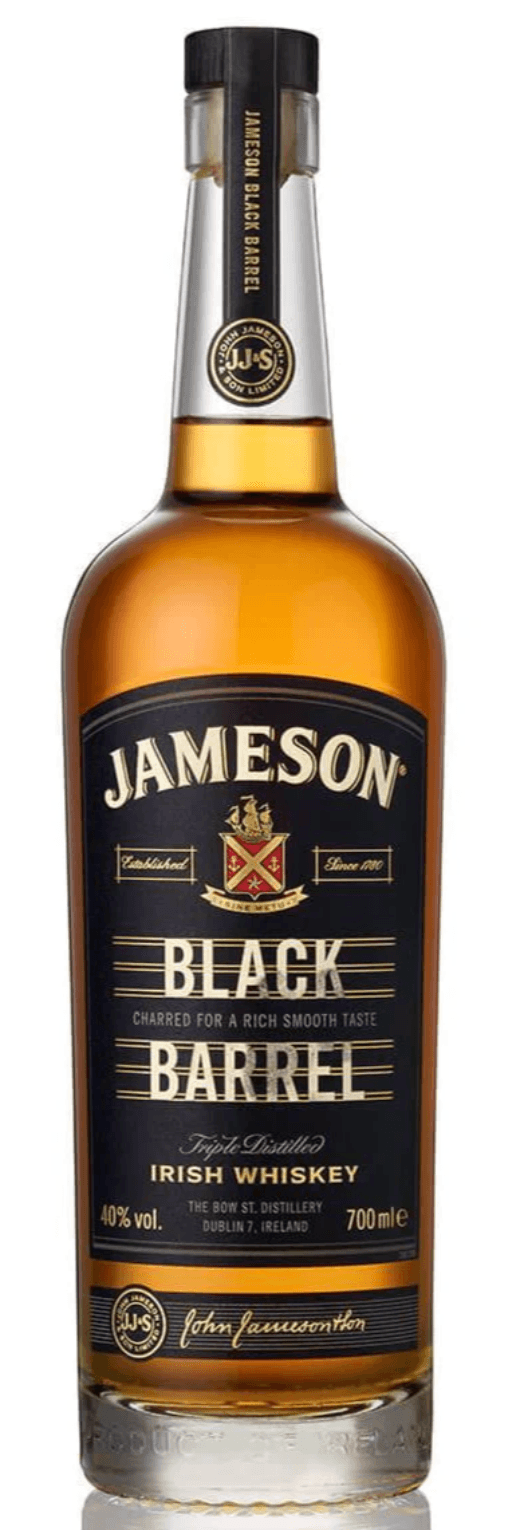
IRISH WHISKEY Jameson Black Barrel
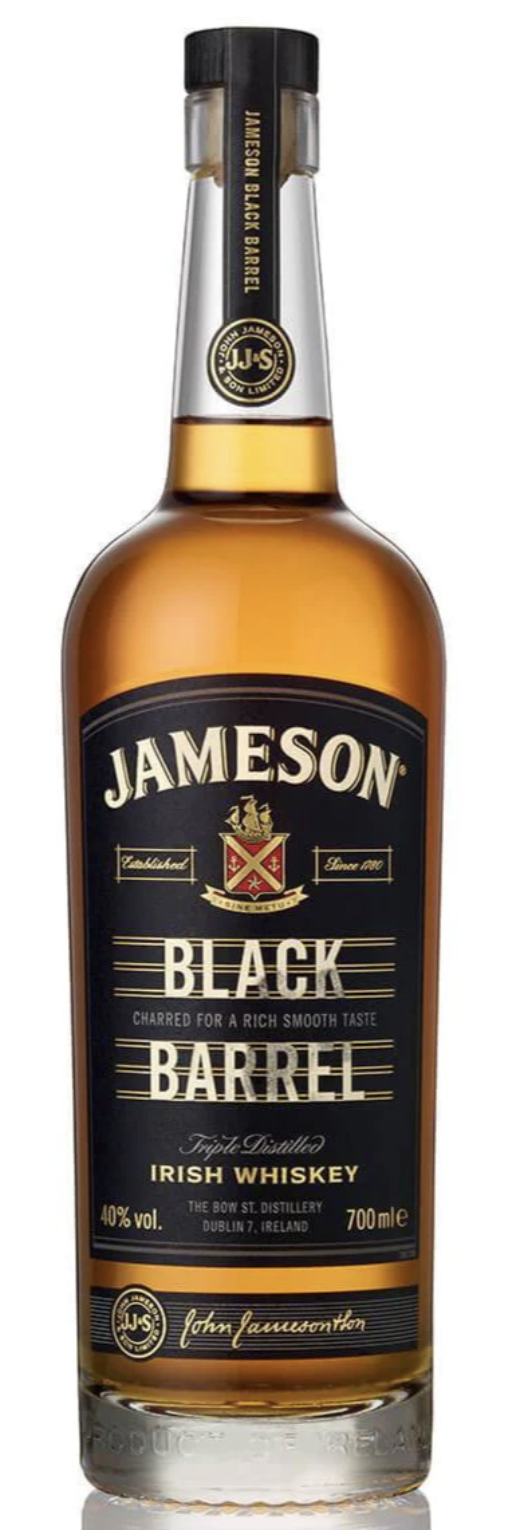
Midleton, County Cork — where the New Midleton Distillery, one of the largest and most versatile in the world, has been producing Irish whiskey since 1975, carrying forward a tradition that stretches back to the original Old Midleton Distillery founded in 1825.
Classification: Blended Irish Whiskey
Company: Irish Distillers (Pernod Ricard)
Distillery: New Midleton Distillery, Midleton, County Cork, Ireland
Proof: 80 (40% ABV)
Age: NAS (aged blend of pot still and grain whiskey)
Mash Bill: Blend of single pot still (malted and unmalted barley) and grain whiskey
Distillation: Triple distilled in copper pot stills
Maturation: Aged in a combination of American oak ex-bourbon barrels and double-charred bourbon barrels
Color: Deep gold with amber highlights
MSRP: $30–$38 (750 mL)
Nose: Toasted oak, butterscotch, vanilla, roasted grain, dark caramel, a touch of charred wood sweetness, and the signature Jameson green apple note now deepened by the extra char.
Palate: Rich and creamy — toffee, dark chocolate, toasted almond, warm spice, charred wood, dried fruit, and a buttery pot still richness. The double-charred barrels add a layer of depth absent from standard Jameson.
Finish: Medium-long with lingering char sweetness, cocoa, spice, and a smooth, warming fade that invites contemplation.
Cocktail — The Black Barrel Irish Coffee: 1.5 oz Jameson Black Barrel · 5 oz fresh-brewed dark roast coffee · 1 bar spoon brown sugar · lightly whipped cream float. Warm a glass, dissolve the sugar in coffee, add whiskey, float cream. The double-char sweetness pairs perfectly with the roast notes.
Pair with: Dark chocolate brownies with sea salt and caramel. The whiskey's charred oak and toffee notes are a mirror image of the brownie, and the salt sharpens every flavor. Simple, patient, perfect.
Awards: Gold, San Francisco World Spirits Competition (multiple years). 91 Points, Wine Enthusiast. Double Gold, International Spirits Challenge.
TEQUILA Clase Azul Reposado
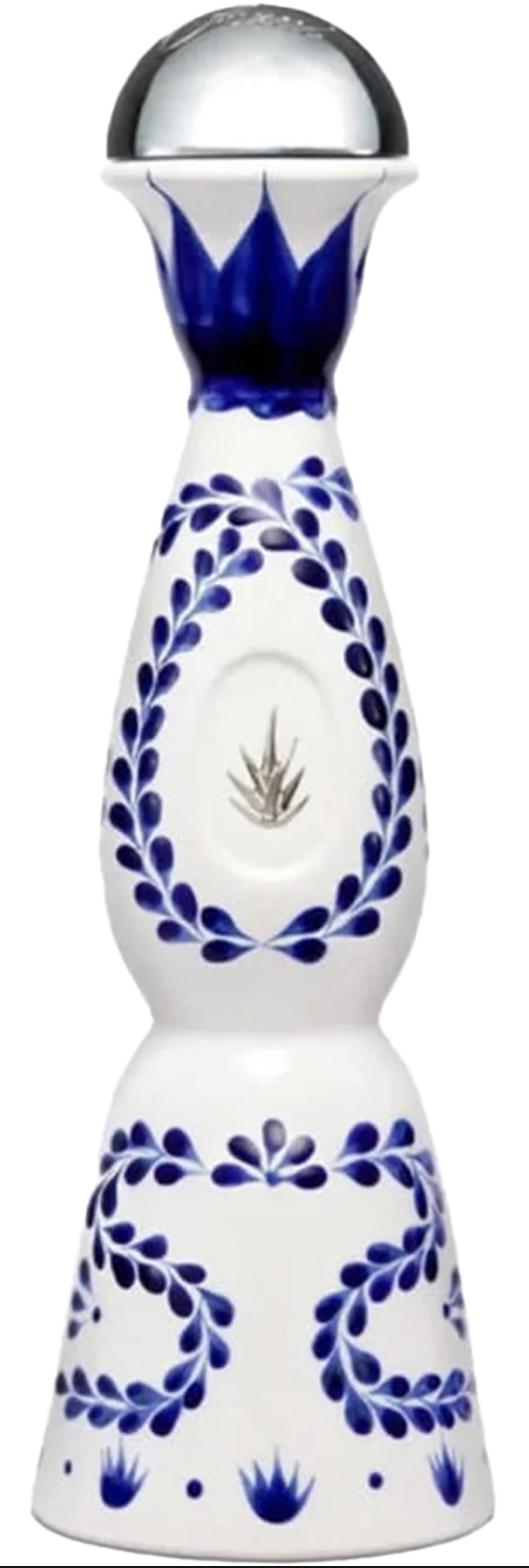
Jesús María, Jalisco Highlands — where master distiller Arturo Lomeli oversees every step of a production process that begins with hand-selected highland agave and ends with hand-painted Talavera ceramic decanters, each one a signed work of art.
Classification: Tequila Reposado, 100% Agave
Company: Clase Azul México (est. 1997)
Distillery: Clase Azul Distillery (NOM 1595), Jesús María, Jalisco, Mexico
Proof: 80 (40% ABV)
Age: 8 months in American whiskey casks
Agave: 100% Highland Blue Weber Agave (7–9 years maturity)
Production: Slow-cooked in traditional brick ovens (72 hours), fermented with proprietary yeast, double distilled in copper pot stills
Color: Pale gold with warm honey tones
MSRP: $150–$170 (750 mL)
Nose: Cooked agave, honey, vanilla, cinnamon, dried apricot, toasted coconut, and a delicate floral quality that speaks to the highland terroir and the slow, 72-hour cook.
Palate: Silky and luxurious — caramel, butterscotch, roasted agave, vanilla custard, baking spice, tropical fruit, and a gentle oakiness from the whiskey cask aging. The texture is almost viscous.
Finish: Long and smooth with lingering caramel, warm spice, agave sweetness, and a clean, elegant fade that justifies the price of admission.
Cocktail — The Ceramic Margarita: 2 oz Clase Azul Reposado · oz fresh lime juice · oz agave nectar · oz Grand Marnier float. Shake the first three ingredients with ice, strain over fresh ice in a rocks glass with a Tajín half-rim. Float Grand Marnier. The reposado's vanilla and caramel elevate this beyond any margarita you've had.
Pair with: Mole negro with slow-braised chicken. The tequila's 72-hour slow-cooked agave sweetness and warm spice are a perfect echo of the mole's complex sauce — both products of patience, both layered with depth.
Awards: Platinum, SIP Awards (multiple years). Double Gold, San Francisco World Spirits Competition. 96 Points, Tasting Panel Magazine.
GIN Roku Japanese Craft Gin
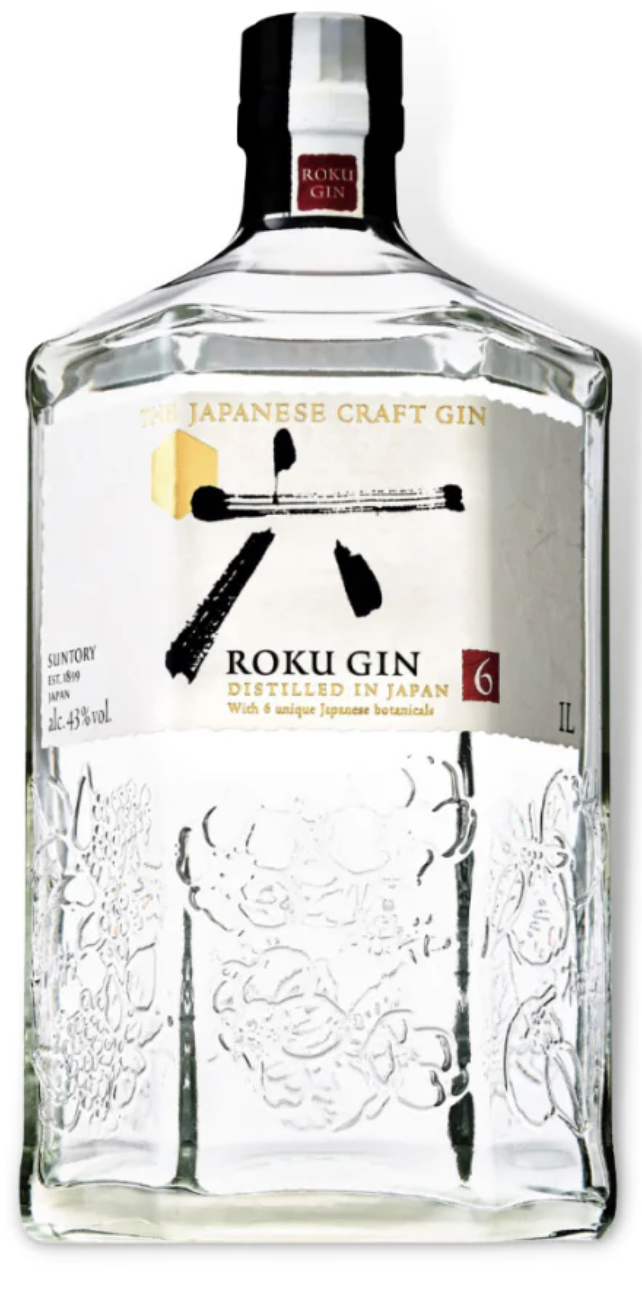
Osaka, Japan — where Suntory's master blenders apply the same meticulous patience they bring to Japanese whisky to a gin built around six native Japanese botanicals, each harvested at its peak season and distilled individually before blending.
Classification: Japanese Craft Gin
Company: Beam Suntory (Suntory Spirits, est. 1899)
Distillery: Suntory Osaka Distillery, Osaka, Japan
Proof: 86 (43% ABV)
Distillation: Each botanical group distilled separately in different still types (pot still, stainless steel still), then blended by master blenders
Botanicals: Fourteen botanicals: six Japanese (sakura flower, sakura leaf, yuzu peel, sencha tea, gyokuro tea, sansho pepper) plus eight traditional (juniper, coriander, angelica root, angelica seed, cardamom, cinnamon, bitter orange peel, lemon peel)
Base: Rice spirit
Color: Crystal clear
MSRP: $28–$35 (750 mL)
Nose: Yuzu citrus, cherry blossom, green tea, juniper, gentle white pepper from the sansho, fresh herbs, and a delicate floral quality that rewards patience — each botanical reveals itself in layers.
Palate: Complex and balanced — bright yuzu, piney juniper, soft floral sakura, warm sansho pepper, tea-like umami, coriander spice, and a silky texture from the rice spirit base. Each sip unfolds differently.
Finish: Clean and lingering with yuzu, green tea astringency, sansho warmth, and a gentle spice that fades like incense.
Cocktail — The Roku Gin & Tonic: 2 oz Roku Gin · 4 oz premium tonic (Fever-Tree Japanese Yuzu) · thin slices of fresh ginger · expressed yuzu or lime peel. Build in a tall glass over ice. The ginger and yuzu amplify the gin's Japanese botanicals. Suntory recommends serving in a thin-lipped glass to appreciate the aroma.
Pair with: Sashimi-grade yellowtail with ponzu, shiso, and pickled ginger. The gin's yuzu and green tea notes echo the ponzu, while the sansho pepper mirrors the ginger. A pairing built on precision and restraint.
Awards: Gold, International Spirits Challenge (multiple years). 92 Points, Wine Enthusiast. Named Best Japanese Gin, World Gin Awards.
RUM Plantation XO 20th Anniversary
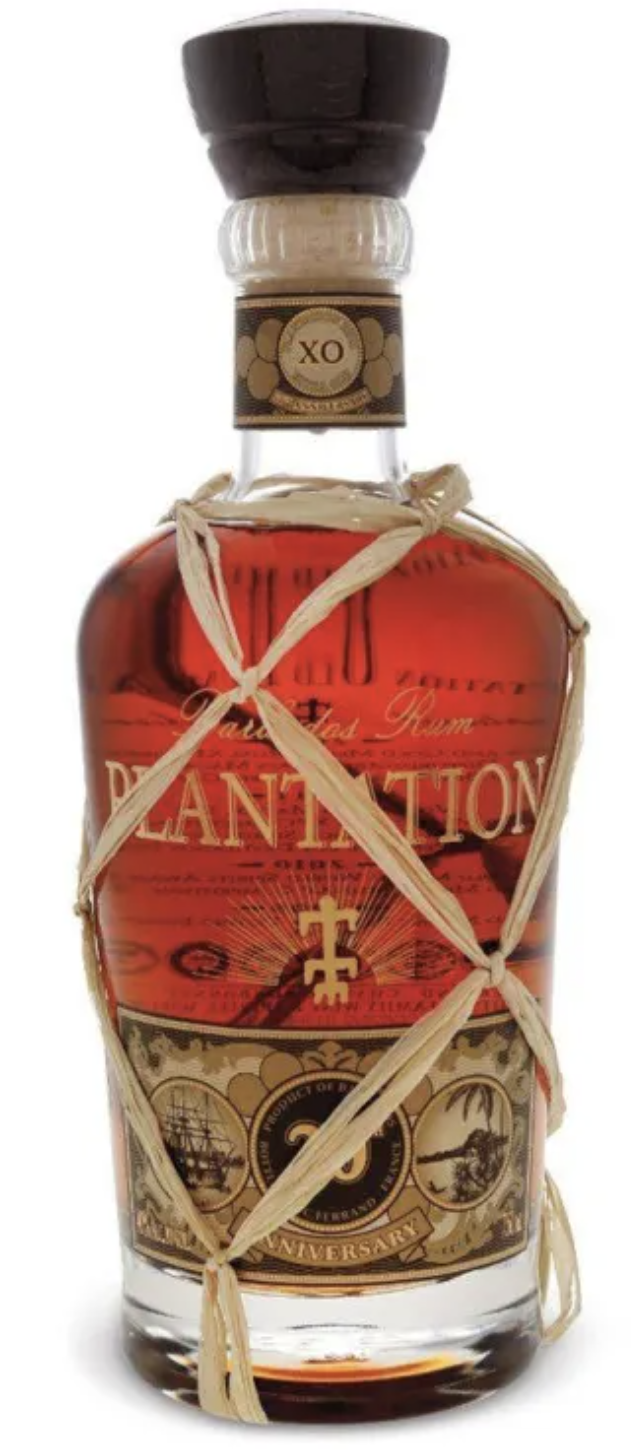
Barbados and Cognac, France — where master blender Alexandre Gabriel takes aged Barbadian rum and gives it a second life in French Cognac casks, applying the patience of two distinct aging traditions to create a rum that belongs to both worlds.
Classification: Aged Barbadian Rum, Double Aged
Company: Maison Ferrand (Plantation Rum, est. 1996)
Distillery: West Indies Rum Distillery and Barbados Distilleries Ltd., Barbados; finished at Chteau de Bonbonnet, Ars, Charente, France
Age: Double aged: up to 12–20 years in bourbon casks in Barbados, then 2–3 years in Cognac casks in France
Distillation: Column and pot still blend; aged in tropical Barbados climate then shipped to France for Cognac cask finishing
Base: Barbadian blackstrap molasses
Color: Deep amber with copper-gold highlights
MSRP: $45–$55 (750 mL)
Nose: Rich caramel, vanilla custard, dried orange, dark chocolate, toasted coconut, café au lait, dried flowers, and a Cognac-like elegance that lifts the tropical rum notes into something refined.
Palate: Opulent and layered — brown sugar, ripe banana, coconut cream, oak spice, cinnamon, cocoa, dried tropical fruits, and a buttery richness from the Cognac casks. The tropical and French aging create a remarkable complexity.
Finish: Very long and elegant with lingering toffee, dried fruit, dark chocolate, oak, and a warm, clean sweetness that fades slowly — like a conversation you don't want to end.
Cocktail — The Cognac Coast: 2 oz Plantation XO · oz Pierre Ferrand Dry Curaao · oz demerara syrup · 2 dashes orange bitters · 1 dash Angostura bitters. Stir over ice, strain into a rocks glass with one large cube. Garnish with a wide orange peel. The Curaao bridges the rum and Cognac influences.
Pair with: Bananas Foster with vanilla bean ice cream. The rum's banana, caramel, and vanilla notes are literally the ingredients of the dessert — a pairing so natural it feels inevitable. The Cognac cask elegance keeps it from feeling heavy.
Awards: Gold, Rum Masters (multiple years). 94 Points, Wine Enthusiast. Named among the World's Top 10 Rums by International Rum Conference.
RED WINE Caymus Vineyards Cabernet Sauvignon Napa Valley 2022
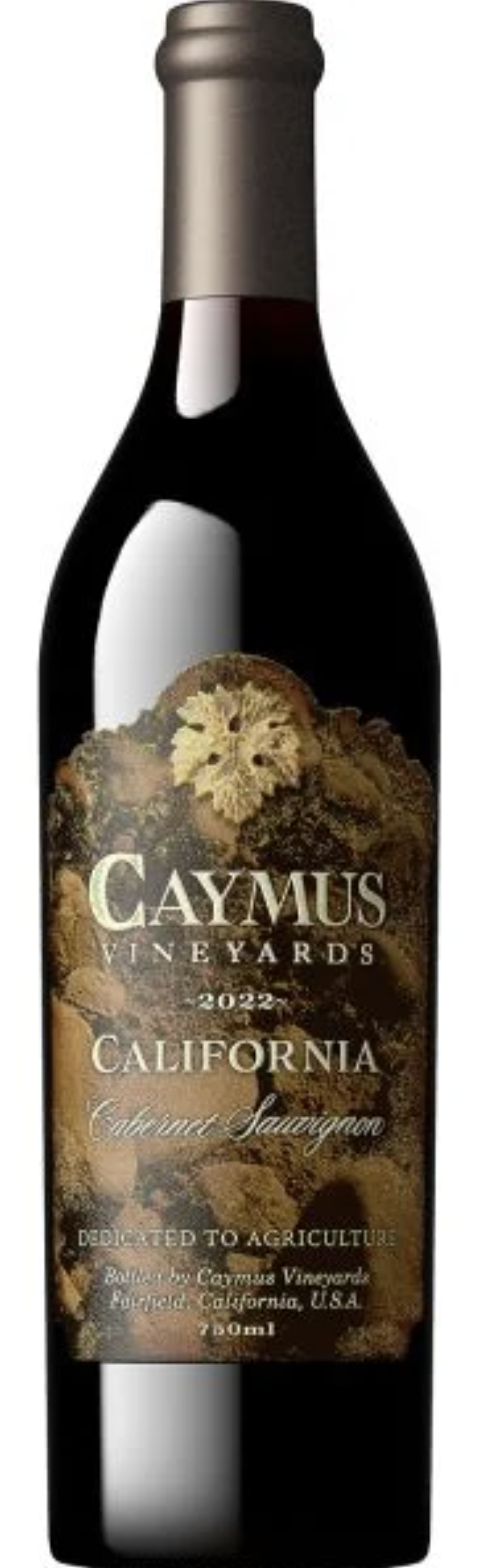
Rutherford, Napa Valley — where the Wagner family has farmed since 1906 and where Chuck Wagner, one of the most awarded winemakers in California history, has spent five decades perfecting a Cabernet Sauvignon style defined by richness, generosity, and the patience to let fruit reach full ripeness.
Classification: Napa Valley Cabernet Sauvignon
Company: Wagner Family of Wine (Caymus Vineyards, est. 1972)
Winery: Caymus Vineyards, Rutherford, Napa Valley, California
Maturation: 16 months in French oak barrels
ABV: 14.6%
Primary Varietal: Cabernet Sauvignon
Blend: Cabernet Sauvignon (primarily), with small amounts of complementary varietals
Vineyards: Multi-vineyard blend from eight Napa Valley sub-appellations
Color: Deep ruby-purple, nearly opaque at center
MSRP: $85–$100 (750 mL)
Nose: Ripe blackberry, dark cherry, cassis, vanilla, cocoa powder, sweet cedar, and a warm, baked berry quality that signals the extended hang time Wagner is famous for.
Palate: Rich, round, and fruit-forward — dark plum, blackberry jam, milk chocolate, sweet oak, baking spice, and a plush, velvety texture. The tannins are ripe and soft, giving the wine immediate approachability without sacrificing structure.
Finish: Long and smooth with lingering dark fruit, vanilla, toasted oak, and a cocoa-dusted sweetness that persists well after the last sip.
Cocktail — The Napa Sangria: 1 bottle Caymus Cabernet · 2 oz brandy · 1 oz Cointreau · 2 oz fresh orange juice · seasonal dark fruits (plums, blackberries, cherries). Combine in a pitcher, refrigerate 4–8 hours. Serve over ice with a cinnamon stick. The wine's richness makes a deeply satisfying sangria — but only if you're patient enough to let it rest.
Pair with: Prime ribeye steak with a red wine reduction and roasted garlic mashed potatoes. The Caymus was built for this — the wine's dark fruit and soft tannins envelop the marbled beef, and the reduction intensifies the pairing into something transcendent.
Awards: 93 Points, Wine Spectator. 92 Points, Robert Parker's Wine Advocate. Named among America's most iconic Cabernet Sauvignon brands.
WHITE WINE Cakebread Cellars Chardonnay Napa Valley 2022
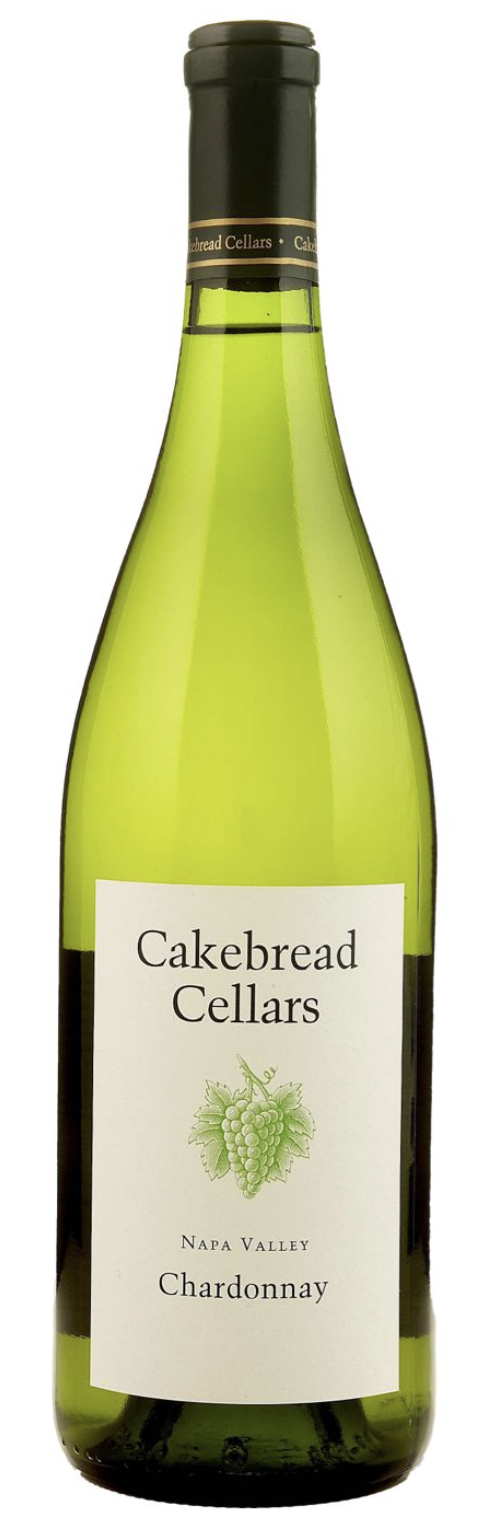
Rutherford, Napa Valley — where Jack and Dolores Cakebread founded their winery in 1973 after a fateful photography trip with Ansel Adams led them to fall in love with the valley, and where three generations later, the family continues to produce one of Napa's most beloved Chardonnays.
Classification: Napa Valley Chardonnay
Company: Cakebread Cellars (est. 1973)
Winery: Cakebread Cellars, Rutherford, Napa Valley, California
ABV: 14.1%
Primary Varietal: Chardonnay
Blend: 100% Chardonnay
Vinification: Whole-cluster pressed, barrel fermented in French oak (30% new), partial malolactic fermentation, sur lie aged 7 months with periodic lees stirring
Color: Bright straw-gold
MSRP: $38–$45 (750 mL)
Nose: Green apple, Meyer lemon, white peach, honeysuckle, brioche, a hint of toasted almond, and a clean minerality that speaks to careful handling and restrained oak use.
Palate: Balanced and elegant — crisp apple, citrus zest, pear, subtle vanilla, toasted hazelnut, a creamy mid-palate from the lees contact, and a bright acidity that keeps every element lifted and focused.
Finish: Medium-long with lingering citrus, green apple, a touch of honey, and a clean, refreshing acidity that makes you reach for another sip.
Cocktail — The Napa Spritz: 3 oz Cakebread Chardonnay · 1 oz elderflower liqueur (St-Germain) · 2 oz sparkling water · expressed lemon peel. Build in a wine glass over ice. The Chardonnay's apple and citrus notes pair beautifully with the elderflower, creating a refreshing warm-weather spritz that respects the wine.
Pair with: Roast chicken with lemon, herbs, and roasted root vegetables. The definitive Chardonnay pairing — Dolores Cakebread literally wrote cookbooks about food and wine pairing, and her roast chicken recipe with this Chardonnay is a masterclass in simplicity and patience.
Awards: 91 Points, Wine Spectator. 90 Points, Wine Enthusiast. One of Napa Valley's most consistently acclaimed Chardonnays for over three decades.
Train Your Nose: Today's Aroma Spotlight
The Terroir Effect — When Place Becomes Flavor
Today's training focuses on patience in perception. Each product below was shaped by deliberate, unhurried processes — and your nose can learn to detect the results. Set up each exercise, close your eyes, and take your time. The aromas that reward patience in production also reward patience in tasting. Slow down, breathe, and let each layer arrive on its own schedule.
Now compare the two tequilas you've tasted this week: yesterday's El Tesoro and today's Siete Leguas. Both use tahona stones. Both use highland agave. Both come from Jalisco's Los Al
Try This: Pour the Flor de Caña 12 alongside yesterday's El Dorado 12. Both are 12-year-old rums, both aged in ex-bourbon oak. But one comes from volcanic Nicaraguan soil and the other from Guyanese river delta. Using your Rum Aroma Masterclass Kit, find the "toffee" note in each and notice what surrounds it: El Dorado's toffee sits in a bed of tropical fruit and raw sugar; Flor de Caña's toffee is wrapped in almond, tobacco, and dry mineral. Same age. Same oak. Different earth. That's terroir.
Today's Kit Reference
| Today's Product | Key Aromas | Train With |
|---|---|---|
| Angel's Envy Kentucky Straight Bourbon | Caramel, Vanilla, Cherry, Maple Syrup, Oak, Raisins | Bourbon Aroma Masterclass Kit |
| Macallan 12 Year Old Sherry Oak | Dried Fruit, Vanilla, Clove Spice, Honey, Orange, Woody | Whisky Aroma Masterclass Kit |
| Jameson Black Barrel | Vanilla, Caramel, Buttery, Woody, Honey, Cocoa (Dark) | Whisky Aroma Masterclass Kit |
| Clase Azul Reposado | Agave (Cooked), Vanilla, Caramel, Cinnamon, Honey, Coconut | Tequila & Mezcal Aroma Masterclass Kit |
| Roku Japanese Craft Gin | Juniper (Green), Ginger, Coriander, Lemon, Floral (Rose), Peppery | Gin Aroma Masterclass Kit |
| Plantation XO 20th Anniversary | Caramel, Vanilla, Coconut, Chocolate, Dried Fruit, Oak | Rum Aroma Masterclass Kit |
| Caymus Vineyards Cabernet Sauvignon Napa Valley 2022 | Cherry, Berry (Generic), Vanilla, Cedar, Woody, Toasted | Wine Aroma Masterclass Kit |
| Cakebread Cellars Chardonnay Napa Valley 2022 | Buttery, Apple (Green), Vanilla, Citrus (Generic), Honey, Toasted | Wine Aroma Masterclass Kit |
Explore the School of Wine and Spirits
Today's eight bottles prove that the best products taste like the places they come from. Our books take you deeper into those places — from the limestone hollows of Kentucky in America's Spirit, the misty distilleries of Scotland's Spirit and Ireland's Spirit, the volcanic highlands of The Tequila y Mezcal Revolution, the ancient vineyards of The Ultimate Northern Italian Wine Journey, and the fossilized seabeds of Burgundy in our Chablis and Cte d'Or pocket guides.
Explore our Aroma Masterclass kits and books at schoolofwineandspirits.com
Explore our Aroma Masterclass kits and books at schoolofwineandspirits.com
Join the School of Wine and Spirits Community
Connect with fellow connoisseurs, share tasting notes, and go deeper into every pour. Sign up at skool.com/schoolofwineandspirits
Sign up at skool.com/schoolofwineandspirits
Our kits make the perfect gift for the curious drinker in your life — because once you learn to identify aromas, you never taste the same way again.
Know someone who would enjoy The Still & The Vine? Forward this issue to a fellow enthusiast — or share it on social media and tag @SchoolofWineandSpirits. We grow by word of mouth.
Robert R. Mohr, CPA, CGMA, WSET Level 3, WSG Certified Spirits Specialist — author of America's Spirit, Scotland's Spirit, Ireland's Spirit, The Ultimate Northern Italian Wine Journey, The Tequila y Mezcal Revolution, The Definitive Pocket Guide to Chablis, The Definitive Pocket Guide to the Cte d'Or, and Strategic Tuning. Published author of the Aroma Academy Tequila/Mezcal and Distiller's training kits.
The Still & The Vine is a daily publication of the School of Wine and Spirits.
Angel's Envy Kentucky Straight Bourbon
Louisville Distilling Company (Angel's Envy, est. 2010)
Angel's Envy is a monument to patience — Lincoln Henderson's patience in waiting until age 72 to build the bourbon he'd always imagined, and the liquid patience of that port barrel finish, where months of quiet resting transform a solid Kentucky straight bourbon into something altogether more layered and contemplative. The port casks, sourced from Portugal, add a ruby-hued sweetness and dried fruit complexity without obscuring the corn-forward bourbon character underneath. At 86.6 proof, it's gentle enough for newcomers but complex enough to hold the attention of seasoned whiskey drinkers. Henderson passed away in 2013, but his son Wes carries the vision forward — and every bottle remains a reminder that the best things often come from those willing to wait.
Macallan 12 Year Old Sherry Oak
Edrington Group (The Macallan, est. 1824)
The Macallan 12 Sherry Oak is a masterclass in the patience of wood. While most distilleries treat cask selection as a purchasing decision, Macallan treats it as an art — commissioning their own sherry-seasoned casks in Jerez, waiting two years for the sherry to condition the wood, then waiting another twelve years for the whisky to mature inside it. That's fourteen years of patience before a single drop reaches a bottle. The result is a whisky where the cask and the spirit are in perfect dialogue: neither dominates, and the sherry influence reads as complexity, not sweetness. Macallan's tiny copper stills — the smallest on Speyside — concentrate the new make spirit, giving it the heft to stand up to such assertive wood. This is the benchmark against which all sherry-matured Scotch is measured, and it earns that status through the simplest and most difficult virtue: time.
Jameson Black Barrel
Irish Distillers (Pernod Ricard; Jameson, est. 1780)
Jameson Black Barrel is what happens when the world's most approachable Irish whiskey gets a lesson in patience. The key difference from standard Jameson is the double-charred bourbon barrels — a process where spent barrels are re-charred before the whiskey goes in, reactivating the wood's sugars and deepening the flavor extraction. It's an extra step that takes extra time, and the result is a whiskey with noticeably more weight, complexity, and character. The pot still component adds a creamy, spicy backbone that the grain whiskey alone couldn't provide, and the char gives everything a toasty, caramelized edge. At its price point, Black Barrel may be the best value in Irish whiskey — complex enough to sip neat, versatile enough for cocktails, and proof that patience in the cooperage pays dividends in the glass.
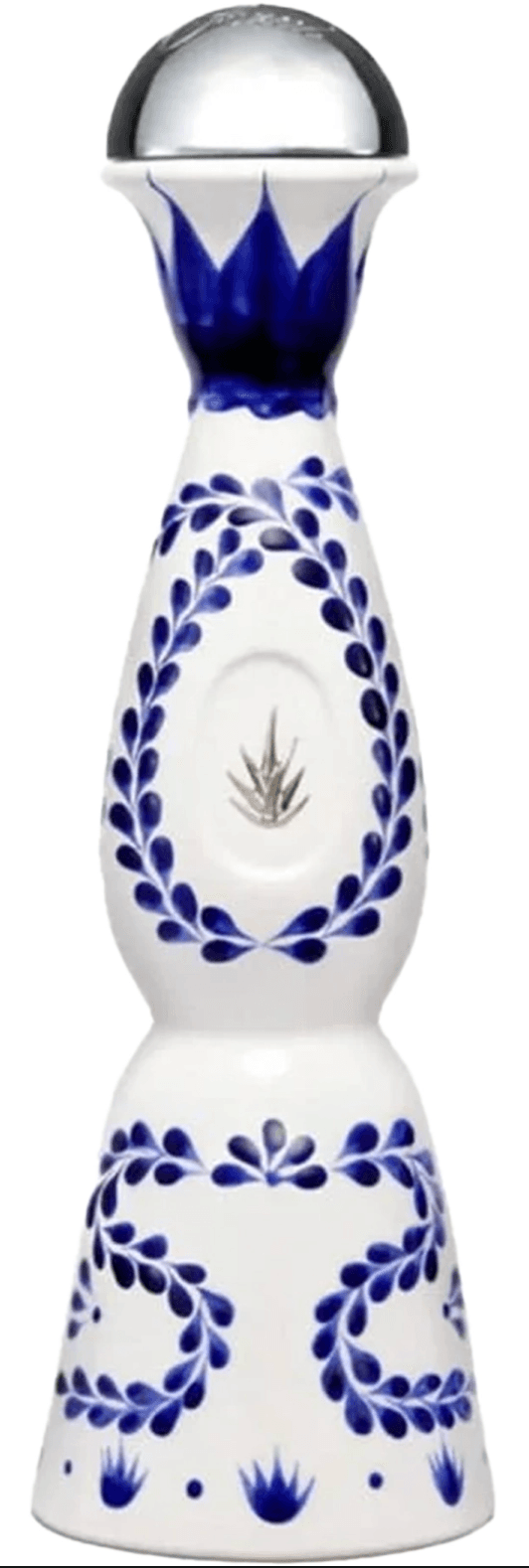
Clase Azul Reposado
Clase Azul México (est. 1997)
Clase Azul Reposado is an exercise in patience at every level. The agave waits 7 to 9 years before harvest. The piñas cook for 72 hours — three times longer than most industrial tequilas. The reposado rests 8 months in whiskey casks. And each hand-painted ceramic decanter takes two weeks to complete. In an industry increasingly dominated by celebrity brands and additive-laden shortcuts, Clase Azul represents something rare: a luxury tequila that earns its price through craft rather than marketing. The liquid inside is genuinely exceptional — sweet but not cloying, oaky but not heavy, and agave-forward in a way that honors the plant's nearly decade-long journey to maturity. Yes, you're paying for the bottle too. But when the tequila inside is this good, the bottle becomes less a gimmick and more a fitting vessel.
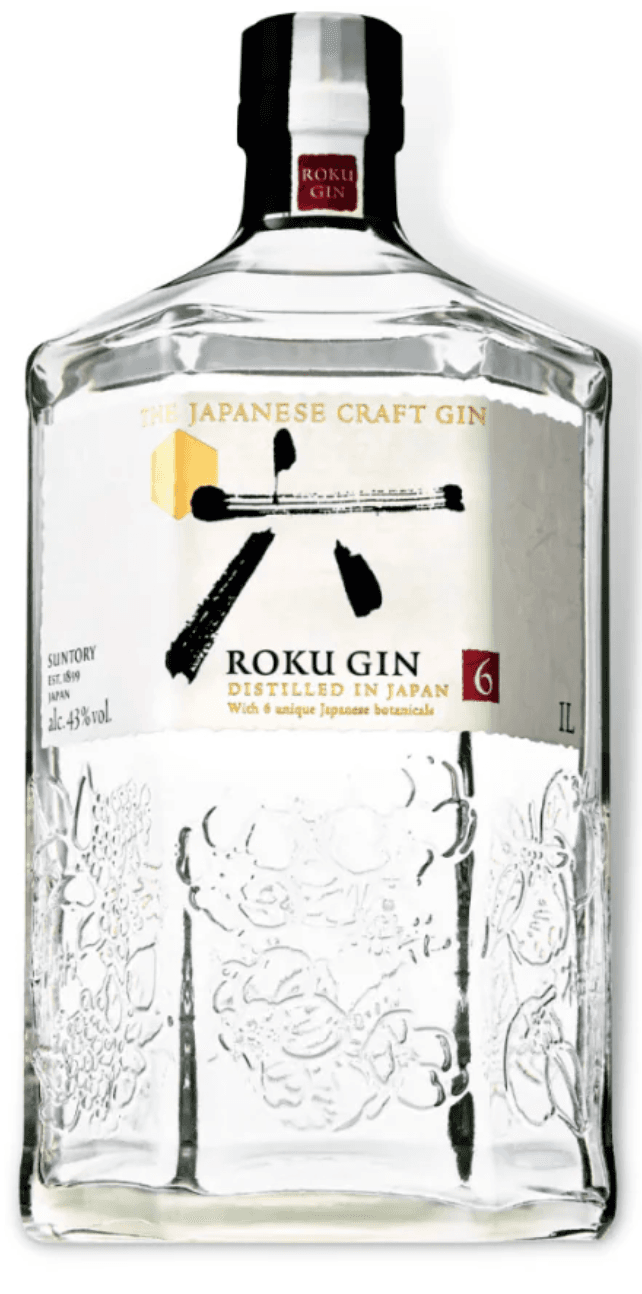
Roku Japanese Craft Gin
Beam Suntory (Suntory Spirits, est. 1899)
Roku means 'six' in Japanese, and those six native botanicals — sakura flower, sakura leaf, yuzu, sencha, gyokuro, and sansho pepper — are what elevate this gin from competent to contemplative. Suntory harvests each botanical at its peak season, meaning the production cycle spans an entire year before blending even begins. Each botanical group is then distilled separately in different still types to extract its optimal character. It's the Japanese philosophy of monozukuri — the art of making things with care and patience — applied to gin. The result is a spirit where East meets West in genuine harmony: the juniper backbone is clearly there, but the yuzu, tea, and sakura create a flavor profile unlike any Western gin. At under $35, Roku offers a masterclass in how patience in production translates to complexity in the glass.
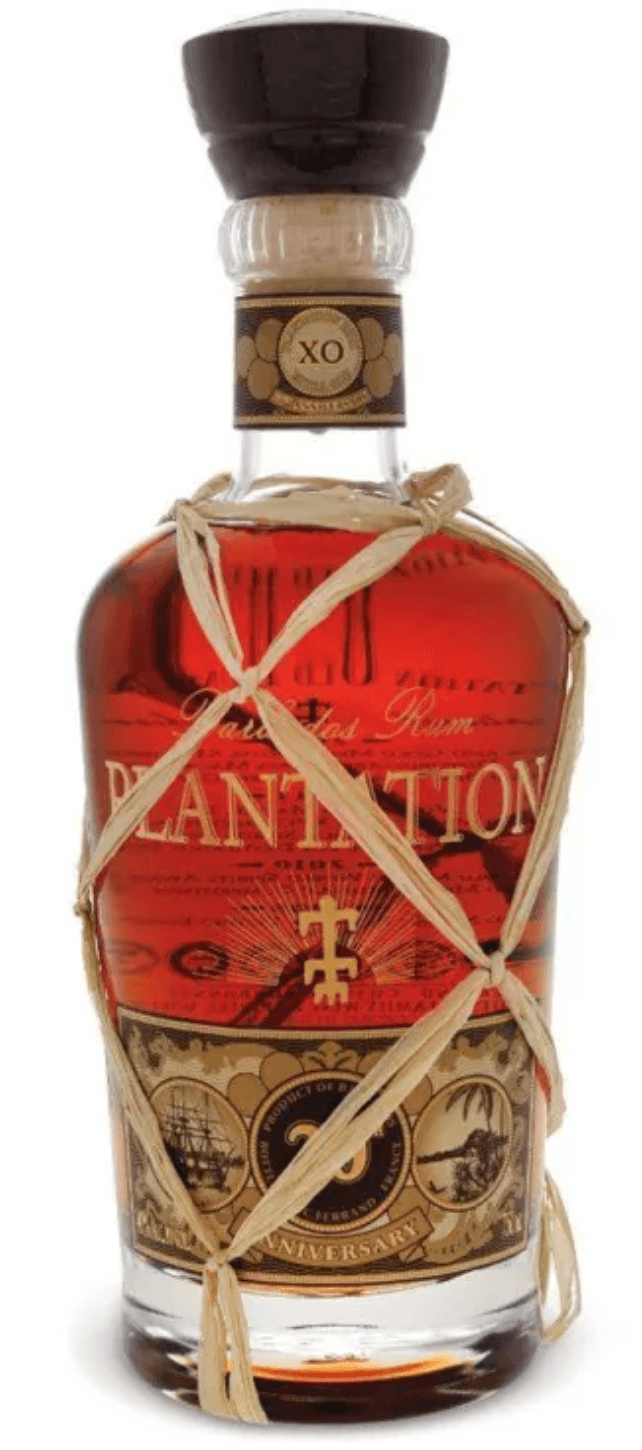
Plantation XO 20th Anniversary
Maison Ferrand (Plantation Rum, est. 1996)
Plantation XO is the purest expression of patience in the rum world — a spirit aged twice, on two continents, over the course of up to 23 years. Alexandre Gabriel's method borrows from his day job as a Cognac producer: he takes aged Barbadian rum and re-barrels it in spent Cognac casks at his château in Ars, France. The tropical aging in Barbados accelerates extraction and concentrates the rum's character; the continental aging in France slows everything down, adding finesse and floral complexity. The result is a rum that drinks like a fine Cognac — but with the warmth, sweetness, and tropical soul of Barbados intact. At $50, it competes with spirits twice its price. The 20th Anniversary label commemorates two decades of this double-aging philosophy, and the rum itself is the best argument for its continued patience.
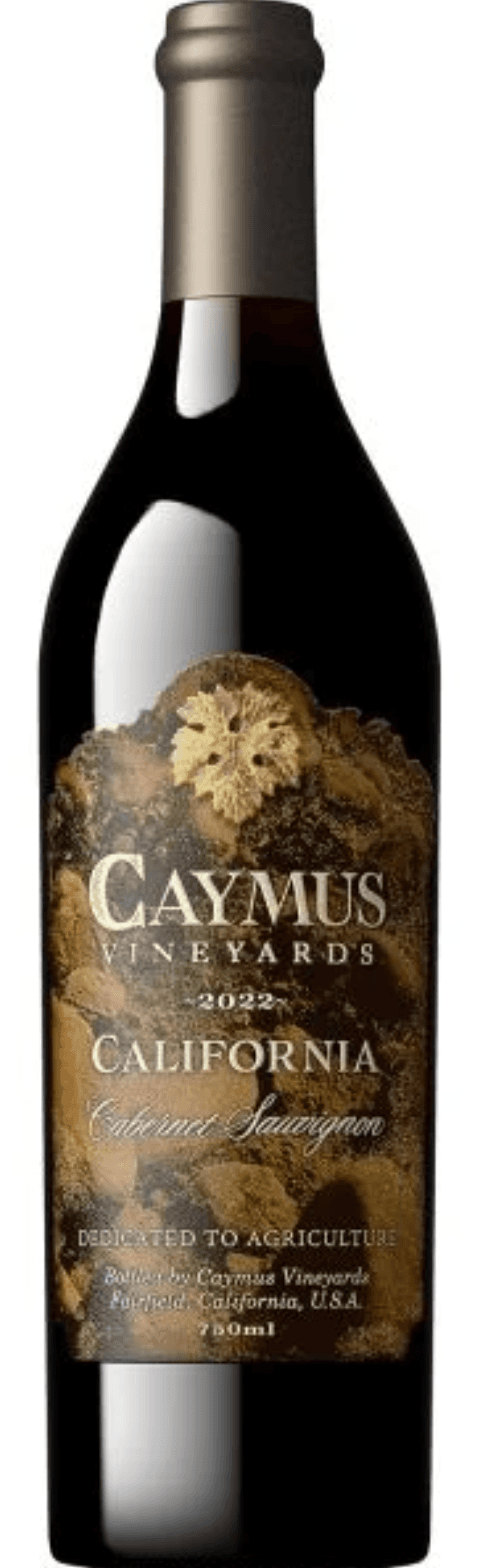
Caymus Vineyards Cabernet Sauvignon Napa Valley 2022
Wagner Family of Wine (Caymus Vineyards, est. 1972)
Caymus Cabernet Sauvignon is what happens when five decades of patience in the vineyard meet an unwavering commitment to a single vision. Chuck Wagner's approach is simple in concept and demanding in execution: wait for the fruit to reach perfect ripeness, blend across multiple Napa sub-appellations for complexity, and give the wine enough oak to frame the fruit without overwhelming it. Critics have debated the Caymus style for years — some find it too ripe, too rich, too crowd-pleasing — but the marketplace has settled the argument: this is one of the most consistently sought-after California Cabernets in existence. The 2022 vintage continues the tradition — dark, plush, generous, and built for the table rather than the cellar. Wagner's genius is making a wine that feels effortless, but that effortlessness comes from 50 years of learning what patience in the vineyard actually means.
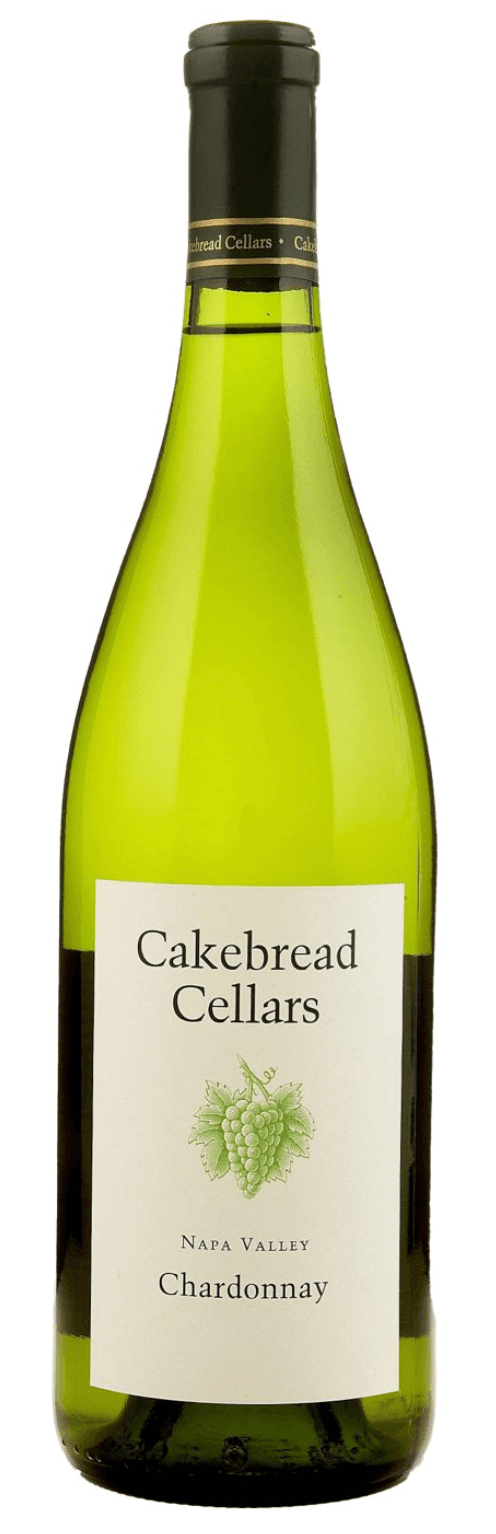
Cakebread Cellars Chardonnay Napa Valley 2022
Cakebread Cellars (est. 1973)
Cakebread Chardonnay has been a Napa Valley staple for over 50 years, and its longevity is a testament to the patience of doing something well and resisting the urge to change it. While Chardonnay trends have swung wildly — from heavily oaked and buttery in the '90s to severely unoaked in the 2010s — Cakebread has held a steady middle course: enough barrel influence for texture and complexity, enough acidity for freshness and food-friendliness. The partial malolactic fermentation is key — it gives the wine a creamy quality without tipping into butterball territory. Seven months of sur lie aging adds richness from the lees without dominating the fruit. The result is a Chardonnay that works equally well as an aperitif, a dinner companion, or a quiet glass at the end of the day. In a world of extremes, Cakebread's patience with its own identity is its greatest virtue.
Be the first to comment.