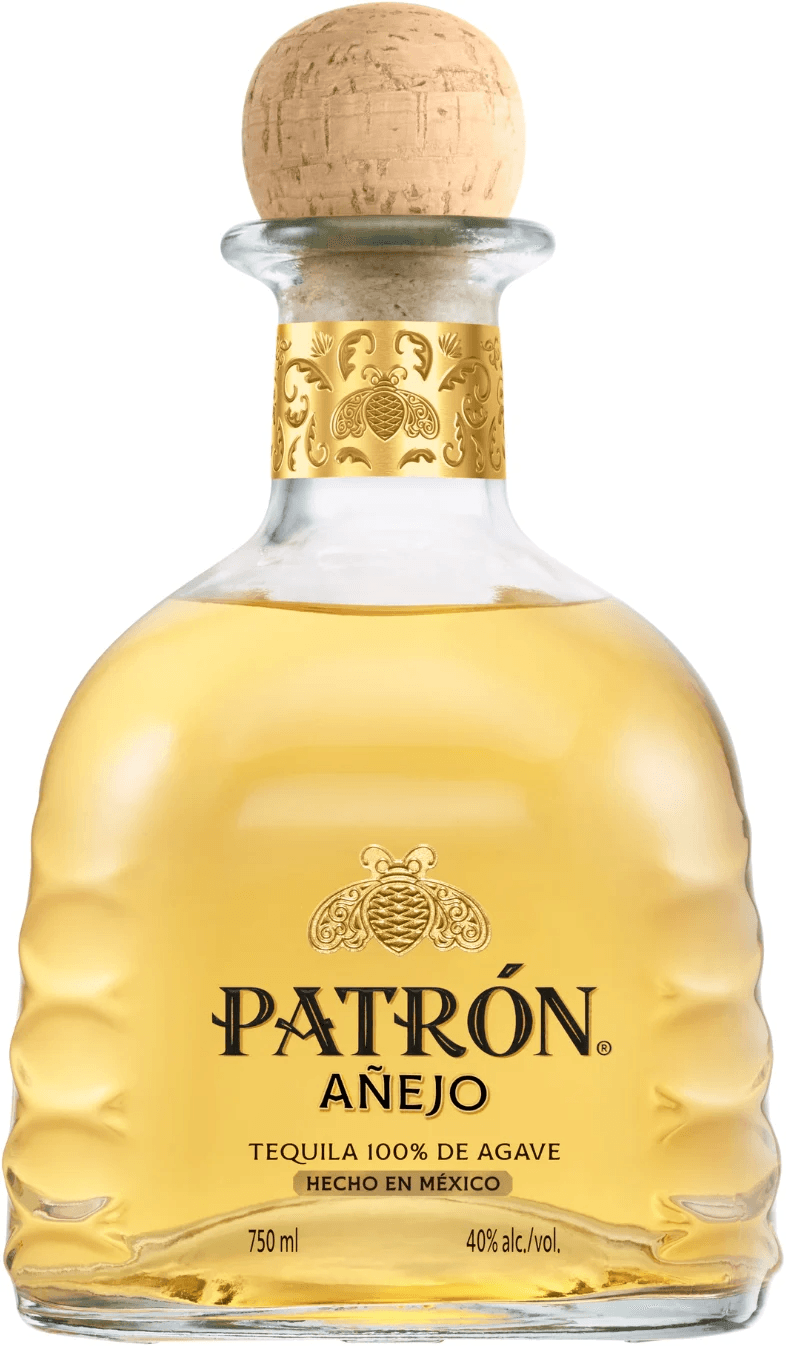
Patrón Añejo
Patrón Spirits International (Bacardi Limited) · Hacienda Patrón, Atotonilco el Alto, Los Altos de Jalisco
Patrón Añejo is proof that popularity and quality are not mutually exclusive. In an era of marketing-driven premium spirits, Patrón remains rooted in Francisco Alcaraz's original vision: 100% blue agave, proper resting time, and honest craftsmanship. The Añejo is the expression that rewards patient sipping.
Nose
Warm cooked agave and ripe vanilla lead, with sweet caramel, cinnamon bark, and baking spice — rich and approachable.
Palate
Smooth and warming, with caramel-glazed agave sweetness, vanilla cream, baking spices, and a gentle butterscotch note from the oak.
Finish
Medium-long and smooth, with lingering vanilla, dried fruit, and a gentle highland agave earthiness.
- Agave
- 100% Blue Weber Agave (Agave tequilana), highland-grown and harvested at 8–10 years maturity
- Production
- Traditional volcanic stone tahona wheel crushing alongside roller mill; double distilled in copper pot stills; hand-numbered bottles
Cocktail Suggestion
Cocktail — Patrón Añejo Sour: 2 oz Patrón Añejo · 3/4 oz fresh lime juice · 1/2 oz agave nectar · 1 egg white (optional, for froth). Dry shake if using egg white. Add ice, shake vigorously. Strain into a chilled coupe or rocks glass. Garnish with a dehydrated lime wheel.
Food Pairing
Pair with: Dark chocolate and ancho chile truffles — the spice and cocoa notes amplify the tequila's warm agave character.
Be the first to comment.
Leave a comment

Caballito Cerrero Añejo
Caballito Cerrero
Caballito Cerrero is one of Jalisco's oldest and most storied tequila producers, and this añejo captures the gravity of that legacy. Rustic yet refined, it drinks like twilight itself — warm colors deepening into shadow, every layer sharpened by contrast. A tequila that rewards patience and belongs in the quiet hour when the day's edges dissolve.

Tapatio Reposado 110
Tapatío
This is reposado with its volume turned up. The 110-proof bottling lets the agave and barrel talk at full register without distortion. Don Carlos Camarena's La Alteña distillery produces this with traditional brick ovens and tahona-crushed agave, and the result is a reposado that hides nothing. Sip it neat or try it in a stirred cocktail where you want agave to lead.

Código 1530 Añejo
Código 1530
Código 1530 Añejo is a masterclass in what happens when spirit and stave become intimate. The use of Cabernet-seasoned French White Oak—rather than the more common American oak ex-bourbon barrels—creates a distinctive bridge between the agave world and the wine world, making it a perfect fit for the 'Barrel's Inner Skin' theme. The wine-stained wood imparts a refined tannic structure and fruit-forward complexity that complement rather than overwhelm the cooked agave heart. This is contemplative, after-dinner tequila that rewards patience.

Tequila San Matías Gran Reserva Extra Añejo
San Matías
Casa San Matías has been making tequila since 1886, and this extra añejo demonstrates a mastery of time and barrel. Three years in American oak have deepened the spirit without erasing its agave identity—a furnace of patience made liquid. At under $90, it punches well above its price class, delivering the contemplative depth of bottles twice its cost. A superb after-dinner pour for those who believe great tequila rewards the same reverence as aged whisky.