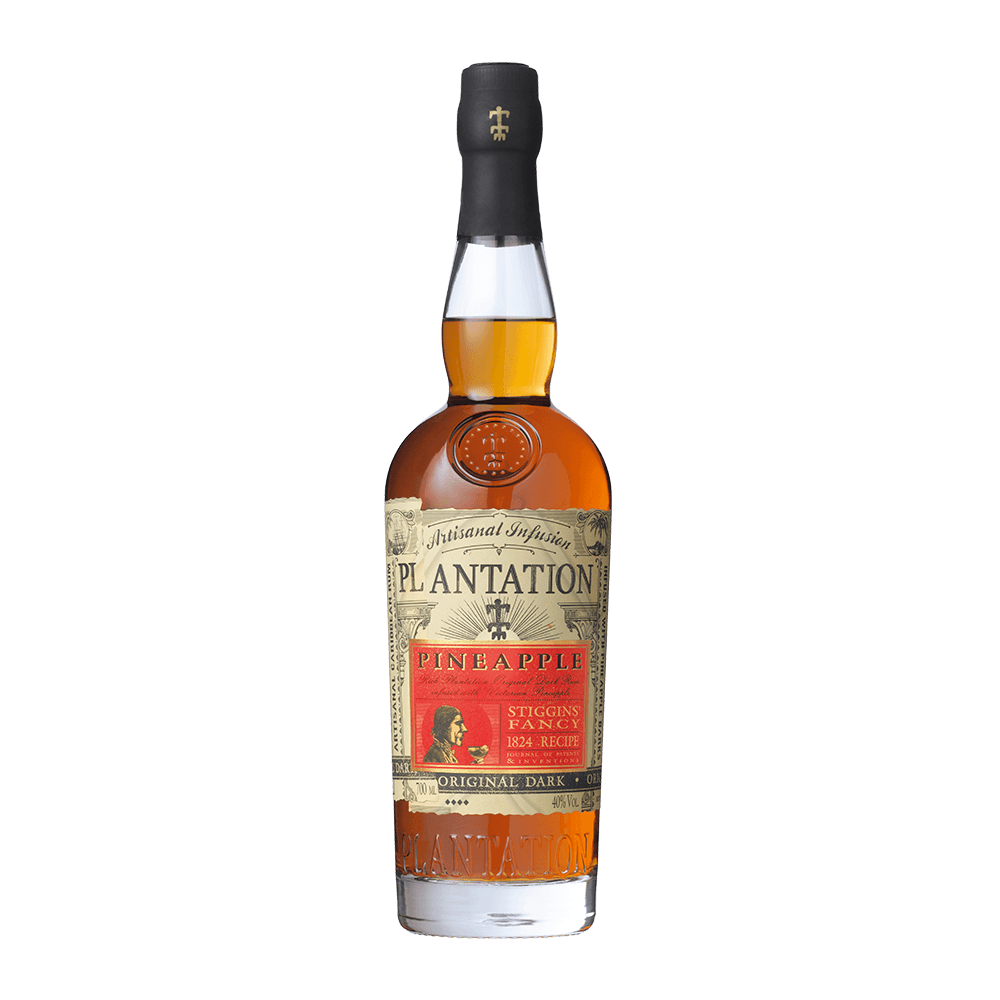
Plantation Stiggins' Fancy Pineapple
Maison Ferrand · Maison Ferrand, Ars, France (blending and infusion) using Caribbean base rums
Before Stiggins' Fancy, flavored rum meant artificial sweeteners and neon colors. Alexandre Gabriel and David Wondrich's experiment asked a different question: what if you used real fruit, real distillation, and treated infusion as seriously as barrel aging? The dual-infusion method — rinds distilled for bright aromatics, fruit macerated in dark rum for depth — is an engineering solution to a flavor problem. The result is a rum that tastes genuinely of pineapple without tasting like a pineapple candy. It proved that the flavored spirits category could be legitimate, and it changed the conversation for every brand that followed.
Nose
Fresh pineapple leaps from the glass — ripe, tropical, and unmistakable — followed by banana, demerara sugar, clove, cinnamon, and black pepper spice.
Palate
Rich and layered with authentic pineapple flavor supported by dark brown sugar, toffee, and warm baking spices. The dual-infusion technique gives both bright tropical fruit from the rind distillation and deep, jammy sweetness from the dark rum fruit maceration.
Finish
Long and slightly dry with lingering spice, a touch of acidity, and pineapple that persists as a top note over a base of brown sugar and oak.
- Base Ingredient
- Dual infusion: pineapple rinds in Plantation 3 Stars white rum (pot-distilled), fruit flesh in Plantation Original Dark rum
- Distillation
- Rind infusion redistilled in Ferrand copper pot stills; fruit infusion left intact; both blended and rested in oak
Cocktail Suggestion
Cocktail — The Dickens Daiquiri: 2 oz Plantation Pineapple, 0.75 oz fresh lime juice, 0.5 oz rich demerara syrup, 2 dashes Angostura bitters. Shake with ice, double-strain into a chilled coupe, garnish with a dehydrated pineapple ring.
Food Pairing
Pair with: Grilled pineapple with coconut cream and toasted macadamia nuts — the caramelized fruit amplifies the rum's pineapple, while the coconut and nut add tropical richness.
Be the first to comment.
Leave a comment

Holmes Cay Fiji 2004 Single Cask Rum
Holmes Cay
Holmes Cay's Fiji 2004 is a masterclass in how heat — both the tropical Fijian climate and cask-strength intensity — forges depth and complexity. Sixteen years of equatorial aging have compressed decades of flavor development into a rum that burns bright but never out of control. The flame that tempers, indeed: every searing note is answered by sweetness and structure.

Doorly's 14 Year Old Barbados Rum
Doorly's
Doorly's 14 Year Old is one of the finest arguments for patient tropical aging in carefully selected casks. Where wood meets spirit, this rum has found a near-perfect equilibrium — the barrel's inner skin has contributed layers of complexity without overwhelming the Barbadian molasses-based distillate. At its price point, it remains one of the great values in aged spirits, delivering the kind of oak-driven sophistication that many bottles at three times the cost aspire to. A masterclass in wood management from R.L. Seale and the Foursquare Distillery.

Centenario Fundación 25 Year Old Gran Reserva
Ron Centenario
If this issue's theme is heat shaped by time, Centenario 25 is the thesis statement in liquid form. Twenty-five years of solera aging in Costa Rica's tropical climate compress decades of wood interaction into a rum of startling depth and composure. Where the Glenfarclas 105 delivers furnace-like intensity and the San Matías Extra Añejo shows agave transformed by patient oak, this rum demonstrates how relentless equatorial warmth can forge something almost impossibly smooth yet layered. A masterclass in tropical patience.

Clarendon 10 Year Old Jamaica Rum
Rum Bar by Worthy Park
This issue's theme — Material Shapes Memory — finds its purest expression here. Clarendon's copper pot stills, some of the oldest continuously operating in the Caribbean, literally shape the spirit molecule by molecule, while a decade in Jamaican tropical warehouses (clay floors, wooden walls, humid air) imprints the rum with a sense of place no other maturation environment can replicate. The result is a rum where the materials of its making — copper, clay, wood, cane — are not just tools but co-authors. At $55, it's an extraordinary window into how physical substance becomes liquid memory.