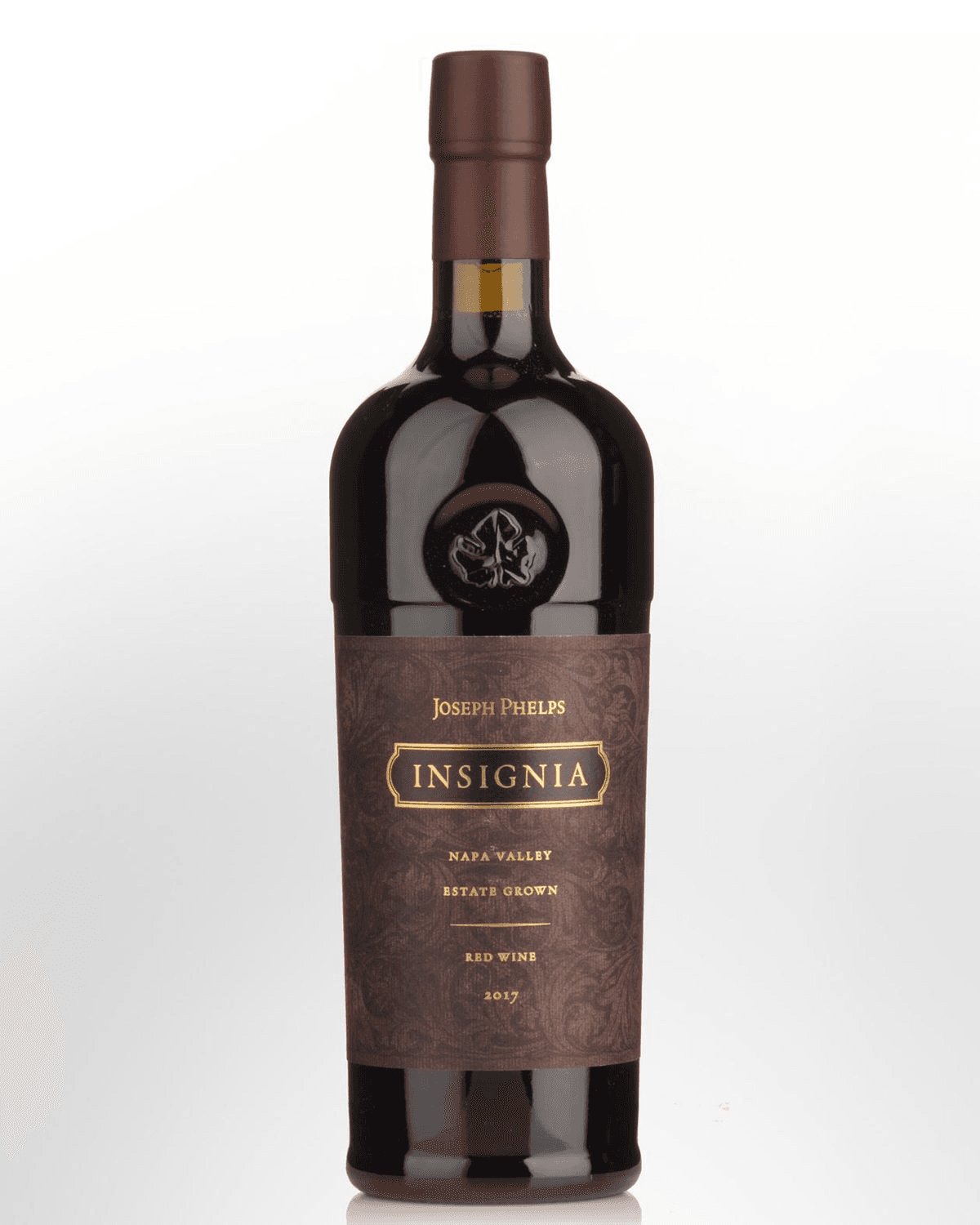
Joseph Phelps Insignia 2020
Joseph Phelps Vineyards (LVMH Moët Hennessy) · Joseph Phelps Vineyards, St. Helena, Napa Valley
Insignia is one of America's great wines — not merely because it is prestigious or expensive, but because it consistently delivers what the greatest Bordeaux delivers: extraordinary complexity that evolves across decades. The 2020 vintage was grown in a challenging year that produced remarkably concentrated, structured fruit.
Nose
Extraordinarily complex: cassis and blackberry fruit leading into cedar, fresh violet, graphite, mocha, and the characteristic lifted floral quality of great Napa Cabernet.
Palate
Full-bodied and perfectly structured, with impeccably resolved tannins providing architecture for layers of blackberry, cassis, chocolate, cedar, and espresso.
Finish
Exceptionally long and evolving, with persistent cassis, cedar, vanilla, and graphite minerals — a finish measured in minutes.
- Varietal
- Cabernet Sauvignon (approximately 88% in the 2020 vintage)
- Blend
- Approximately 88% Cabernet Sauvignon, 9% Merlot, 2% Petit Verdot, 1% Cabernet Franc — blend varies by vintage
- Vineyards
- Sourced from 14 estate vineyards across Napa Valley's finest appellations: Oakville, Stags Leap, Rutherford, and St. Helena
Cocktail Suggestion
Cocktail — Insignia Sangria (use a younger vintage for cocktails): 1 bottle Napa Cabernet · 2 oz brandy · 1 oz orange liqueur · 2 oz fresh orange juice · 1 orange and 1 lemon sliced. Combine all ingredients. Chill overnight. Serve over ice.
Food Pairing
Pair with: Prime dry-aged ribeye with black truffle butter — the weight and tannin structure of Insignia demands equally substantial, umami-rich food.
Be the first to comment.
Leave a comment

Domaine du Vieux Télégraphe Télégramme Châteauneuf-du-Pape 2020
Domaine du Vieux Télégraphe
Télégramme is the second wine of the legendary La Crau bottling, and the 2020 vintage is a testament to the warmth and generosity of that year. It offers much of the depth and complexity of its elder sibling at a fraction of the price — a serious Châteauneuf for everyday enjoyment.

Passopisciaro Contrada P Terre Siciliane IGT 2021
Passopisciaro
Andrea Franchetti's Passopisciaro project maps Etna's contrade with obsessive precision, and Contrada P — from the Porcaria vineyard on Etna's north face — is a vivid demonstration of how volcanic fire, stored in the soil for millennia, shapes a wine's identity. Nerello Mascalese here is lean, focused, and electric.

Vietti Barbera d'Asti Tre Vigne 2022
Vietti
Vietti's Tre Vigne Barbera shows how minimal oak aging can shape a wine without redefining it. The fruit remains front and center, with wood providing structure rather than flavor. For a daily-drinking red from a top Piedmont producer, it delivers remarkable clarity and balance.

Benanti Etna Rosso DOC 2021
Benanti
Benanti pioneered the modern Etna wine movement in the 1980s, and their entry-level Rosso remains a benchmark for the appellation. Nerello Mascalese grown on volcanic slopes delivers transparency, tension, and a sense of place that few wines at this price can match. A vivid expression of heat stored in stone.