Issue 25 · April 20, 2026
The Slow Reveal
Theme: Layer by Layer
Eight bottles that reward patience — spirits and wines whose aromas, flavors, and stories unfold gradually, revealing hidden layers the longer you sit with them.
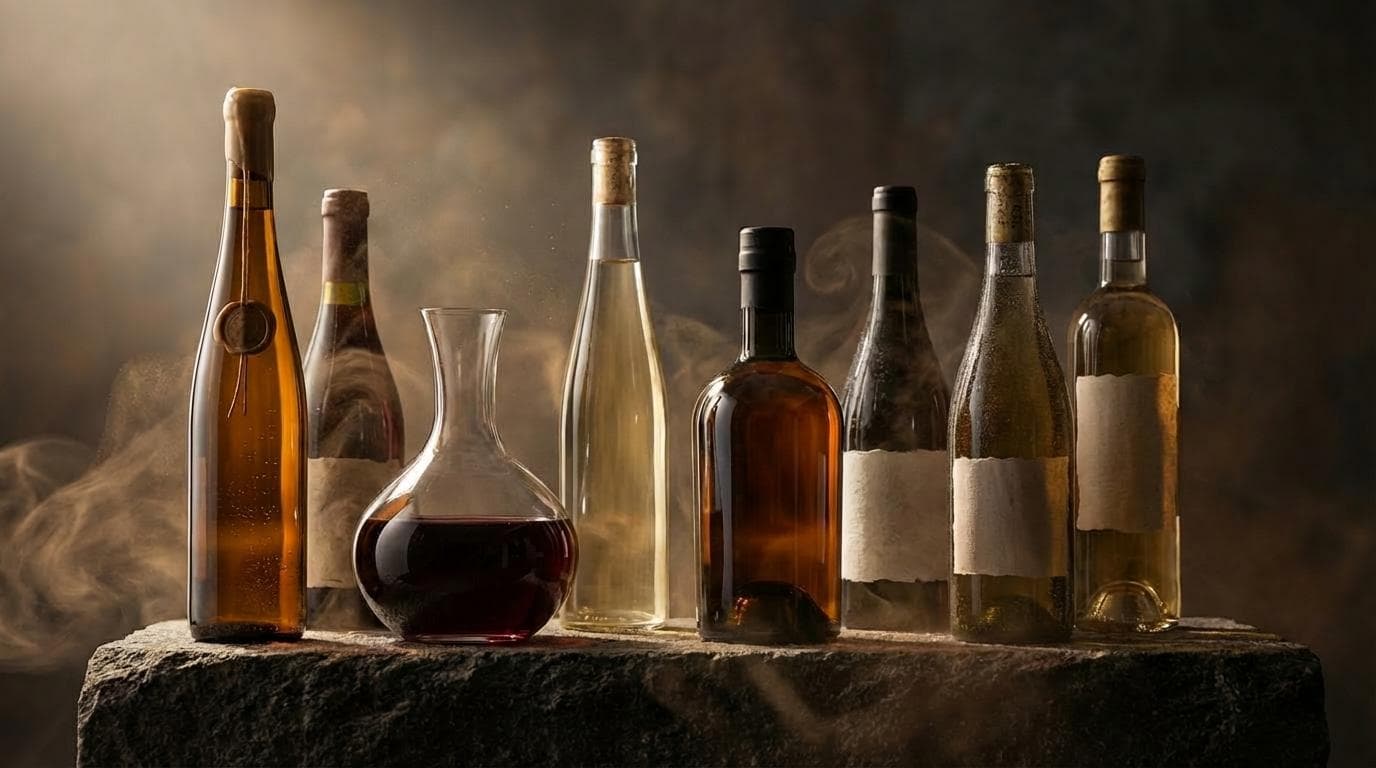

Some bottles announce themselves the moment the cork is pulled — bright, immediate, unmistakable. Today's eight are not those bottles. These are the ones that ask you to slow down, to pour and wait, to return to the glass five minutes later and find something you missed the first time. An Old Grand-Dad 114 that opens from fiery rye heat into a layered web of caramel and dark chocolate. A Cragganmore 12 whose legendary nose has been called the most complex in all of Speyside. A Fortaleza Añejo tahona-crushed tequila that spent eighteen months becoming something profoundly more than the sum of its ingredients. Each one rewards the drinker who refuses to rush.
The thread connecting these eight selections is patience in the glass — not just patience in production (though several of these makers are extraordinarily patient), but the experience of flavors that reveal themselves layer by layer. A Redbreast Lustau Edition that unfolds from sherry sweetness into dark chocolate and spice over twenty minutes. A López de Heredia Viña Tondonia Reserva that spent six years in barrel and still isn't done evolving in your glass. A Chairman's Reserve born from casks literally forgotten during a fire, their accidental extra aging creating a rum of extraordinary depth. Pour any of these tonight and you'll discover that the best bottles don't give everything away at once.
Today's Selections
BOURBON SCOTCH WHISKY IRISH WHISKEY TEQUILA GIN RUM RED WINE WHITE WINE
BOURBON Old Grand-Dad 114
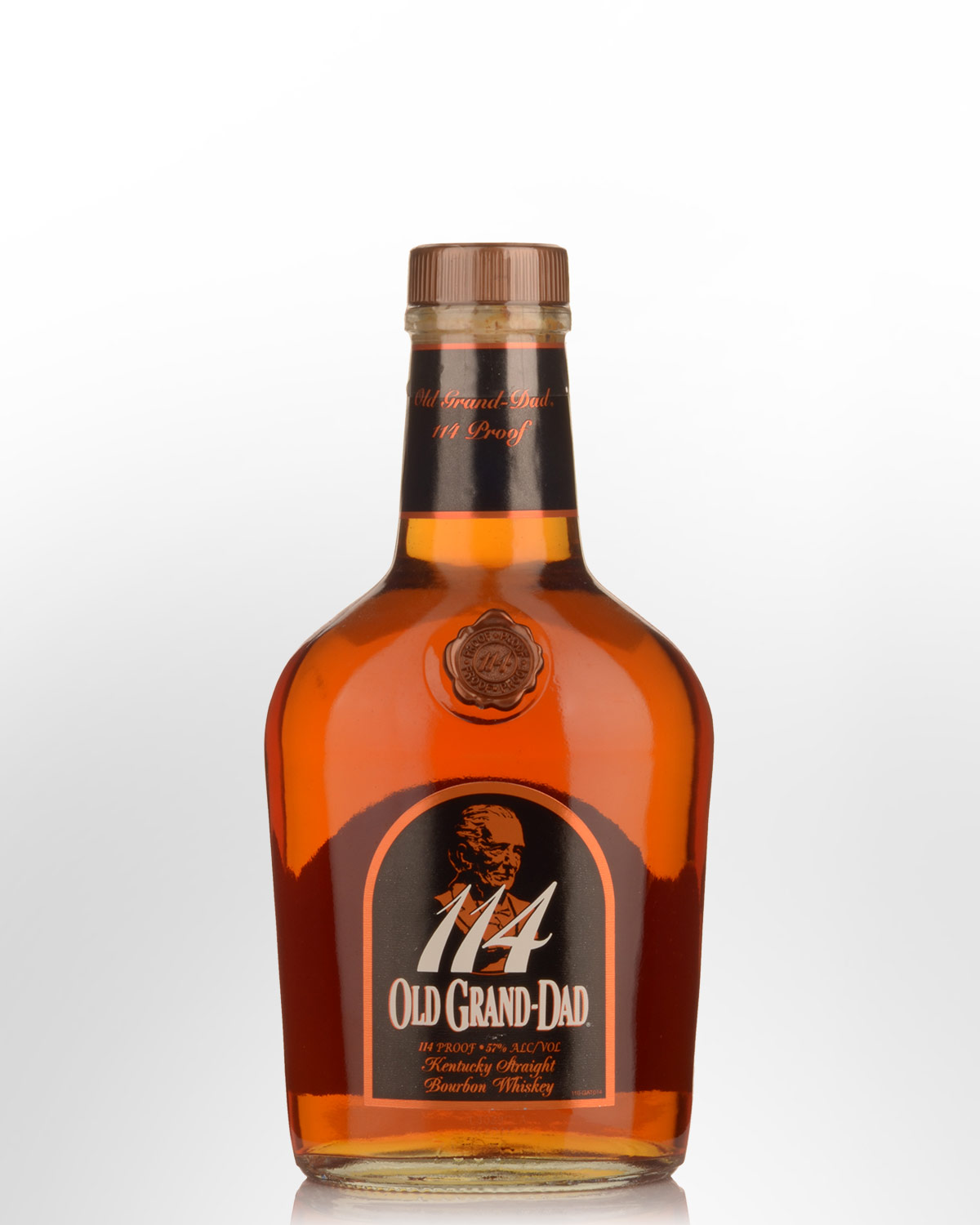
From the rolling hills of Clermont, Kentucky, Old Grand-Dad carries one of American whiskey’s most storied lineages. Named for Meredith Basil Hayden Sr., a pioneering distiller who led a group of Catholic families from Maryland to Kentucky in 1785, beginning to distill his distinctive high-rye recipe by 1796, this bourbon has maintained its distinctive character through over two centuries of ownership changes — from the Hayden family to the Wathen family to National Distillers and now Beam Suntory. The 114-proof expression is bottled without chill filtration, preserving every layer of flavor the barrel imparted. — where Old Grand-Dad 114 is the thinking drinker's value bourbon — a bottle that punches so far above its price point it almost feels like a mistake. That 27% rye mash bill, nearly double the industry average, gives it a backbone of spice that would overwhelm a lesser whiskey, but here it serves as architecture: the framework on which layers of caramel, oak char, and dark fruit slowly reveal themselves. Pour it neat and you get a wall of proof. Add water and wait, and you get a bourbon of startling complexity. This is the slow reveal at its most democratic — a world-class drinking experience for the price of a weeknight dinner.
Classification: Kentucky Straight Bourbon Whiskey
Company: Beam Suntory
Distillery: Jim Beam Distillery, Clermont, Kentucky
Proof: 114 (57% ABV)
Age: No Age Statement (estimated 4–6 years)
Mash Bill: 63% Corn, 27% Rye, 10% Malted Barley
Color: Deep amber with burnished copper highlights
MSRP: $28–$35
Nose: Rich caramel and toasted rye bread emerge first, followed by waves of cinnamon bark, dried orange peel, and a dark chocolate undertone that deepens with time in the glass. A few drops of water unlock a hidden layer of brown sugar and charred oak.
Palate: Bold rye spice leads, then yields to butterscotch, charred oak, and baking spices. The high proof delivers a mouth-coating richness that carries black pepper and warm honey through the mid-palate, with each sip revealing slightly different emphasis.
Finish: Long and warming, with slow-building waves of cinnamon, leather, and a lingering rye kick that fades gradually into toasted grain and a whisper of dark chocolate.
Cocktail — The Slow Old Fashioned: Combine 2 oz Old Grand-Dad 114, 1 bar spoon demerara syrup, 2 dashes Angostura bitters, and 1 dash orange bitters over a large ice cube. Stir gently for thirty seconds — the high proof means this cocktail will evolve in the glass as the ice slowly dilutes, revealing new layers of sweetness and spice with every sip. Express an orange peel over the surface.
Pair with: Smoked brisket with a brown sugar and black pepper bark — the caramelized meat crust mirrors the bourbon's charred oak and brown spice, while the fat tempers the proof.
Awards: 91 points, Breaking Bourbon (2025 review). Consistently rated among the best value bourbons in America by major publications.
SCOTCH WHISKY Cragganmore 12 Year Old
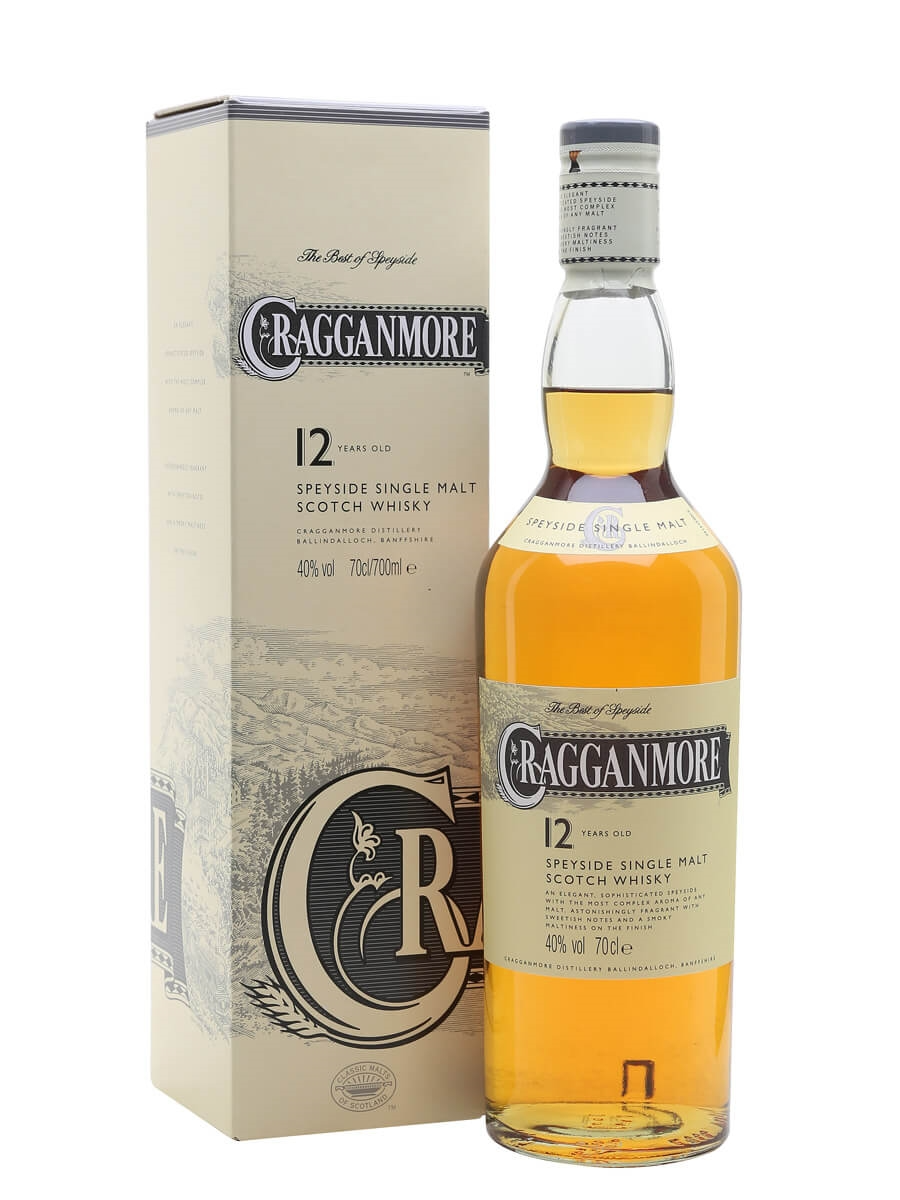
Nestled in the shadow of Craggan More hill in Ballindalloch, Speyside, Cragganmore has been distilling since 1869, when John Smith — considered one of the most experienced distillers of his day — chose this precise location for its access to the Craggan Burn’s soft water. The distillery’s unique flat-topped spirit stills with T-shaped lyne arms create an unusually complex spirit by increasing copper contact and reflux. Diageo selected Cragganmore as the Speyside representative for its Classic Malts range, a quiet endorsement of its layered character. — where Cragganmore 12 is the Speyside malt that rewards the patient nose. Where many single malts deliver their story in one dramatic chapter, Cragganmore reads like a novel with slow-building subplots. Those unique T-shaped lyne arms aren't a marketing gimmick — they create a spirit of genuine multi-layered complexity that unfolds over the course of a dram. Michael Jackson's famous declaration about its nose wasn't hyperbole; return to this glass three times and you'll catch three different aromatics. At its price point, this is one of the most intellectually rewarding malts in the Diageo portfolio.
Classification: Single Malt Scotch Whisky
Company: Diageo
Distillery: Cragganmore Distillery, Ballindalloch, Speyside
Proof: 80 (40% ABV)
Age: 12 Years
Mash Bill: 100% Malted Barley
Distillation: Double distilled in flat-topped stills with unique T-shaped lyne arms
Maturation: Aged in second-fill ex-bourbon American oak casks
Filtered: Chill-filtered
Color: Warm amber gold
MSRP: $50–$60
Nose: A kaleidoscope that shifts with every return to the glass: heather and wildflower honey appear first, then dried fruit and smoked almonds, then a surprising wisp of peat smoke that vanishes as quickly as it arrived. The legendary whisky writer Michael Jackson called this the most complex nose of any malt whisky.
Palate: Rich honey and stone fruit on entry, with malted barley and chestnut weaving through the mid-palate. The flat-topped stills create a textural complexity that carries layers of smoke and spice, with each sip revealing a slightly different balance of flavors.
Finish: Long and sophisticated, with honey and light smoke lingering first, then a final floral and nutty note that persists. The finish is remarkably clean yet layered, a testament to the distillery's unique distillation process.
Cocktail — The Speyside Reviver: Combine 2 oz Cragganmore 12, 0.75 oz honey syrup, 0.5 oz fresh lemon juice, and 2 dashes of Peychaud's bitters. Shake with ice and strain into a coupe. The honey syrup amplifies the malt's natural sweetness while the citrus lifts the dried fruit notes into sharper focus.
Pair with: Roasted duck breast with a cherry and walnut compote — the game bird's richness complements the malt's nutty depth, while the compote echoes the dried fruit and berry notes.
Awards: 94 points, Ultimate Spirits Challenge. Selected as the Speyside representative in Diageo's Classic Malts of Scotland range.
IRISH WHISKEY Redbreast Lustau Edition
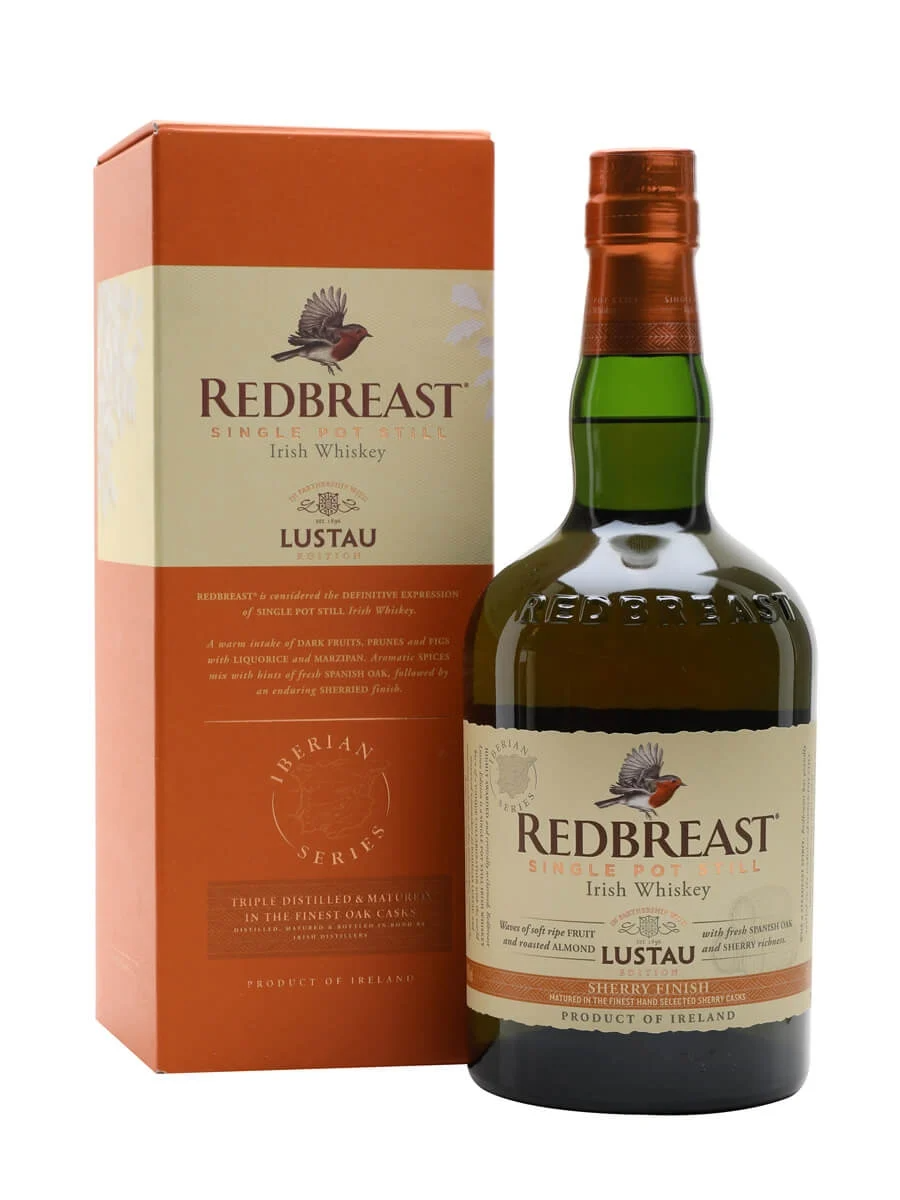
Born of a friendship between Midleton Distillery in Cork and Bodegas Lustau in Jerez, Spain, this edition bridges two of Europe’s most storied traditions. The whiskey begins its life as classic Redbreast — triple-distilled single pot still from a mash of malted and unmalted barley — then matures for nine to twelve years in a combination of bourbon and sherry casks. The final act is a one-year finish in first-fill Oloroso sherry butts hand-selected by Lustau’s own cellar master, adding a last layer of Spanish complexity to an already rich Irish whiskey. — where The Lustau Edition is Redbreast's most layered expression — a whiskey that seems to change shape in the glass. That final year in Lustau's first-fill Oloroso butts doesn't overpower the pot still character; it adds a last chapter to an already complex story. The sherry sweetness arrives as a whisper on the nose, builds to a confident statement on the palate, and then retreats on the finish to let the barley and spice have the final word. This is the slow reveal as collaboration: two great traditions, each revealing itself in sequence rather than competing for attention. At under ninety dollars, it's one of the finest Irish whiskeys available.
Classification: Single Pot Still Irish Whiskey
Company: Irish Distillers (Pernod Ricard)
Distillery: Midleton Distillery, Cork, Ireland
Proof: 92 (46% ABV)
Age: 9–12 Years (plus 1 year Lustau sherry butt finish)
Mash Bill: Malted and Unmalted Barley (single pot still tradition)
Distillation: Triple distilled in copper pot stills
Maturation: Bourbon and sherry casks (9–12 years), finished 1 year in first-fill Oloroso sherry butts from Bodegas Lustau
Color: Rich amber with deep ruby highlights
MSRP: $80–$90
Nose: Opens with rich dried fruits and toasted almonds, then slowly reveals Christmas cake, dark chocolate, and the unmistakable Oloroso sherry influence — a nutty, raisined depth that grows more pronounced the longer the glass sits.
Palate: A lush, creamy entry of toffee and dried fruit gives way to warming spices — nutmeg, clove, and a hint of cinnamon. The pot still's characteristic oiliness carries toasted oak and dark plum through the mid-palate, with each sip seemingly different from the last.
Finish: Exceptionally long, with dark chocolate emerging first, then Oloroso sweetness, then gentle spice, each layer arriving at its own pace. The final notes of dried fig and roasted barley can linger for minutes.
Cocktail — The Lustau Sour: Combine 2 oz Redbreast Lustau Edition, 0.75 oz fresh lemon juice, 0.5 oz Pedro Ximénez sherry syrup, and 1 egg white. Dry shake vigorously, then shake with ice and strain into a rocks glass. The PX syrup doubles down on the sherry character while the egg white creates a velvety texture that lets the whiskey's layers unfold slowly.
Pair with: Dark chocolate truffles dusted with sea salt — the cocoa amplifies the whiskey's dark chocolate notes while the salt lifts the dried fruit and sherry sweetness.
Awards: 95 points, Jim Murray's Whisky Bible 2021. Double Gold Medal, San Francisco World Spirits Competition 2019.
TEQUILA Fortaleza Añejo
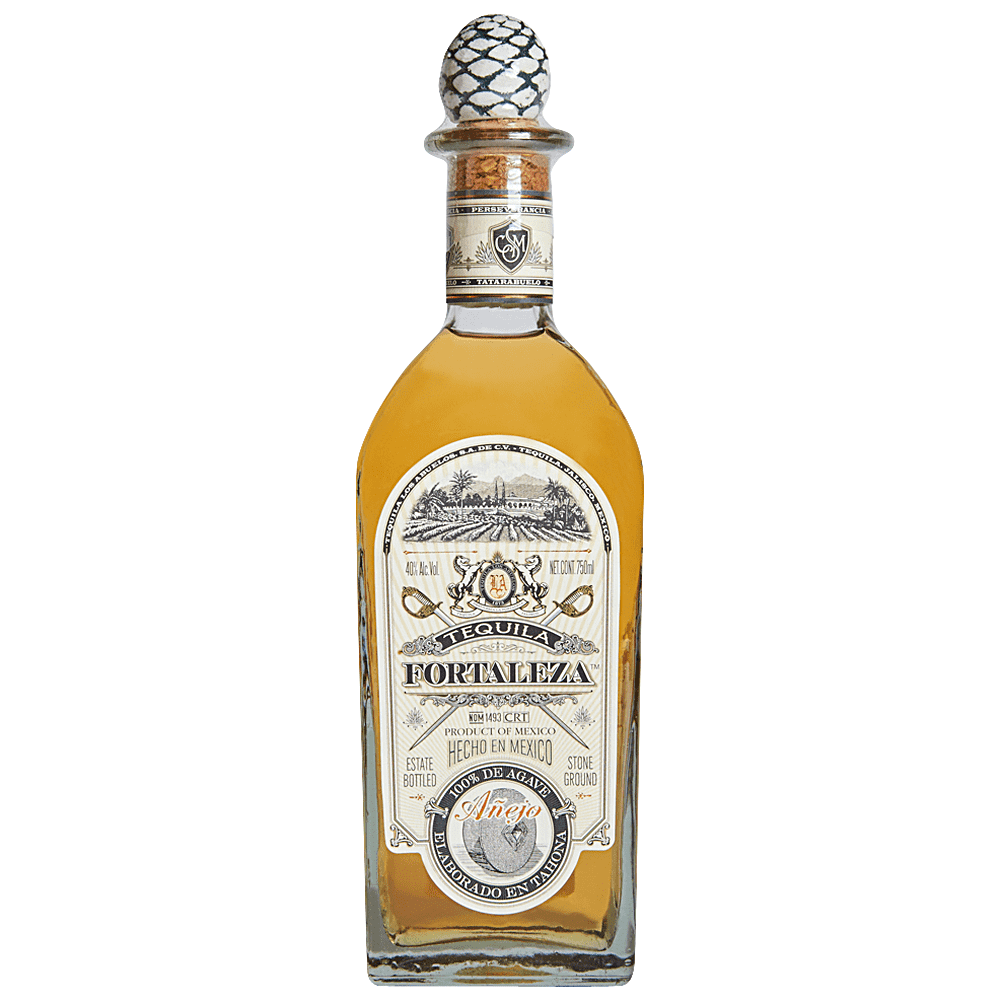
Fifth-generation tequilero Guillermo Erickson Sauza produces Fortaleza at Destilería Los Abuelos in the town of Tequila, Jalisco — using the same methods his family pioneered in 1873. Estate-grown Blue Weber agave is slow-roasted in a traditional stone brick oven, then crushed by a two-ton volcanic tahona wheel, fermented in open-air wooden tanks with ambient yeast, and double distilled in small copper pot stills. The añejo rests for eighteen months in American oak barrels, gaining complexity without losing the agave’s soul. — where Fortaleza Añejo is what happens when traditional methods meet patient barrel aging — and neither rushes the other. The tahona wheel produces a spirit with more texture and mineral complexity than a modern roller mill, and eighteen months in oak adds caramel depth without burying the agave. This is a tequila that rewards a slow pour: the first sip is butterscotch and vanilla; the fifth reveals the cooked agave and earthy minerality that are Fortaleza's true signature. In a category increasingly dominated by additive-laden bottles designed to taste like bourbon, this is the real thing — a slow reveal of what añejo tequila was always meant to be.
Classification: Añejo Tequila (100% Blue Weber Agave)
Company: Tequila Los Abuelos (NOM 1493)
Distillery: Destilería Los Abuelos, Tequila, Jalisco
Proof: 80 (40% ABV)
Age: 18 Months in American Oak
Agave: 100% Blue Weber Agave, estate-grown in the Tequila Valley of Jalisco
Production: Stone oven roasted, tahona wheel crushed, open-air wooden tank fermentation, double distilled in copper pot stills. Additive-free.
Color: Rich gold with warm amber highlights
MSRP: $70–$85
Nose: Cooked agave sweetness greets first, then butterscotch, vanilla, and caramel build slowly. Give it five minutes and cinnamon, toasted oak, and a subtle earthiness emerge from beneath the initial sweetness — the tahona wheel's signature mineral depth.
Palate: Silky and rich, with caramel and butterscotch leading into warm cinnamon, vanilla bean, and roasted agave. The oak is present but restrained, adding structure without masking the agave character. A slight honey sweetness weaves through the mid-palate.
Finish: Long and elegant, with oak tannins, gentle cinnamon warmth, and a lingering cooked agave sweetness that recalls the tahona-crushed piñas. The finish evolves for minutes, with vanilla and subtle spice as the final notes.
Cocktail — The Tahona Old Fashioned: Combine 2 oz Fortaleza Añejo, 0.5 oz agave nectar, and 2 dashes mole bitters over a large ice cube. Stir slowly for 30 seconds. The agave nectar reinforces the spirit's natural sweetness while the mole bitters draw out the chocolate and cinnamon undertones.
Pair with: Mole negro with braised chicken — the sauce's chocolate, chili, and warm spice layers harmonize with the tequila's oak-aged complexity.
Awards: Multiple gold medals at international spirits competitions. Widely acclaimed as one of the finest traditionally-made añejo tequilas available.
GIN Barr Hill Gin
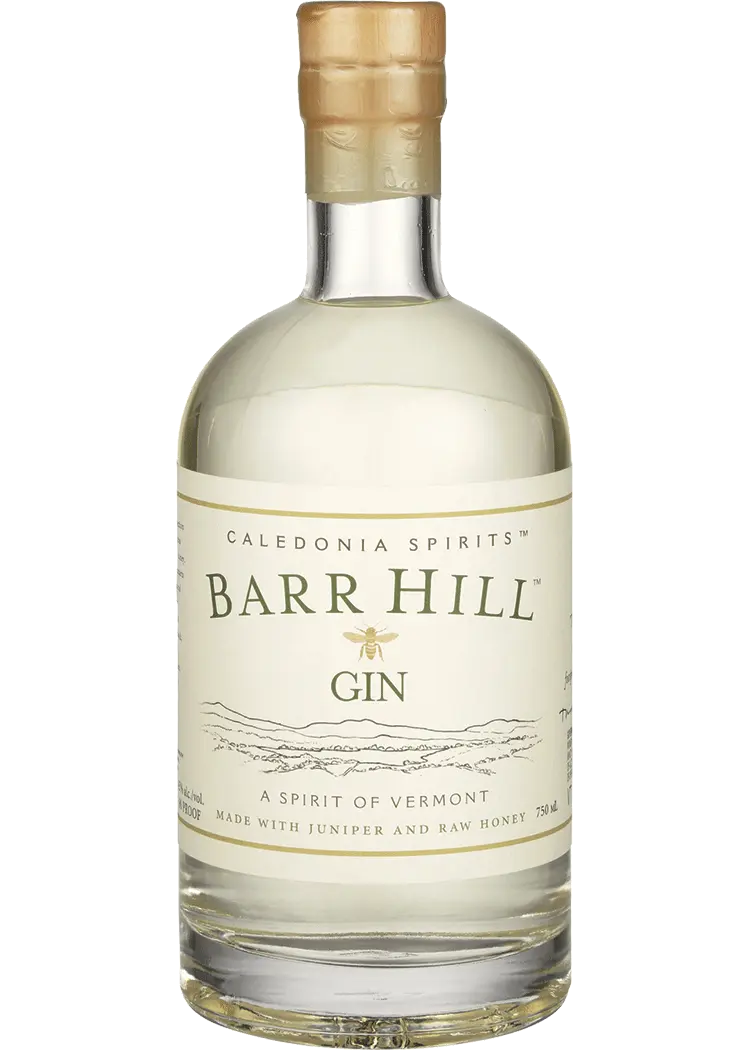
In Montpelier, Vermont, beekeeper Todd Hardie co-founded Caledonia Spirits on a radical premise: strip gin down to its essence and let two ingredients — juniper and raw honey — do all the talking. Where most gins build complexity through a dozen or more botanicals, Barr Hill achieves it through the extraordinary complexity already present in Vermont’s raw wildflower honey, which contains an estimated 100 to 115 different pollen and plant particles. The result is a gin that reveals its depth not through addition, but through the patient appreciation of what was always there. — where Barr Hill proves that complexity doesn't require a botanical bill as long as your arm. Two ingredients — juniper and raw honey — sound impossibly simple, until you realize that Vermont's raw wildflower honey is itself a symphony of over a hundred pollen sources, each contributing its own aromatic fingerprint. The result is a gin that seems simple on first sip but grows more interesting the longer you spend with it. In a Gin and Tonic, the honey rounds the juniper beautifully; neat, with time, the floral and herbal layers emerge one by one. This is the slow reveal as minimalism: fewer ingredients, more to discover.
Classification: American Gin
Company: Caledonia Spirits
Distillery: Barr Hill Distillery, Montpelier, Vermont
Proof: 90 (45% ABV)
Botanicals: Juniper and raw Vermont wildflower honey (just two ingredients)
Distillation: Single distillation in a custom-built botanical extraction still with hand-crushed juniper
Base: Grain neutral spirit
Color: Crystal clear with the faintest golden hue
MSRP: $30–$38
Nose: Bright, resinous juniper arrives first, then a warm wave of wildflower honey, subtle floral nectar, and a surprising peppery spice. Let it breathe and a delicate meadow sweetness emerges — the honey's hundred-plus pollen sources slowly announcing themselves.
Palate: Clean, assertive juniper leads with a herbaceous, almost waxy quality, then the raw honey unfolds: warm sweetness, floral complexity, a gentle ginger-like warmth. The mid-palate reveals unexpected depth for a two-botanical gin, with peppery spice and a meadowsweet quality.
Finish: Medium-long and evolving: the juniper recedes, honey warmth lingers, and a final floral note appears that wasn't present on the palate — the slow reveal of what raw honey's pollen complexity can become in spirit form.
Cocktail — The Bee's Knees (Barr Hill Edition): Combine 2 oz Barr Hill Gin, 0.75 oz fresh lemon juice, and 0.75 oz raw honey syrup (3:1 honey to warm water). Shake with ice and strain into a coupe. The cocktail's name is literal here: the honey in the syrup and the honey in the gin harmonize into something greater than either alone.
Pair with: Aged Manchego with honeycomb and marcona almonds — the cheese's nuttiness and the honeycomb's sweetness create a bridge to the gin's two core ingredients.
Awards: Most awarded gin made in the United States. Double Gold Medal, San Francisco World Spirits Competition. Top-selling Vermont-made spirit.
RUM Chairman's Reserve The Forgotten Casks
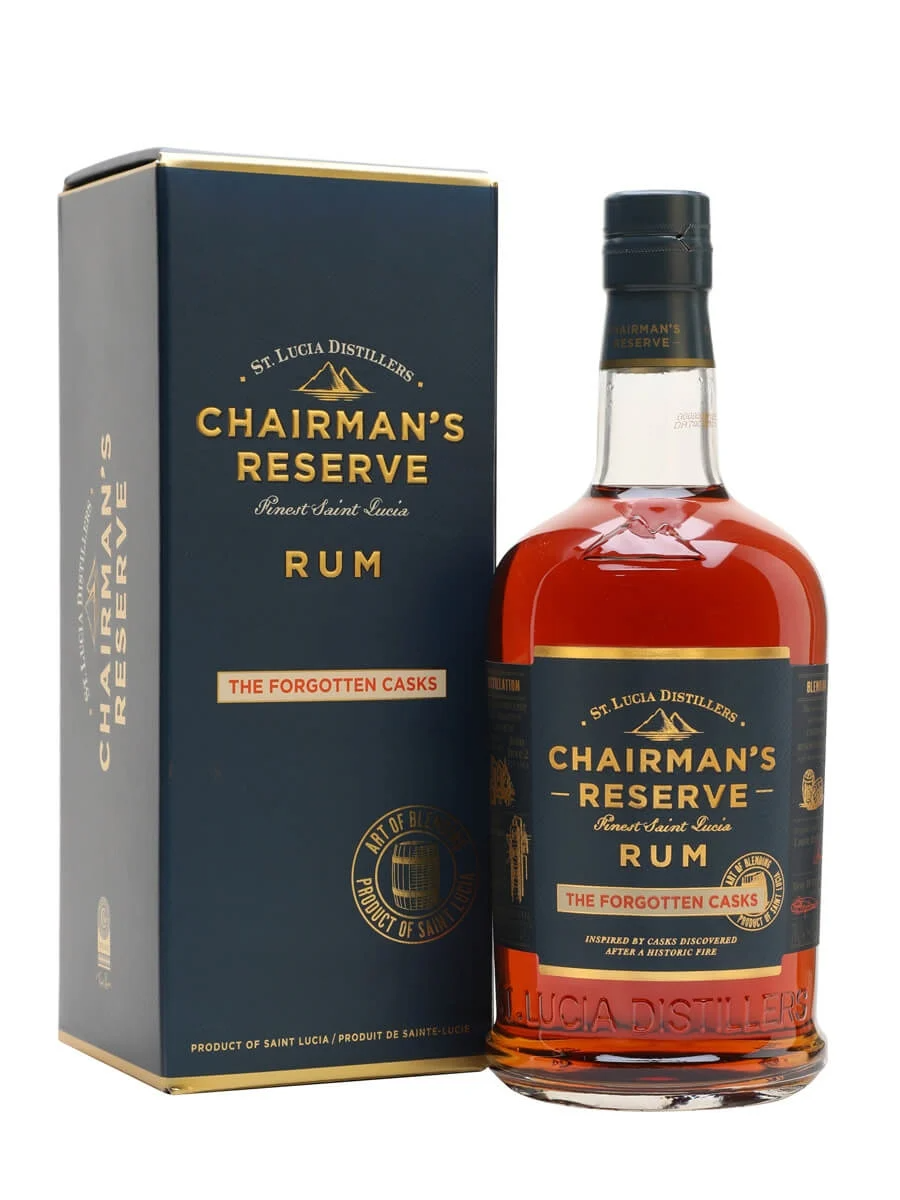
On May 2, 2007, fire swept through St. Lucia Distillers in the Roseau Valley, devastating the distillery and forcing the cellar master to scramble for emergency storage space. In the chaos of reconstruction, several casks of Chairman’s Reserve were misplaced — literally forgotten in temporary storage. When finally rediscovered, the rum inside had aged far beyond the original blend’s specifications, developing an extraordinary depth and complexity. Too old for the standard Chairman’s Reserve, this rum was released as The Forgotten Casks — an accidental masterpiece born from disaster. — where The Forgotten Casks is the rum world's most eloquent argument for the virtue of accidental patience. Those extra years of unplanned aging — born from a fire and a mislabeled storage space — produced a rum of remarkable layered depth at a price that would be impossible if it were intentionally marketed as a premium extra-aged expression. The blend of Coffey still lightness and pot still richness gives it a dynamic quality: the lighter notes surface first, then the heavier ones emerge and take over, then the two merge in the finish. It's a slow reveal in the truest sense — a rum whose story was written by time and circumstance rather than design.
Classification: Extra-Aged Blended Rum
Company: St. Lucia Distillers Group of Companies
Distillery: St. Lucia Distillers, Roseau Valley, St. Lucia
Proof: 80 (40% ABV)
Age: 6–11 Years (blend of various ages)
Base: Molasses
Distillation: Blend of Coffey column still and copper pot still rums, blended and rested an additional 6 months in oak vats
Color: Rich dark gold with deep mahogany highlights
MSRP: $45–$55
Nose: Sweet raisins and cigar tobacco announce themselves immediately, then amber honey, vanilla, and smoky oak emerge in succession. Give it time and a dried tropical fruit note — pineapple, mango — surfaces beneath the darker aromas.
Palate: Dark caramel and honeyed dried pineapple lead, followed by raisins, candied walnuts, and soft baking spices. The Coffey still component adds a lighter, grainier sweetness that contrasts beautifully with the pot still's richer, oilier contribution.
Finish: Long and dry, with tobacco and leather emerging first, then charred oak, then a final whisper of vanilla and dried fruit. The finish evolves over minutes, each wave distinctly different from the last.
Cocktail — The Forgotten Daiquiri: Combine 2 oz Chairman's Reserve The Forgotten Casks, 0.75 oz fresh lime juice, and 0.5 oz demerara syrup. Shake with ice and strain into a chilled coupe. The rum's extra age and complexity transform this simple template into something far more contemplative than a standard daiquiri.
Pair with: Grilled jerk pork with caramelized pineapple — the allspice and scotch bonnet heat echo the rum's spice notes, while the pineapple mirrors its tropical fruit layer.
Awards: Gold Medal, International Wine and Spirits Competition 2011. 93 points, Ultimate Spirits Challenge 2017. Named among the world's best sipping rums by multiple publications.
RED WINE López de Heredia Viña Tondonia Reserva 2011
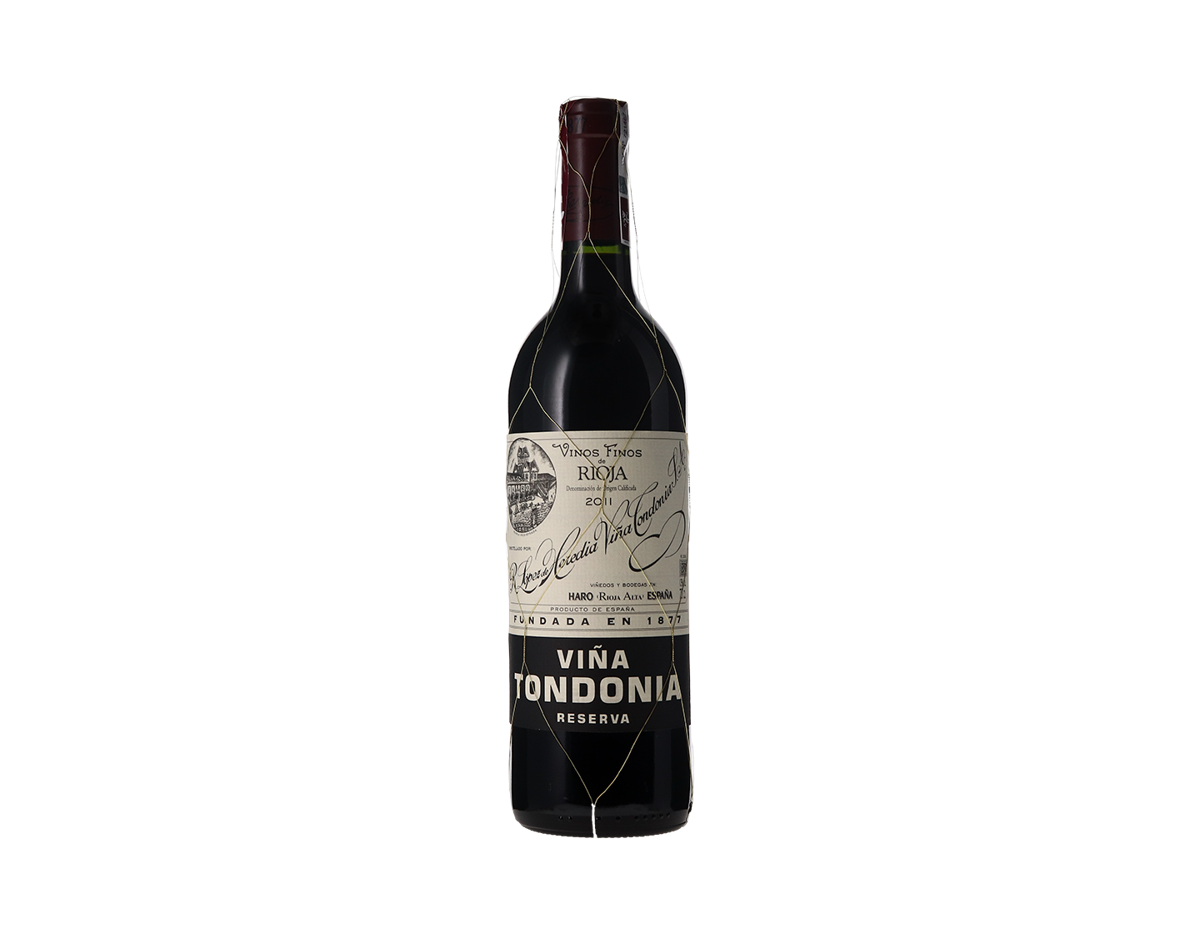
Founded in 1877 in Haro, Rioja Alta, Bodegas R. López de Heredia is one of the first three wineries in the Rioja region and remains proudly family-owned through its fourth generation. The Viña Tondonia vineyard sits in a meander of the Ebro River, where the unique microclimate and clay-limestone soils produce grapes of extraordinary concentration. The 2011 Reserva was aged for six years in century-old American oak barrels, racked twice yearly and fined with fresh egg whites — traditional methods that the López de Heredia family has refused to abandon despite modern trends. — where Viña Tondonia Reserva is the ultimate slow-reveal wine — a bottle that spent six years in barrel and still isn't done evolving when you pour it. The López de Heredia family's insistence on century-old barrels and traditional racking means this wine develops complexity through time and air rather than new-oak extraction, and the result is a Rioja that unfolds over hours in the glass. The 2011 vintage earned 95 points from Tim Atkin and a spot on Wine Spectator's Top 100 because it delivers what very few wines can: genuine intellectual engagement. You'll pour it and think you understand it. An hour later, you'll realize you didn't.
Classification: DOCa Rioja Reserva
Company: R. López de Heredia Viña Tondonia S.A.
Winery: Bodegas R. López de Heredia, Haro, Rioja Alta
ABV: 13%
Primary Varietal: Tempranillo (75%)
Blend: 75% Tempranillo, 15% Garnacho, 5% Graciano, 5% Mazuelo
Vineyards: Estate Viña Tondonia vineyard, Ebro River meander, clay-limestone soils
Maturation: 6 years in century-old American oak barrels, racked twice per year, fined with fresh egg whites
Color: Vibrant ruby trending toward garnet and amber at the rim
MSRP: $55–$65
Nose: Dried cherry and vanilla emerge first, then tobacco leaf, warm earth, and orange zest build in layers. Give it fifteen minutes of air and a cedar note appears, followed by a mineral quality that wasn't there at first pour. This wine literally changes in the glass.
Palate: Dried plums and leather on entry, with iron minerality and subtle spice weaving through the mid-palate. The tannins are firm but sinewy rather than aggressive, and the acidity is bright and alive, carrying flavors of dried fruit and savory herbs across the palate.
Finish: Extraordinarily long. Tobacco and dried fruit linger first, then a mineral earthiness emerges, then a final cedar-vanilla note that can persist for minutes. Few wines in the world offer a finish this layered and this patient.
Cocktail — Tinto de Verano Tondonia: Pour 4 oz Viña Tondonia Reserva over ice and top with 2 oz sparkling lemon water and a slice of orange. Sacrilege to some, but the citrus and carbonation lift the wine's earthy layers into a refreshing new context.
Pair with: Slow-roasted lamb shoulder with rosemary and roasted garlic — the lamb's rendered fat and herbaceous crust mirror the wine's savory, earthy character and match its patient intensity.
Awards: 95 points, Tim Atkin MW. Wine Spectator Top 100 (#53). One of Rioja's most celebrated traditional producers.
WHITE WINE Leeuwin Estate Art Series Chardonnay 2020
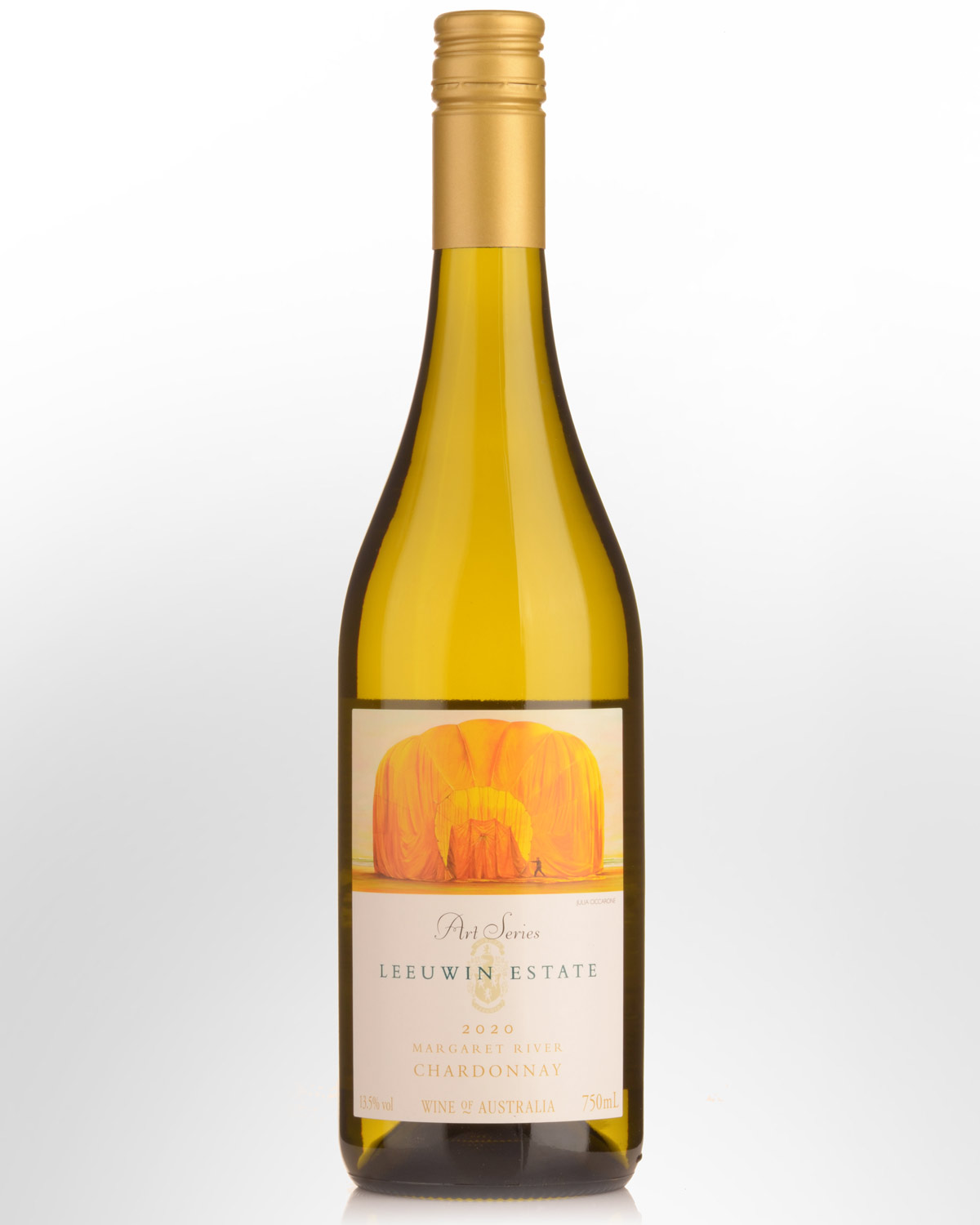
Established in 1973 on the advice of the legendary Robert Mondavi, who identified Margaret River’s potential for world-class Chardonnay, Leeuwin Estate has spent five decades proving him right. The Art Series Chardonnay — classified as ‘Exceptional’ by Langton’s and named one of Australia’s Heritage Five wines — is the flagship. The 2020 vintage saw 30% whole-bunch pressing to new Burgundian oak and the balance to new Bordelais oak, with eleven months of barrel fermentation building layer upon layer of complexity. — where The Art Series Chardonnay is Australia's most compelling argument that great Chardonnay needs nothing but time and patience. The 2020 vintage received 98 points from Wine Advocate and 97 from Halliday, James Suckling, and Wine Front — scores that reflect not just quality but layered complexity. This is a wine that shows one face at ten minutes, another at thirty, and yet another the next day if you're disciplined enough to recork it. The interplay of Burgundian and Bordelais oak creates a textural complexity that slowly reveals itself: richness from one, precision from the other. Drink it now through 2036 and watch it evolve with every year.
Classification: Margaret River Chardonnay
Company: Leeuwin Estate
Winery: Leeuwin Estate, Margaret River, Western Australia
ABV: 13.5%
Primary Varietal: Chardonnay (100%)
Blend: 100% Chardonnay
Vinification: 30% whole bunch pressed to new Burgundian oak, 70% destemmed and pressed to new Bordelais oak. 11 months barrel fermentation.
Color: Pale gold with luminous green-gold highlights
MSRP: $100–$120
Nose: Lemon curd and nashi pear open the conversation, followed by lime zest, vanilla pod, and tea leaf. Give it time and a mineral flintiness emerges alongside lemon myrtle — the kind of aromatic complexity that announces a Chardonnay built for decades, not months.
Palate: Precise and focused, with white peach and pear at the core, delicately woven texture through the mid-palate, and a juicy acidity that carries nectarine and preserved citrus. The oak is fully integrated — you sense it as structure, not flavor.
Finish: Long, saline, and mineral-driven, with lingering citrus and stone fruit that slowly resolves into a crushed-shell minerality. The finish changes character over minutes, from fruit to mineral to a quiet, persistent salinity.
Cocktail — The Art Series Spritz: Pour 4 oz Leeuwin Estate Art Series Chardonnay into a large wine glass over a single ice cube. Add 1 oz elderflower liqueur and top with 2 oz dry sparkling water. The elderflower amplifies the wine's floral and honey notes, while the chill and dilution open new aromatic layers.
Pair with: Butter-poached lobster tail with preserved lemon and tarragon — the lobster's richness meets the wine's buttery texture, while the preserved lemon echoes its citrus core.
Awards: 98 points, Wine Advocate. 97 points, Halliday Wine Companion. 97 points, James Suckling. Langton's Classification of Australian Wine: Exceptional.
Train Your Nose: Today's Aroma Spotlight
Unlocking Layers: When Aromas Reveal Themselves Over Time
Today's selections reward patience — and so does aroma training. The exercises below are designed to help you identify the layered, slow-developing aromas that define these eight products. Use your School of Wine and Spirits Aroma Masterclass Kit to isolate each note, then return to the bottle and find it waiting.
Pour Old Grand-Dad 114 neat and note your first impression — the rye spice will dominate. Now add three drops of water and wait two full minutes. The caramel and charred oak aromas that were hiding behind the proof will step forward. Compare the Caramel and Charred Oak reference vials from your Bourbon Kit to what you smell now versus what you smelled thirty seconds after pouring. This is the slow reveal in action: high-proof spirits compress their aromatic layers, and water unfolds them one by one.
Open the López de Heredia Viña Tondonia Reserva and pour it into a wide glass. Smell it immediately, then set it aside for fifteen minutes. The first nosing will give you cherry and vanilla; the second will reveal cedar, dried tobacco, and a mineral earthiness that wasn't there before. Match the Cherry and Cedar vials from your Wine Kit to these emerging layers. Traditional Rioja Reserva is one of the most time-sensitive wines in the world — it literally changes in the glass, which makes it a perfect training partner for developing your ability to detect evolving aromas.
Today's Kit Reference
| Today's Product | Key Aromas | Train With |
|---|---|---|
| Old Grand-Dad 114 | Caramel, Rye, Brown Spices, Charred Oak, Leather, Orange | Bourbon Aroma Masterclass Kit |
| Cragganmore 12 Year Old | Honey, Dried Fruit, Nut (Hazelnut), Smoky, Floral (Rosewater), Malt | Whisky Aroma Masterclass Kit |
| Redbreast Lustau Edition | Dried Fruit, Vanilla, Clove Spice, Nut (Hazelnut), Caramel, Cocoa (Dark) | Whiskey Aroma Masterclass Kit |
| Fortaleza Añejo | Agave (Cooked), Caramel, Vanilla, Oak, Butterscotch, Cinnamon | Tequila & Mezcal Aroma Masterclass Kit |
| Barr Hill Gin | Juniper (Green), Juniper (Herbaceous/Waxy), Peppery, Floral (Rose), Ginger, Meadowsweet | Gin Aroma Masterclass Kit |
| Chairman's Reserve The Forgotten Casks | Vanilla, Dried Fruit, Tobacco, Caramel, Oak, Leather | Rum Aroma Masterclass Kit |
| López de Heredia Viña Tondonia Reserva 2011 | Cherry, Vanilla, Woody, Cedar, Toasted, Mint | Wine Aroma Masterclass Kit |
| Leeuwin Estate Art Series Chardonnay 2020 | Citrus (Generic), Apple (Green), Vanilla, Buttery, Toasted, Honey | Wine Aroma Masterclass Kit |
Explore the School of Wine and Spirits
Today's eight selections prove that the best producers are architects first. Our books on Amazon take you deeper into those places — from the limestone hollows of Kentucky in America's Spirit, the misty distilleries of Scotland's Spirit and Ireland's Spirit, the volcanic highlands of The Tequila y Mezcal Revolution, the ancient vineyards of The Ultimate Northern Italian Wine Journey, and the fossilized seabeds of Burgundy in our Chablis and Cte d'Or pocket guides.
Explore our Aroma Masterclass kits and books at schoolofwineandspirits.com
Join the School of Wine and Spirits Community
Sign up at skool.com/schoolofwineandspirits
Our kits make the perfect gift for the curious drinker in your life — because once you learn to identify aromas, you never taste the same way again.
Know someone who would enjoy The Still & The Vine? Forward this issue to a fellow enthusiast — or share it on social media and tag @SchoolofWineandSpirits. We grow by word of mouth.
Until tomorrow's pour — cheers.
Robert R. Mohr, CPA, CGMA, WSET Level 3, WSG Certified Spirits Specialist — author of America's Spirit, Scotland's Spirit, Ireland's Spirit, The Ultimate Northern Italian Wine Journey, The Tequila y Mezcal Revolution, The Definitive Pocket Guide to Chablis, The Definitive Pocket Guide to the Cte d'Or, and Strategic Tuning. Published author of the Aroma Academy Tequila/Mezcal and Distiller's training kits.
The Still & The Vine is a daily publication of the School of Wine and Spirits.
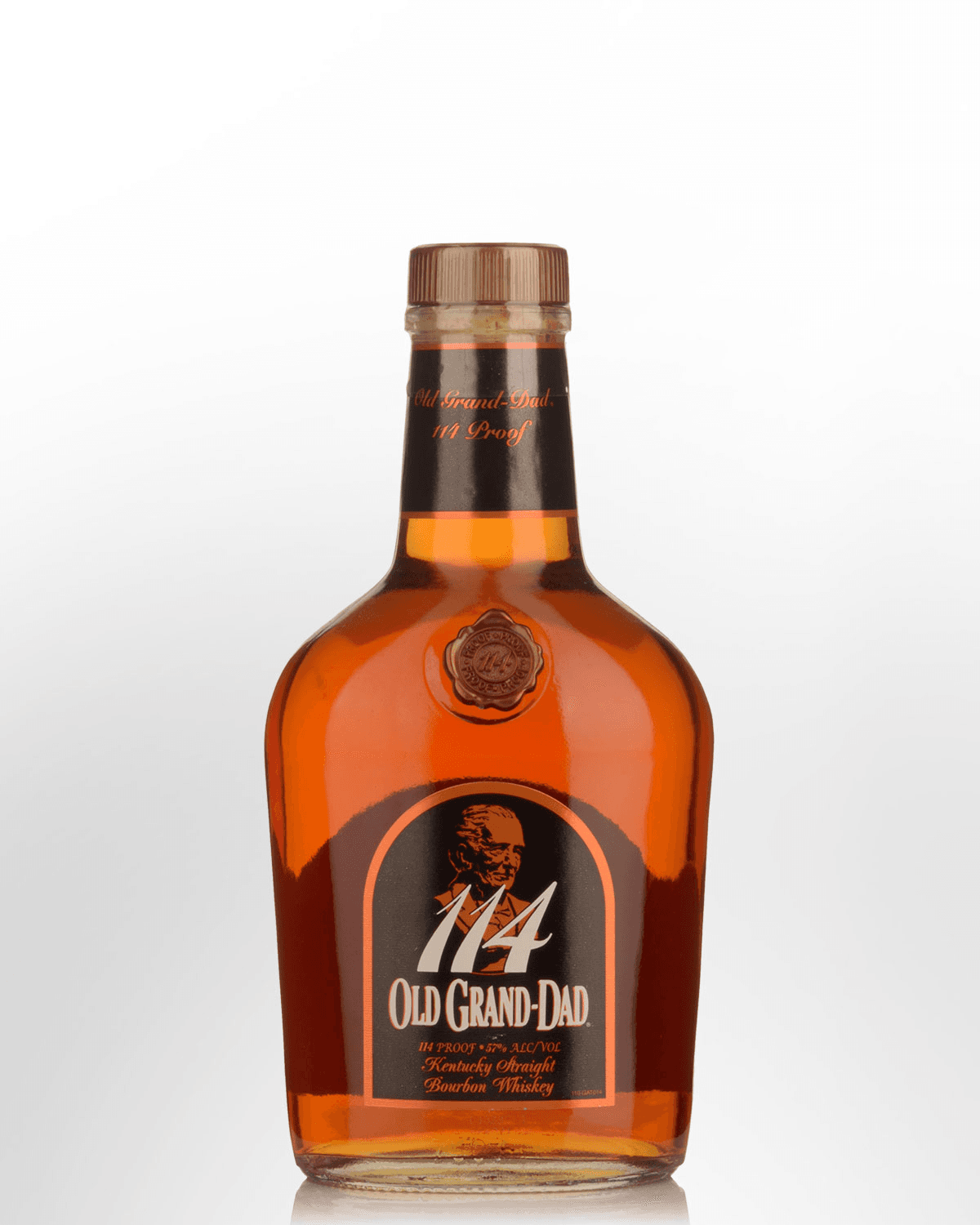
Old Grand-Dad 114
Beam Suntory
Old Grand-Dad 114 is the thinking drinker's value bourbon — a bottle that punches so far above its price point it almost feels like a mistake. That 27% rye mash bill, nearly double the industry average, gives it a backbone of spice that would overwhelm a lesser whiskey, but here it serves as architecture for layers of caramel, chocolate, and charred oak to hang upon. The high proof isn't a gimmick — it's a magnifying glass, amplifying nuances that lower-proof expressions wash away. At under thirty-five dollars, this is a bottle that seasoned bourbon drinkers quietly recommend to one another.
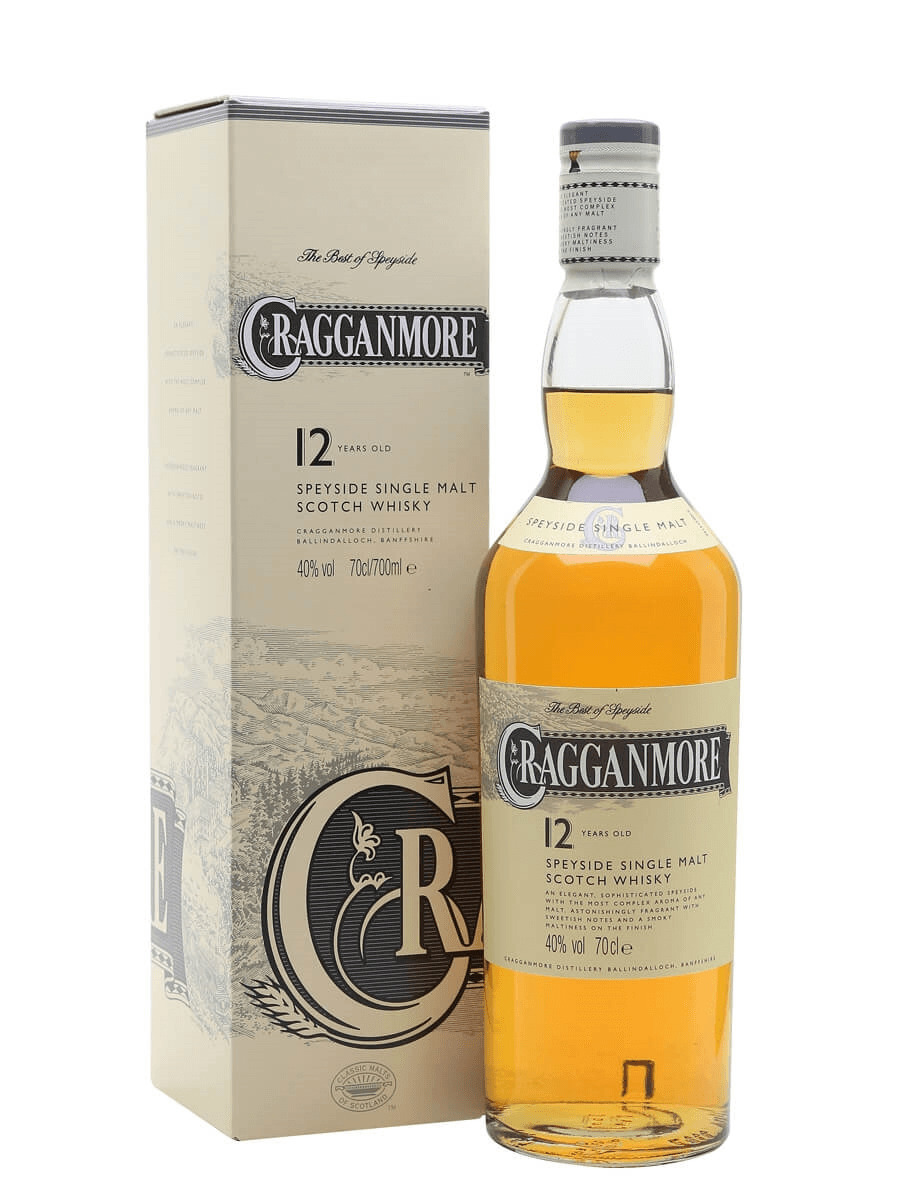
Cragganmore 12 Year Old
Diageo
Cragganmore 12 is the Speyside malt that rewards the patient nose. Where many single malts deliver their story in one dramatic chapter, Cragganmore reads like a novel with slow-building subplots. Those unique T-shaped lyne arms create a spirit of genuine complexity that unfolds over an hour in the glass.
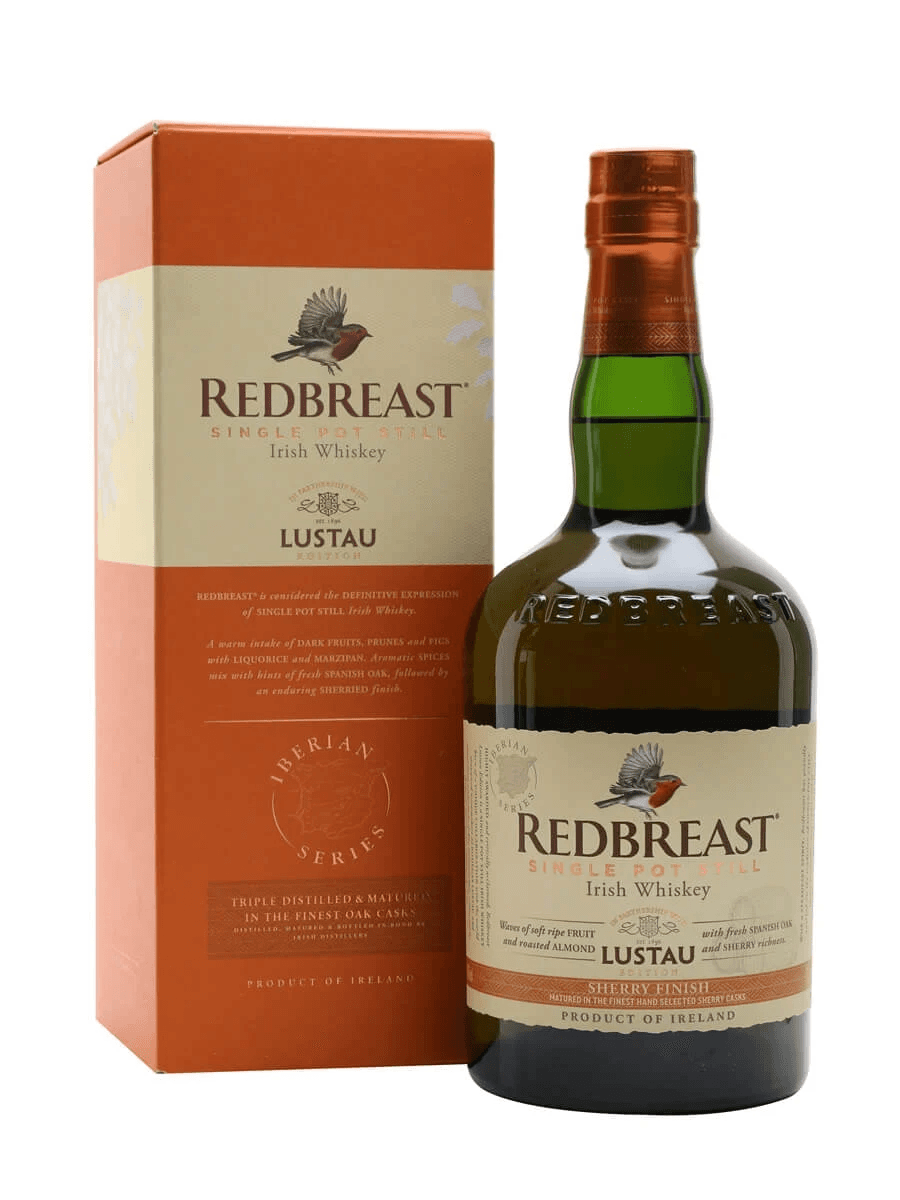
Redbreast Lustau Edition
Irish Distillers (Pernod Ricard)
The Lustau Edition is Redbreast's most layered expression — a whiskey that seems to change shape in the glass. That final year in Lustau's first-fill Oloroso butts doesn't overpower the pot still character; it adds a last chapter to an already complex story.
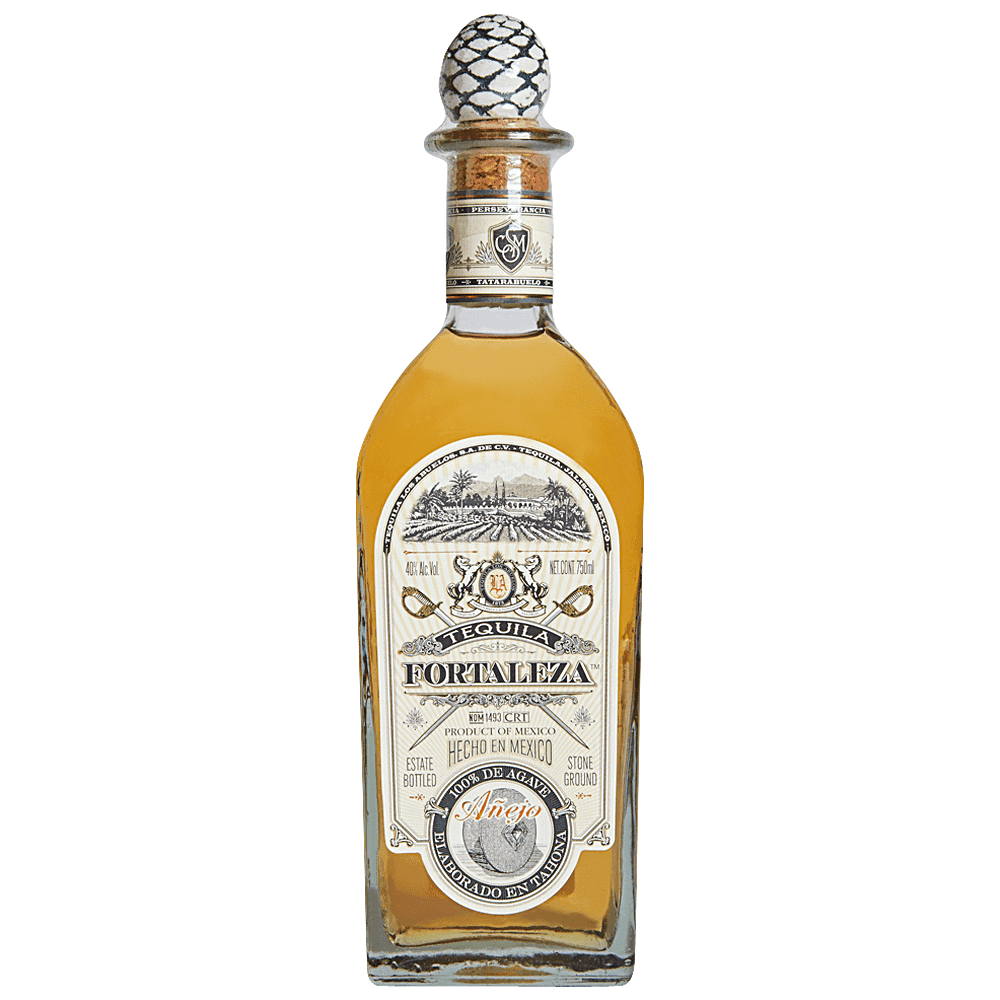
Fortaleza Añejo
Tequila Los Abuelos (NOM 1493)
Fortaleza Añejo is what happens when traditional methods meet patient barrel aging — and neither rushes the other. The tahona wheel produces a spirit with more texture and mineral complexity than a modern roller mill, and eighteen months in oak adds caramel depth without burying the agave.
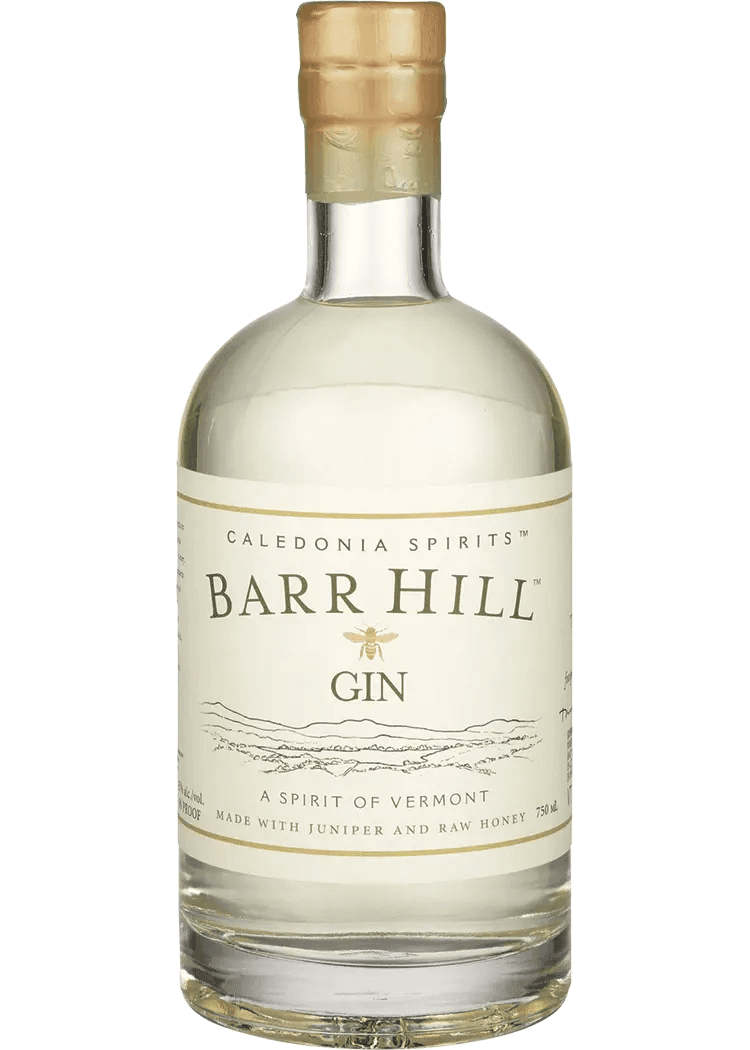
Barr Hill Gin
Caledonia Spirits
Barr Hill proves that complexity doesn't require a botanical bill as long as your arm. Two ingredients — juniper and raw honey — sound impossibly simple, until you realize that Vermont's raw wildflower honey is itself a symphony of over a hundred pollen sources.
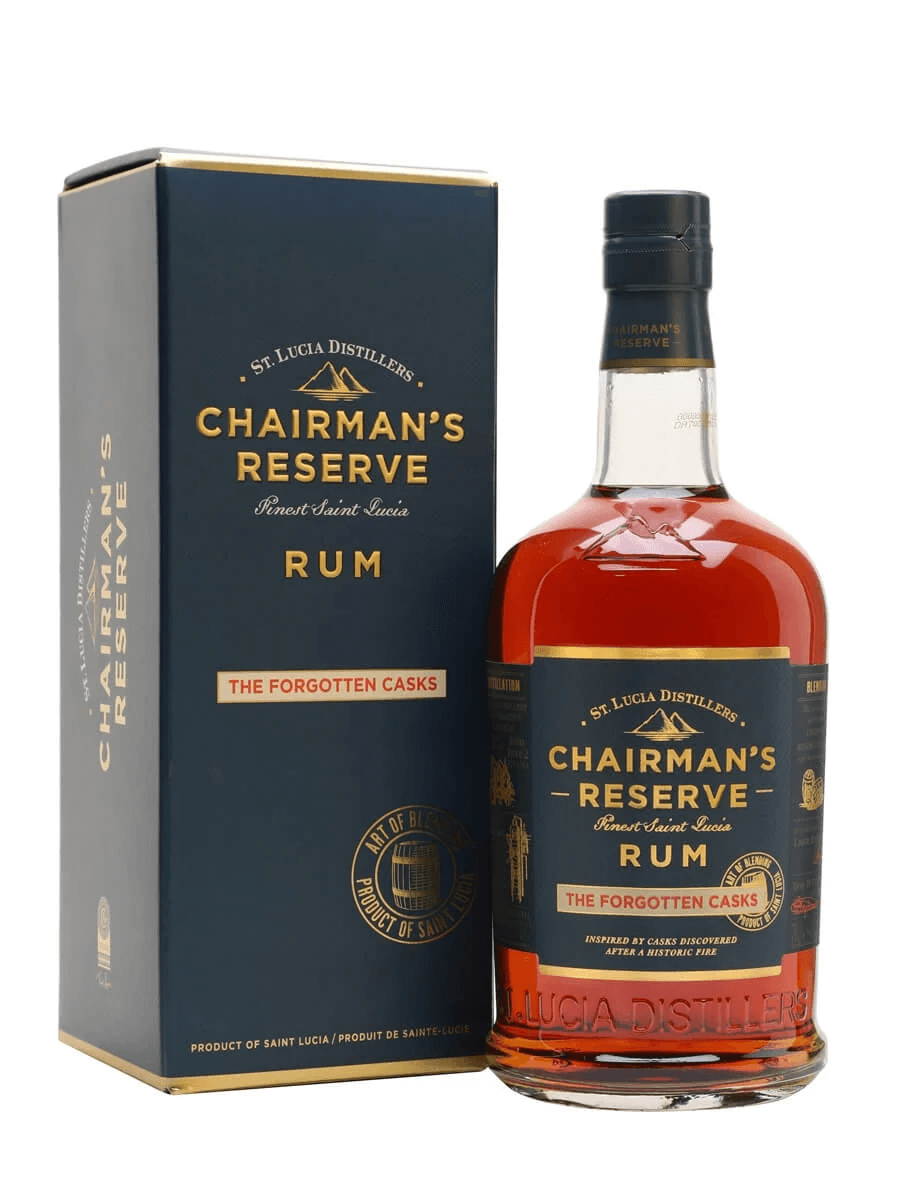
Chairman's Reserve The Forgotten Casks
St. Lucia Distillers Group of Companies
The Forgotten Casks is the rum world's most eloquent argument for the virtue of accidental patience. Those extra years of unplanned aging produced a rum of remarkable layered depth at a price that would be impossible if it were intentional.
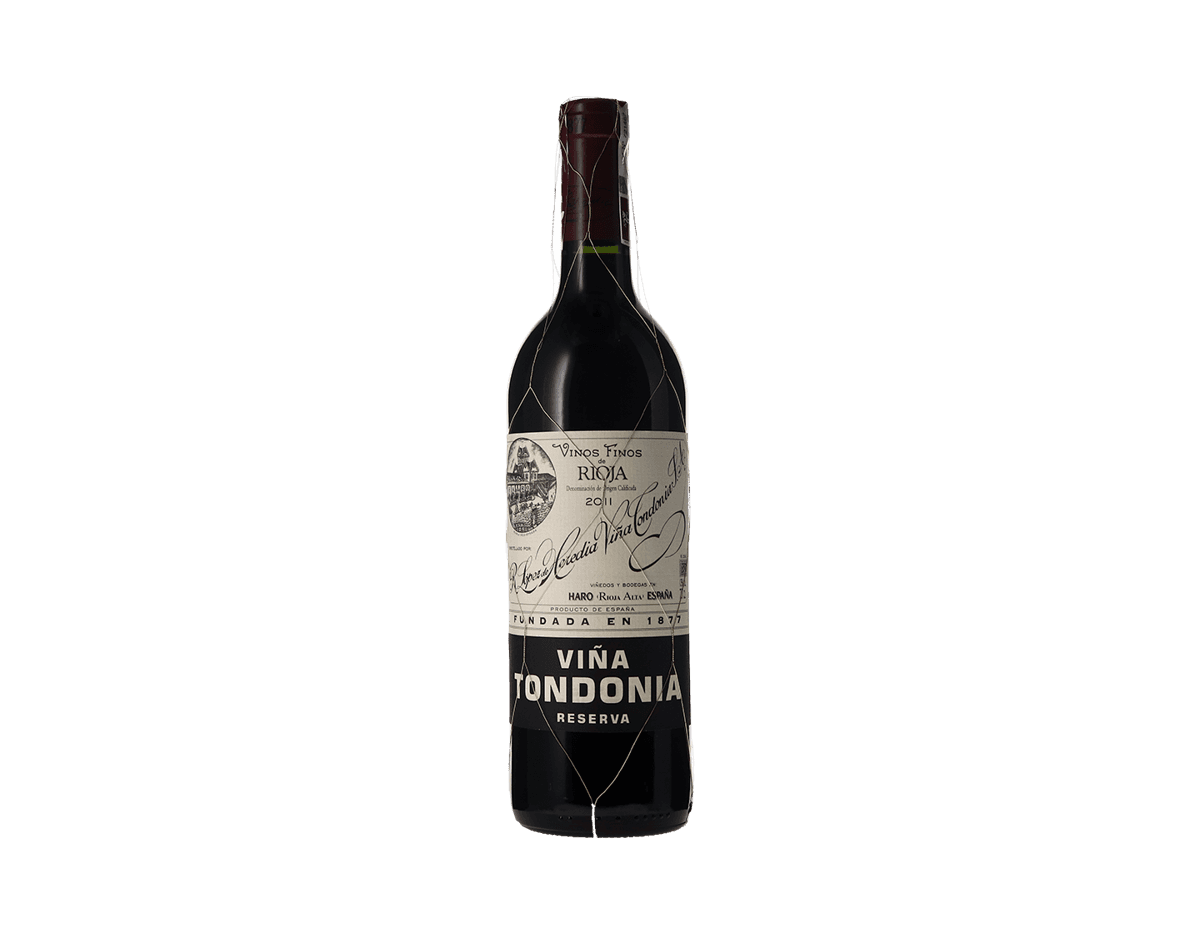
López de Heredia Viña Tondonia Reserva 2011
R. López de Heredia Viña Tondonia S.A.
Viña Tondonia Reserva is the ultimate slow-reveal wine — a bottle that spent six years in barrel and still isn't done evolving when you pour it.
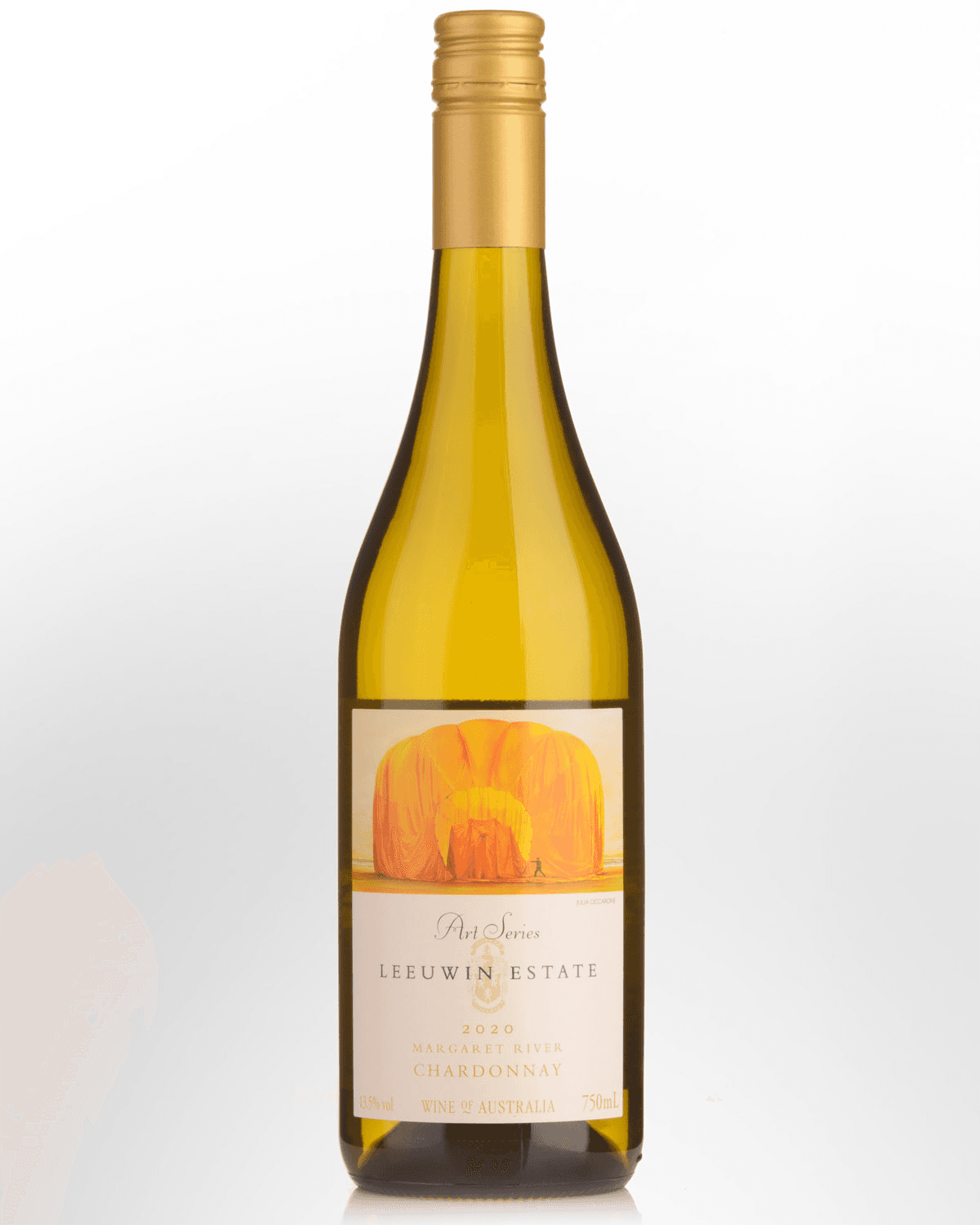
Leeuwin Estate Art Series Chardonnay 2020
Leeuwin Estate
The Art Series Chardonnay is Australia's most compelling argument that great Chardonnay needs nothing but time and patience. The 2020 vintage received 98 points from Wine Advocate and 97 from Halliday, James Suckling, and Wine Front.
Be the first to comment.